

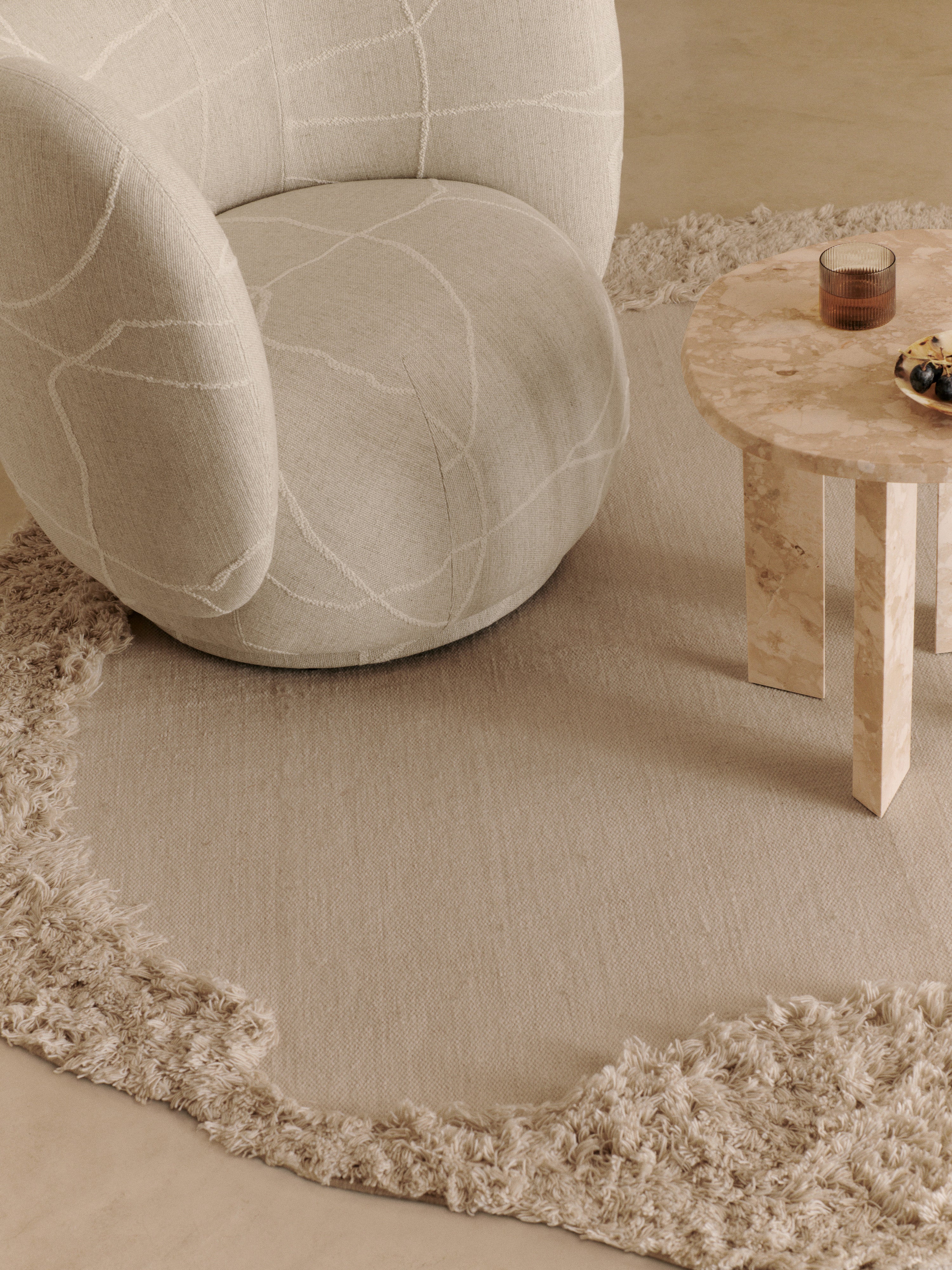

A reading nook is one of the few areas in the home designed solely for oneself. There is no representative or logistical function here — what matters is whether you want to sit in it for an hour.
Good news: you don’t need a separate room. You only need about 1.5 × 1.5 meters — this is how much space a chair with a lamp and table takes, with room for easy standing up. Such a space can fit in the corner of the living room, by the window in the bedroom, or even in a wider hallway.
Below are five elements that determine whether the nook will be used or remain a pretty decoration.
Reading nook – how to create a space you want to return to
1. Chair — parameters more important than appearance 2. Light — one lamp, but the right one 3. Side table — 40 centimeters that change everything 4. Textiles — two pieces, not five 5. Location — at an angle, not parallel Details that complete the arrangement Three most common mistakes Our recommendations Summary – reading nook

1. Chair — parameters more important than appearance
A reading chair operates under different rules than a conversation chair. You sit in it longer, in one position, and most often slightly reclined.
What to look for:
Seat depth 55–60 cm — allows you to lean back and tuck your legs up
High backrest, minimum to the height of the neck
Armrests at a height of 20–25 cm above the seat — at this height, the hand holding the book does not get tired
Soft, yet resilient filling — too soft a seat starts to become uncomfortable after half an hour
Wingback chairs, lounge models with a reclined backrest, and soft shapes in bouclé upholstery work well. Check out our designer armchairs — in this category, you will find both classic forms with armrests and soft, rounded models.
Designer tip: The reading chair should be noticeably softer than a sofa. This is a place for relaxation, not formal seating — and it’s the only area in the home where comfort takes precedence over everything else.


2. Light — one lamp, but the right one
This is the most often neglected element. Reading under overhead ceiling light strains the eyes because the lamp shines in your face, while the book remains in the shadow cast by your own head.
What works:
Floor lamp with an adjustable arm, positioned to the side and slightly behind the armrest
Luminous flux 400–600 lumens directed at the book
Color temperature 2700 K — warm, conducive to relaxation
Alternatively: a wall lamp above the armchair or a table lamp on the side table
Key principle: light should come from the side, never from behind. Check out floor lamps with adjustment and wall lamps, if you want to free up floor space.
A reading nook is a classic example of what is known as a functional layer: lighting assigned to a specific activity, independent of the main lighting. Therefore, the lamp in this area should be able to be turned on separately.

3. Side table — 40 centimeters that change everything
Without a surface to place things, the nook stops functioning. The cup ends up on the floor, the book on the armrest, the phone gets lost somewhere.
Choose a table according to one rule: top at the height of the chair seat, with a tolerance of ±5 cm — in practice, usually 45–55 cm. A top with a diameter of 35–45 cm is enough; larger starts to dominate the area.
Light forms on thin legs, round tops, and natural materials work best. Browse end tables and side tablesand if you want a stronger accent — tables with marble tops.
Designer tip: The table should be slightly lower than the armrest. Then placing a cup is a natural movement, not an exercise.


4. Textiles — two pieces, not five
Fabrics do two things in this area: they build coziness and improve acoustics, quieting the space.
That's enough:
One throw draped over the backrest or armrest
One pillow — lumbar, not decorative
Small rug under the chair if the floor is hard
That's all. A corner overloaded with textiles looks cluttered, not cozy. If you are looking for a soft base, check out our rugs.

5. Location — at an angle, not parallel
The best places in order of effectiveness:
By the window — daylight during the day, view outside
In the corner of the living room — two walls behind give a sense of shelter
Next to the bookshelf or shelves — natural backdrop
In the bedroom against the wall — an alternative to reading in bed
Regardless of the location: place the chair at an angle of 15–30° to the wallnot parallel. A parallel arrangement looks like a waiting room; an angled arrangement — like a thoughtful area.
A few books on on the wall shelf next to the chair closes the composition and keeps it tidy.
Details that complete the arrangement
A maximum of three objects:
Plant next to the chair — adds softness and life
A stack of two to three books on the table
Ceramic vase with a single branch or candle
Check out decorative items and vasesif you are looking for calm, matte forms.

Three most common mistakes
Overhead light instead of side light. The quickest way for the corner to stop being used.
Chair too hard or too shallow. Check the seat depth before purchasing — below 50 cm, you can't sit in it for long.
Lack of surface for placing items. Without a table, the area doesn't function, no matter how beautiful it looks.

Our recommendations


You can see all models in person at our showroom in Warsaw — in the case of a chair, this is the only way to check if the seat fits your height.
How much space is needed for a reading nook?
At least about 1.5 × 1.5 meters. That's the space needed for a chair with a lamp and table, with room for getting up comfortably.
What lamp is best for reading?
A floor or table lamp with an adjustable arm, with a flow of 400–600 lumens and a color temperature of 2700 K, positioned beside the chair — never behind it.
What chair to choose for reading?
With a seat depth of 55–60 cm, a high backrest, and armrests. It should be noticeably softer than a sofa.
Will a reading nook work in the bedroom?
Yes, and it's one of the best spots — especially by a window or on the wall opposite the bed. It then requires its own light source, independent of the main lighting.

Summary – reading nook
A reading nook doesn't need space — it needs three well-chosen elements: chair with the right seat depth, light coming from the side, and table at seat heightThe rest are details. If these three things align, the area will be used daily, not just look nice in photos.


