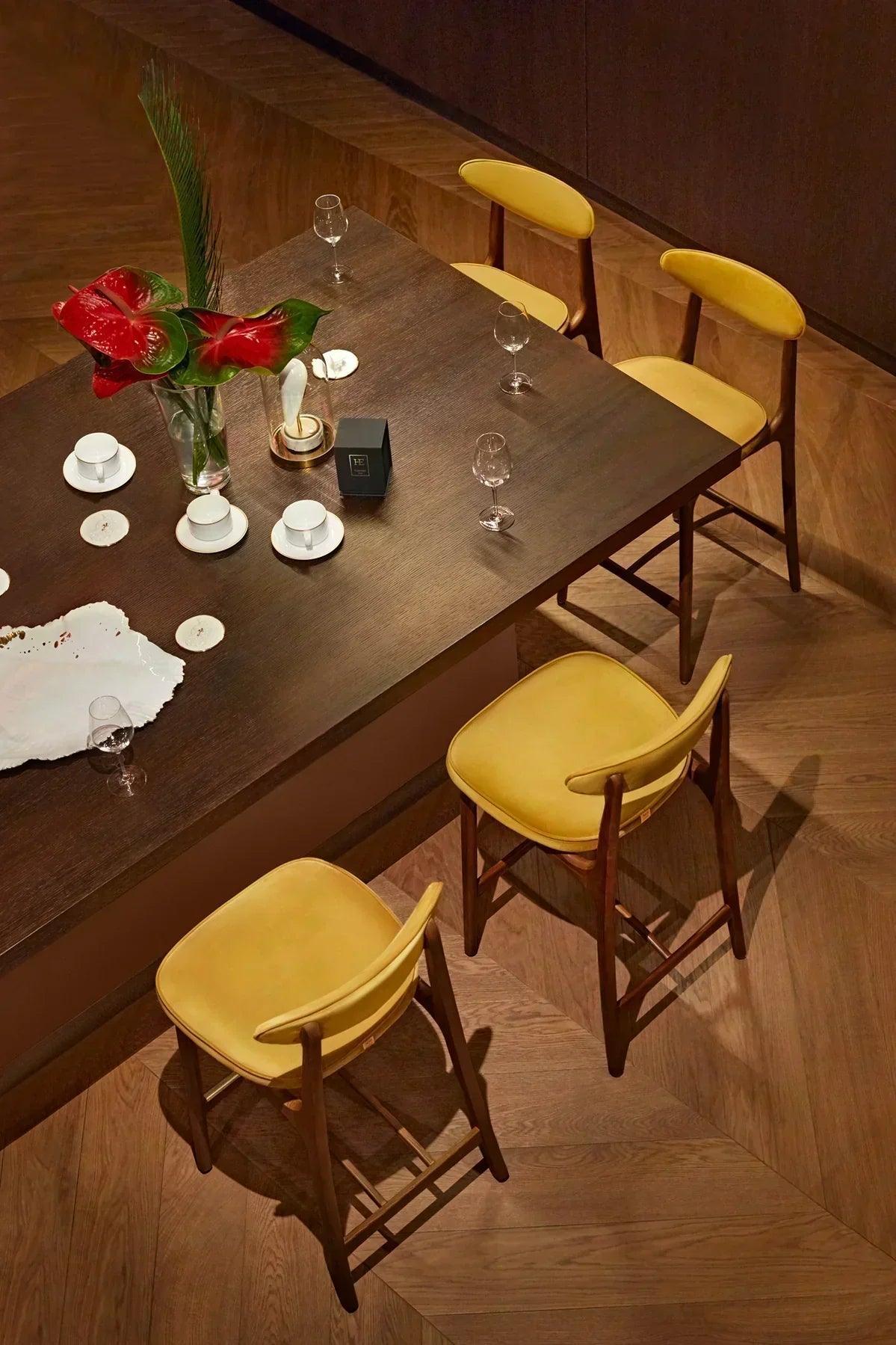
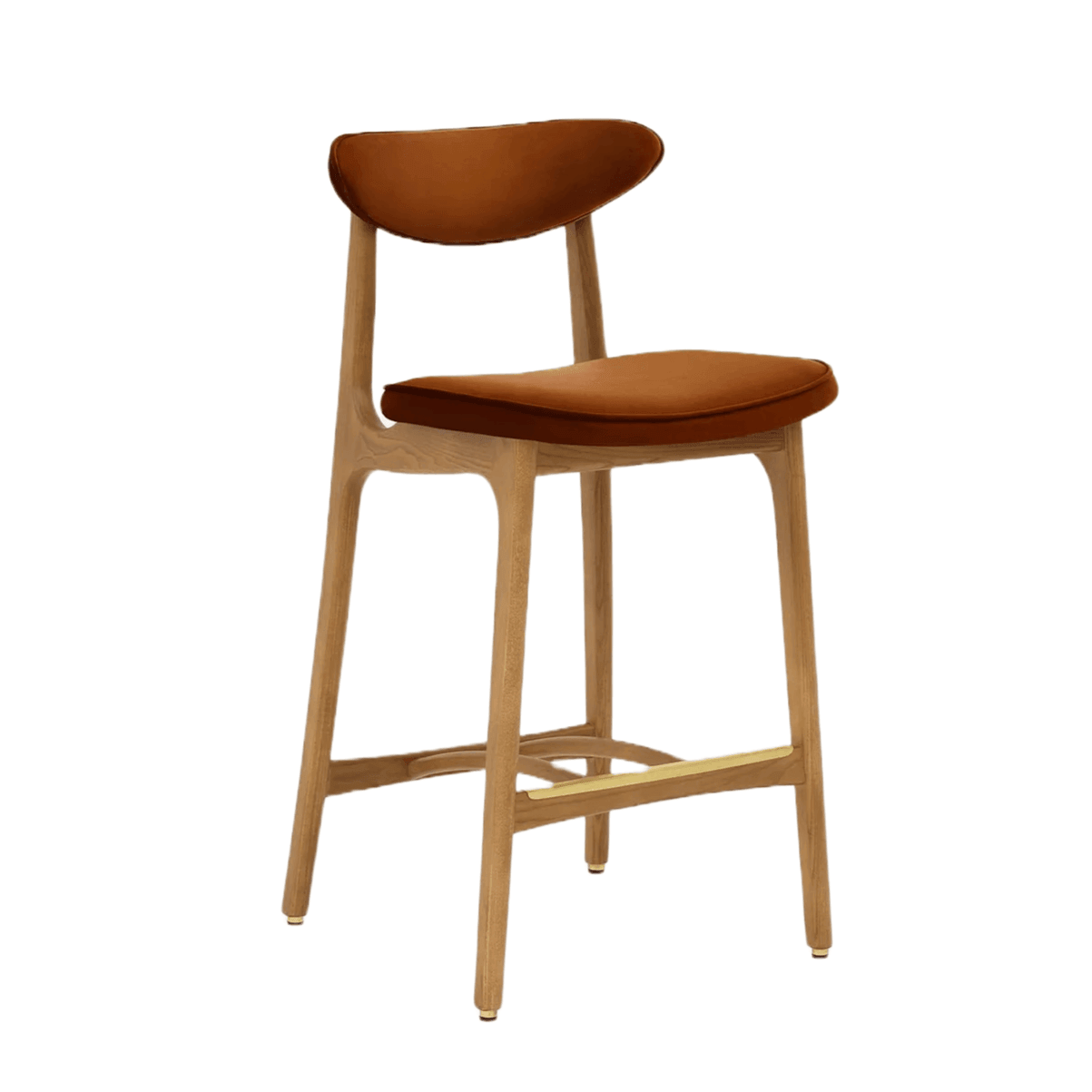
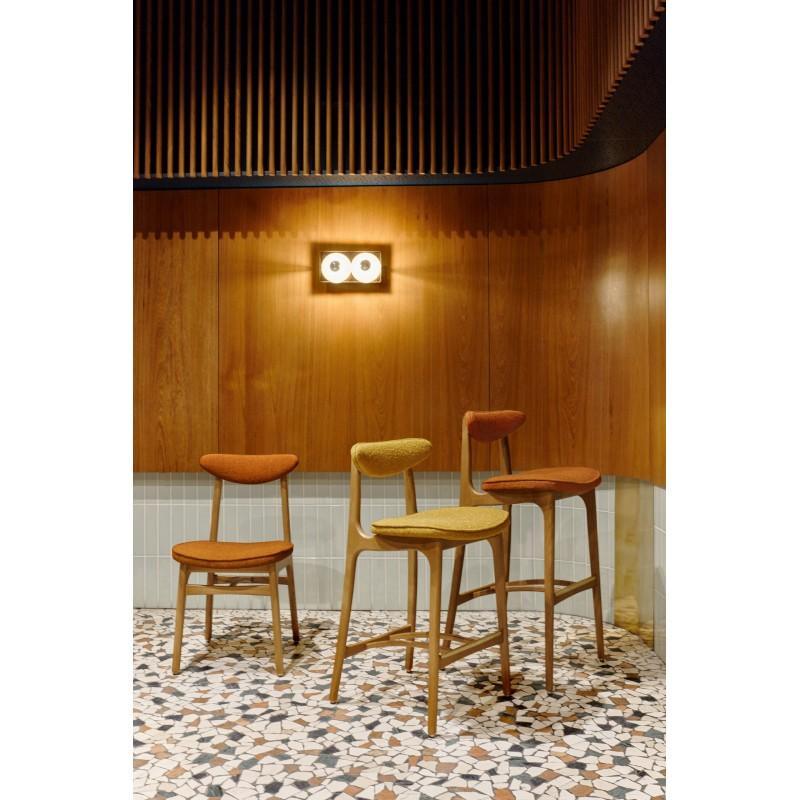
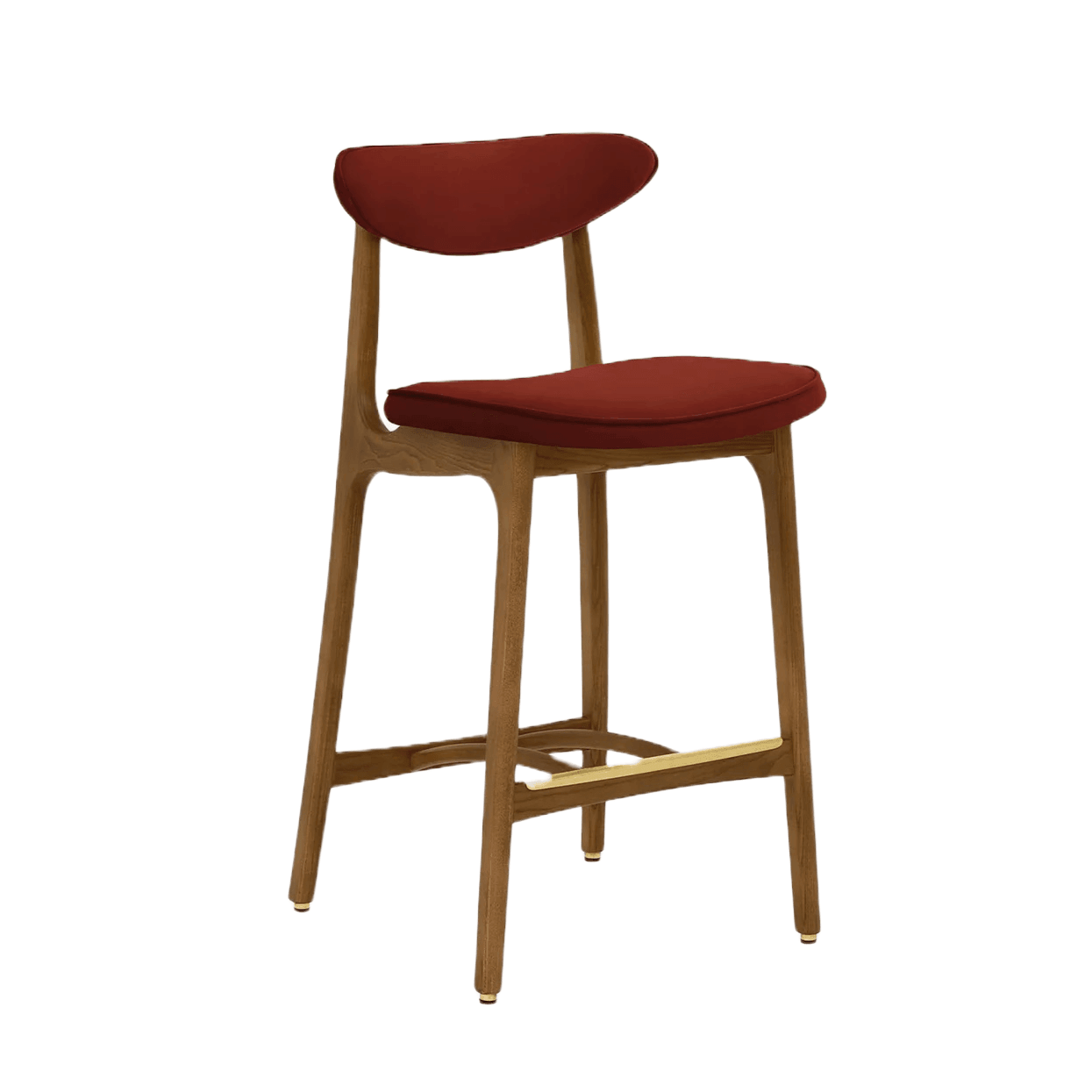
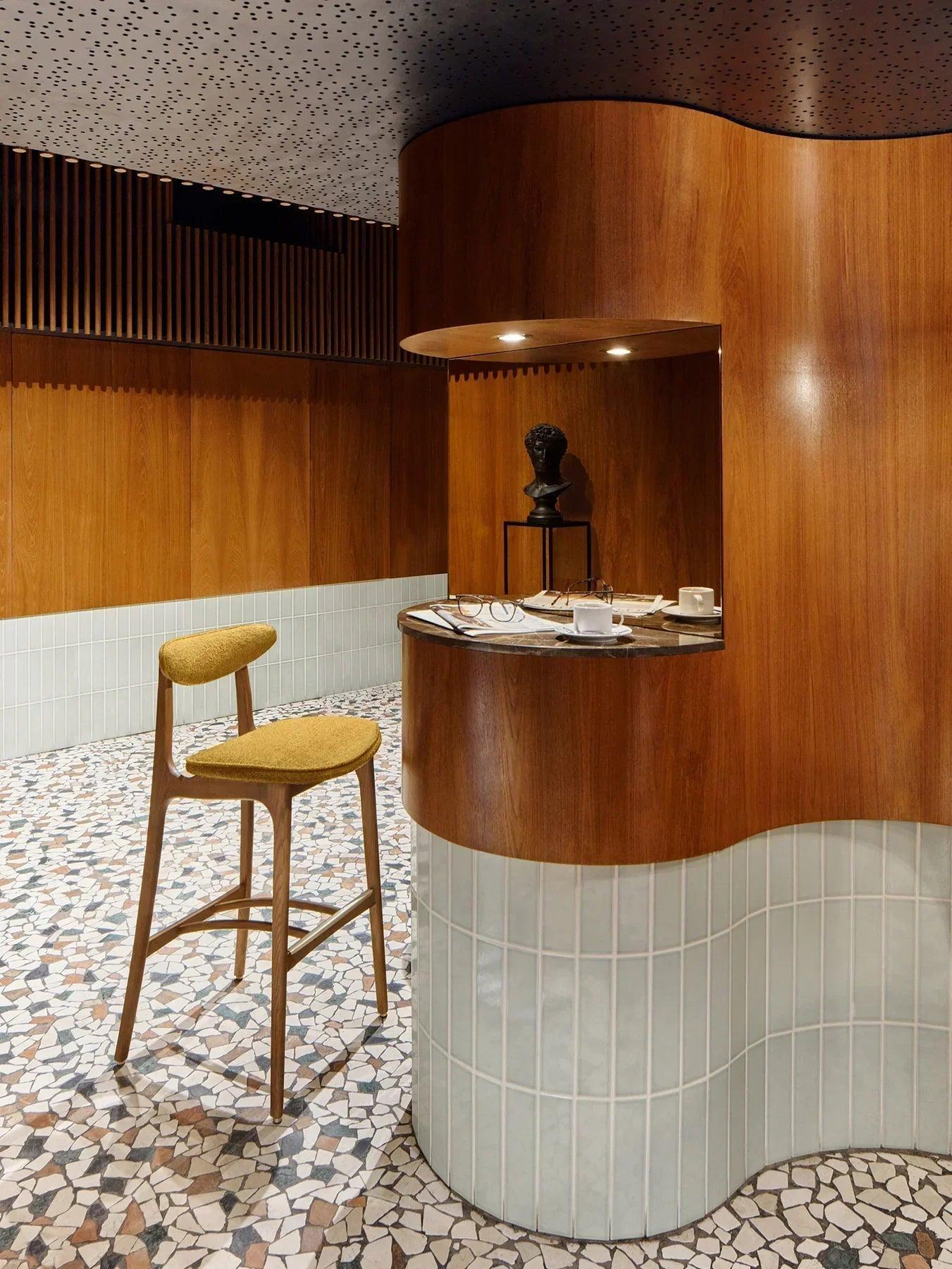
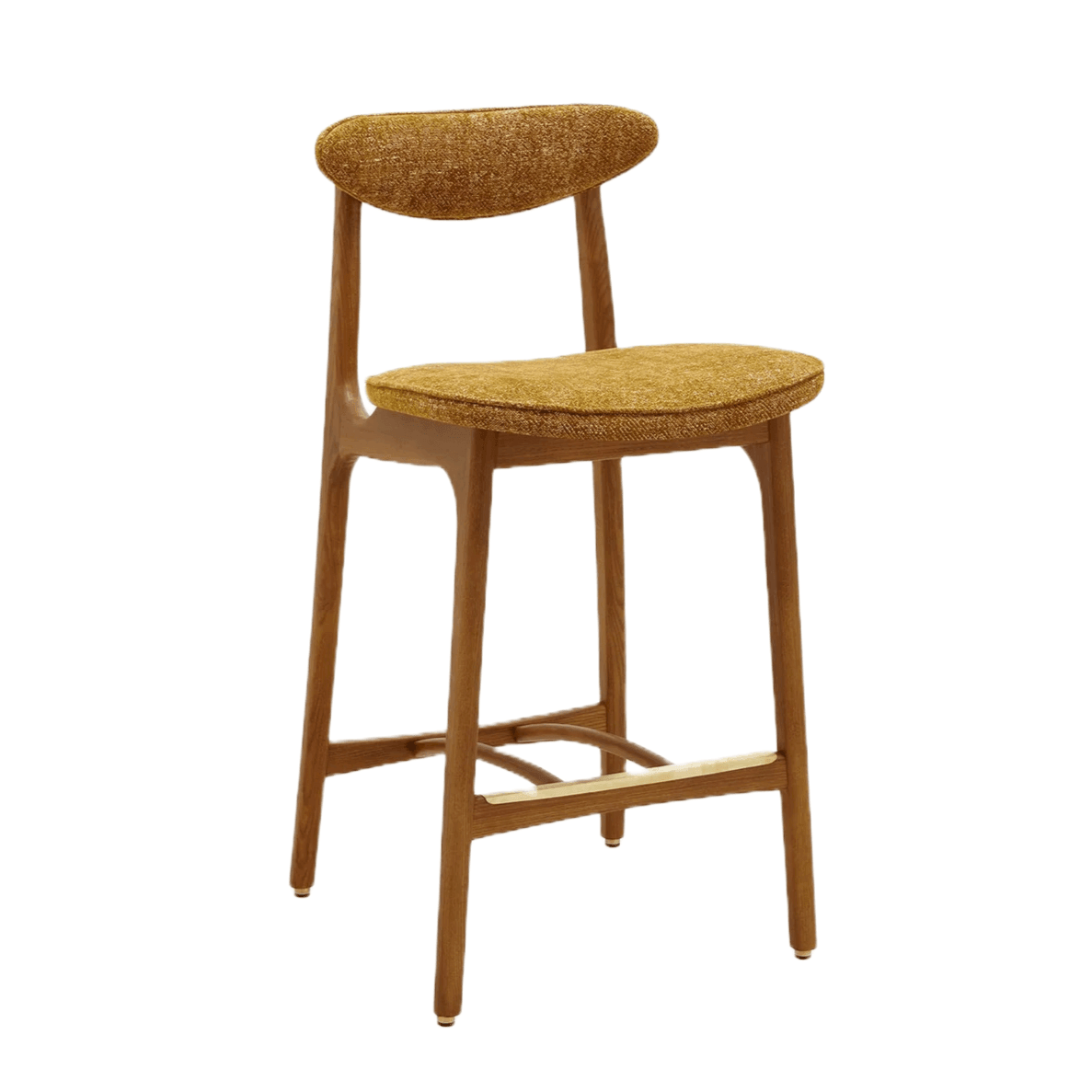
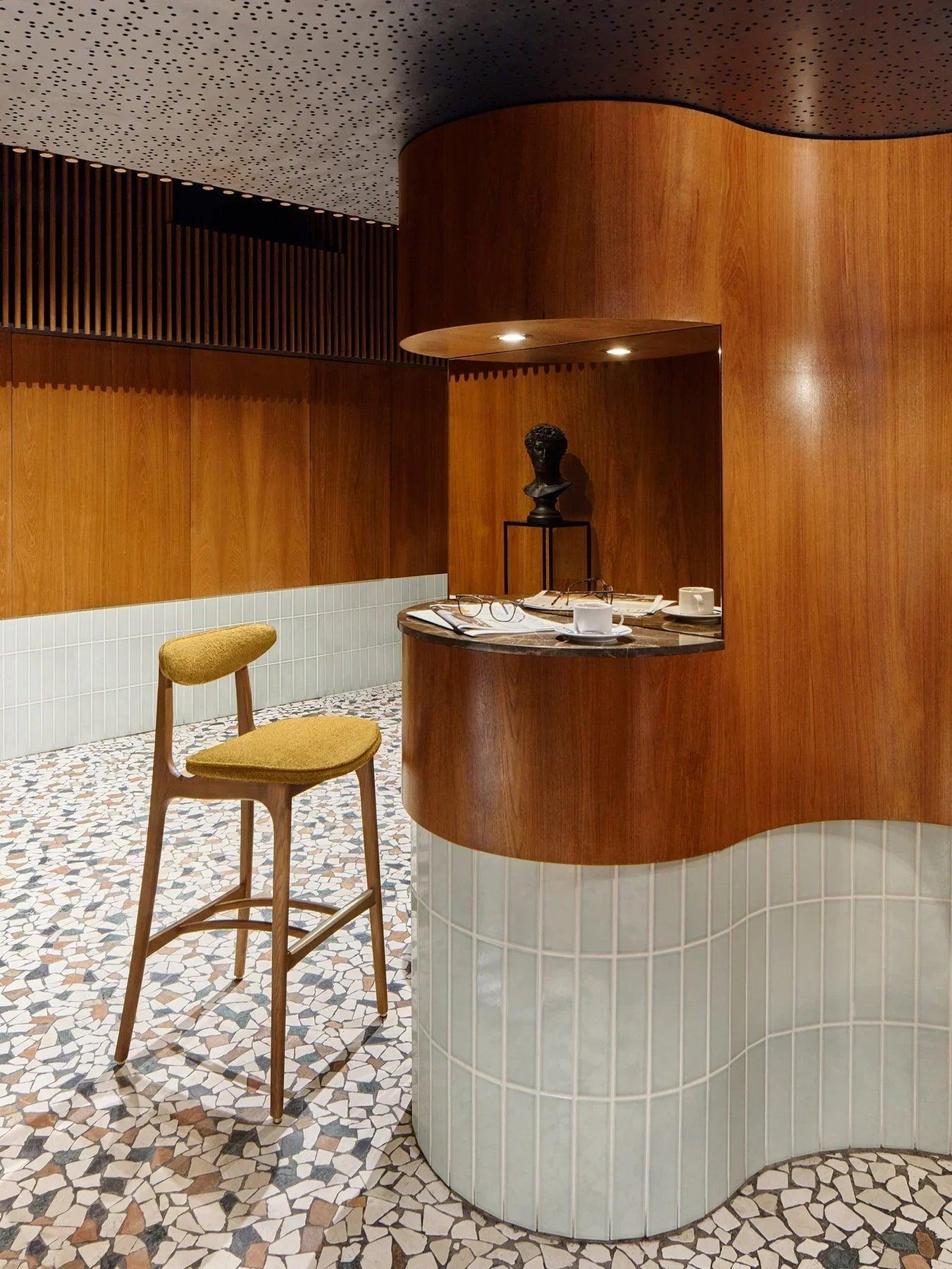
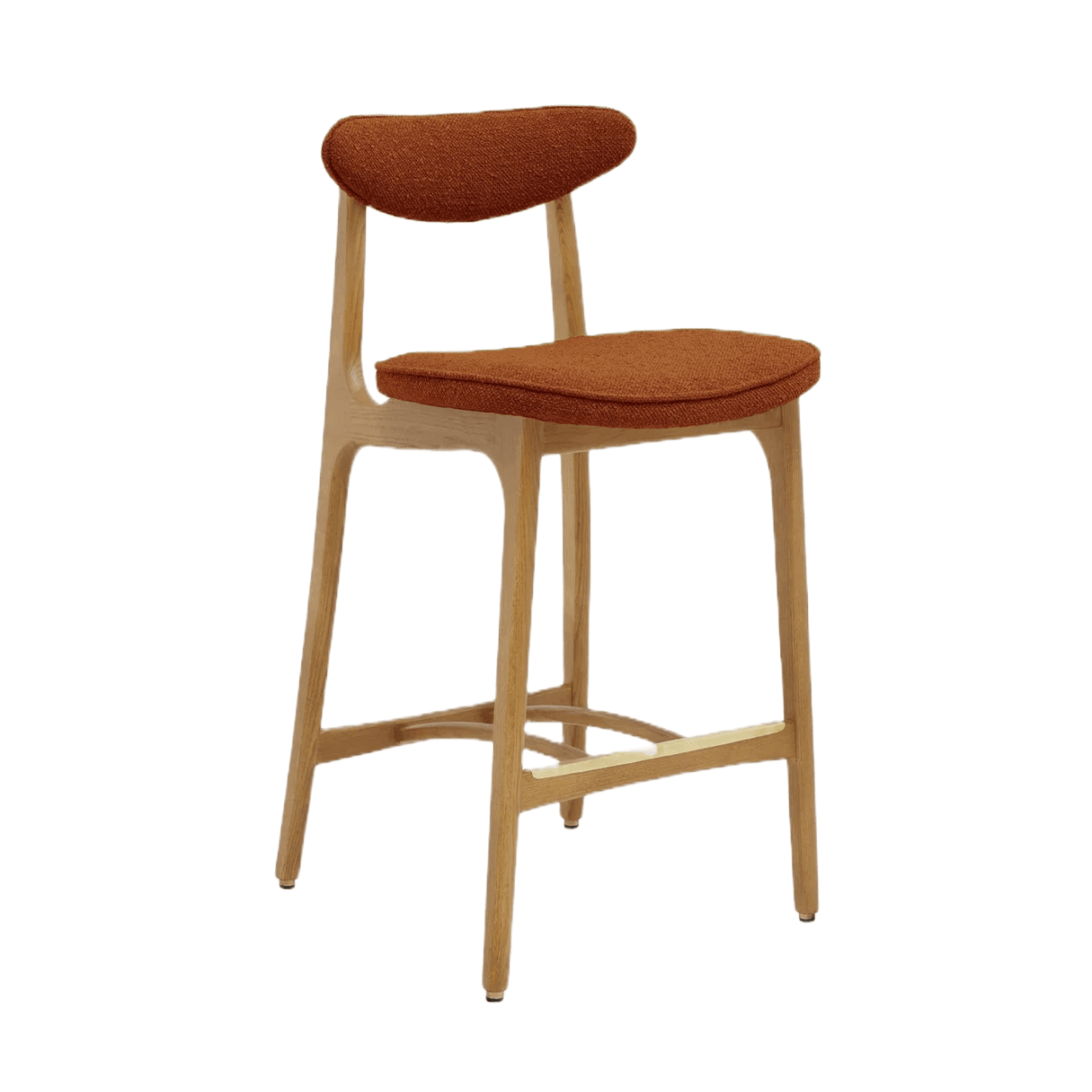
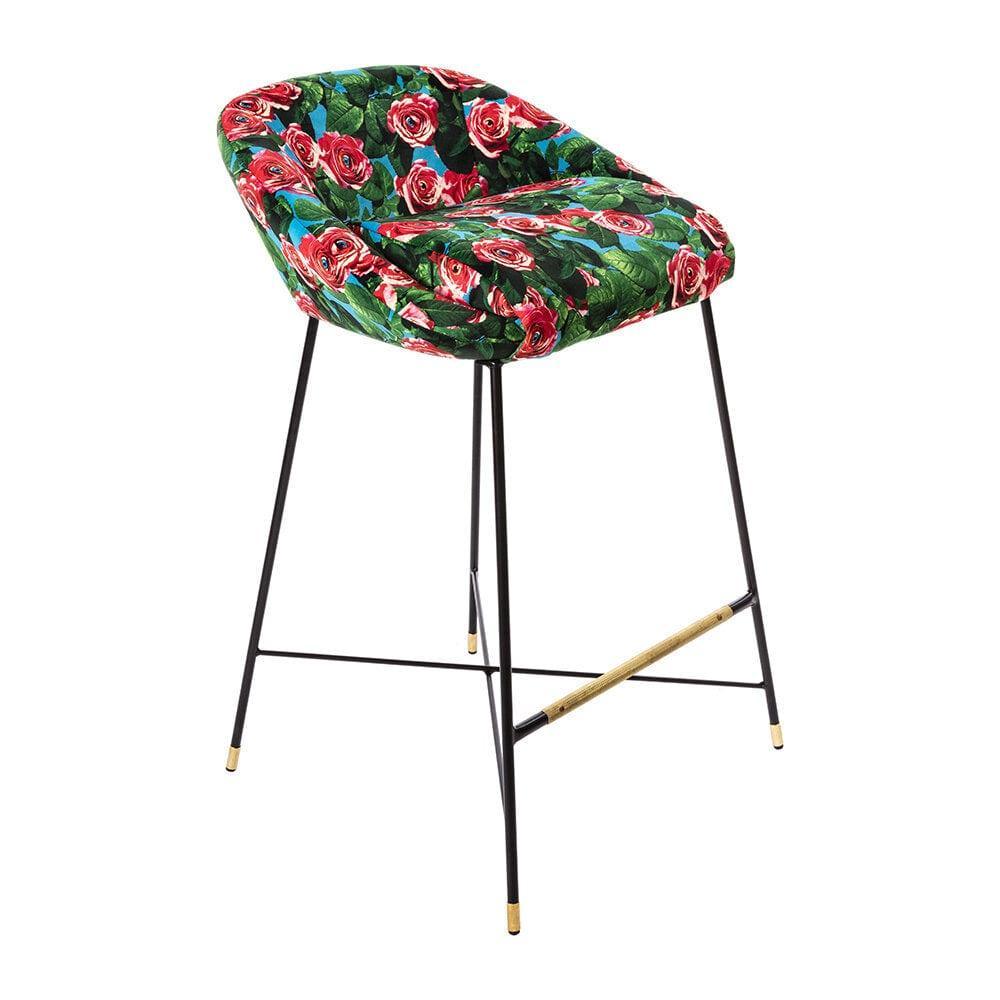
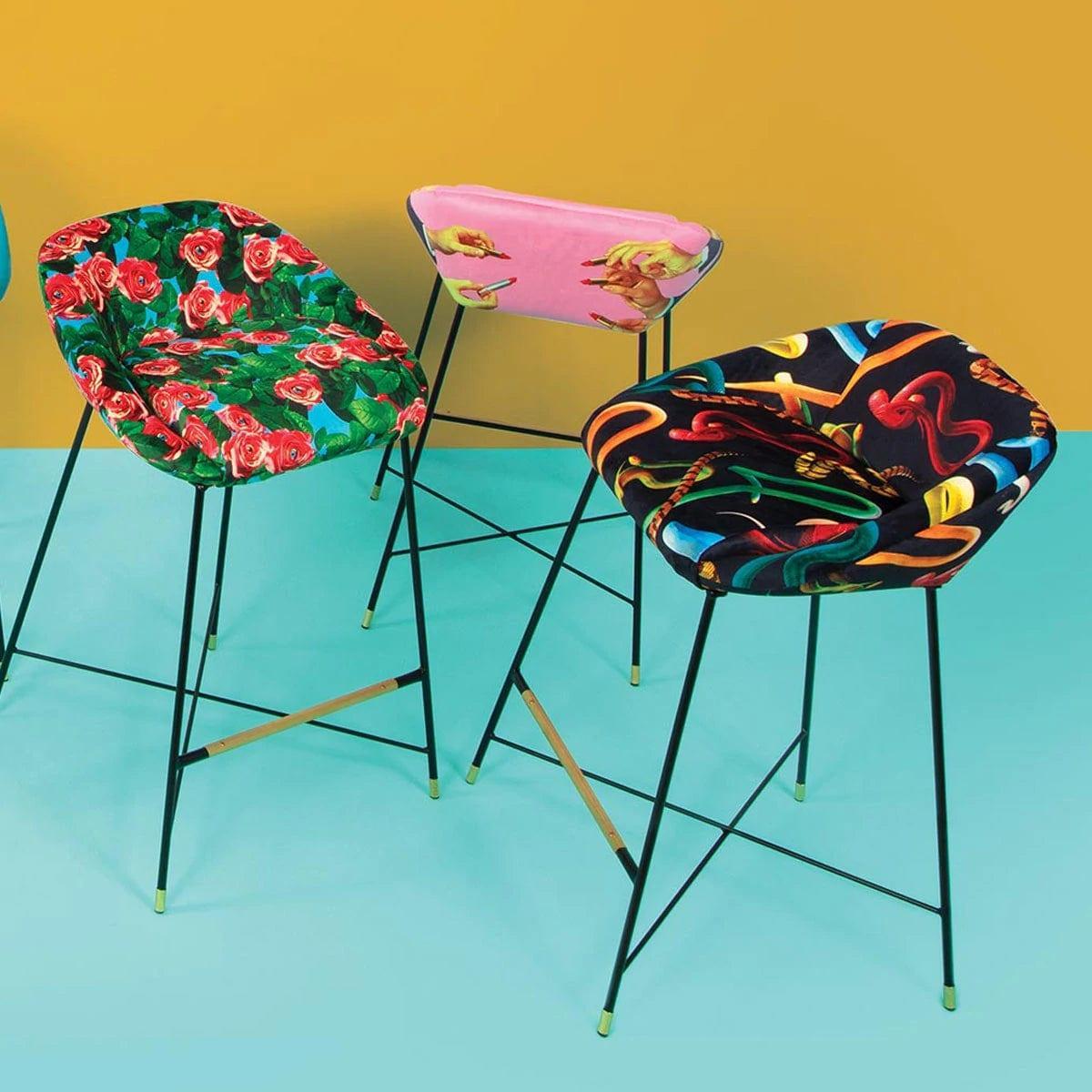
How to Choose a Bar Stool? A Practical Guide
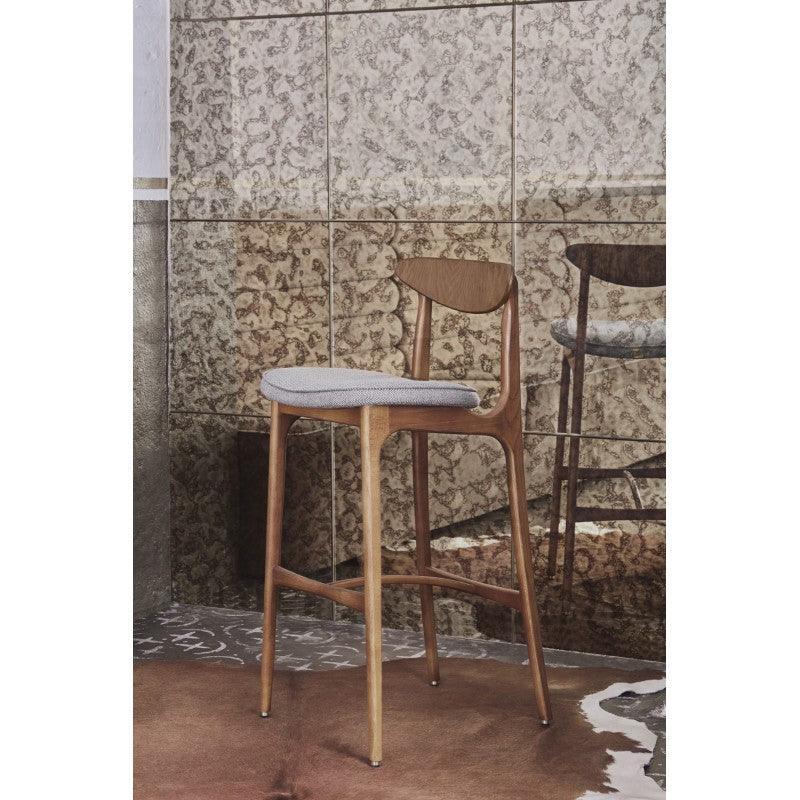
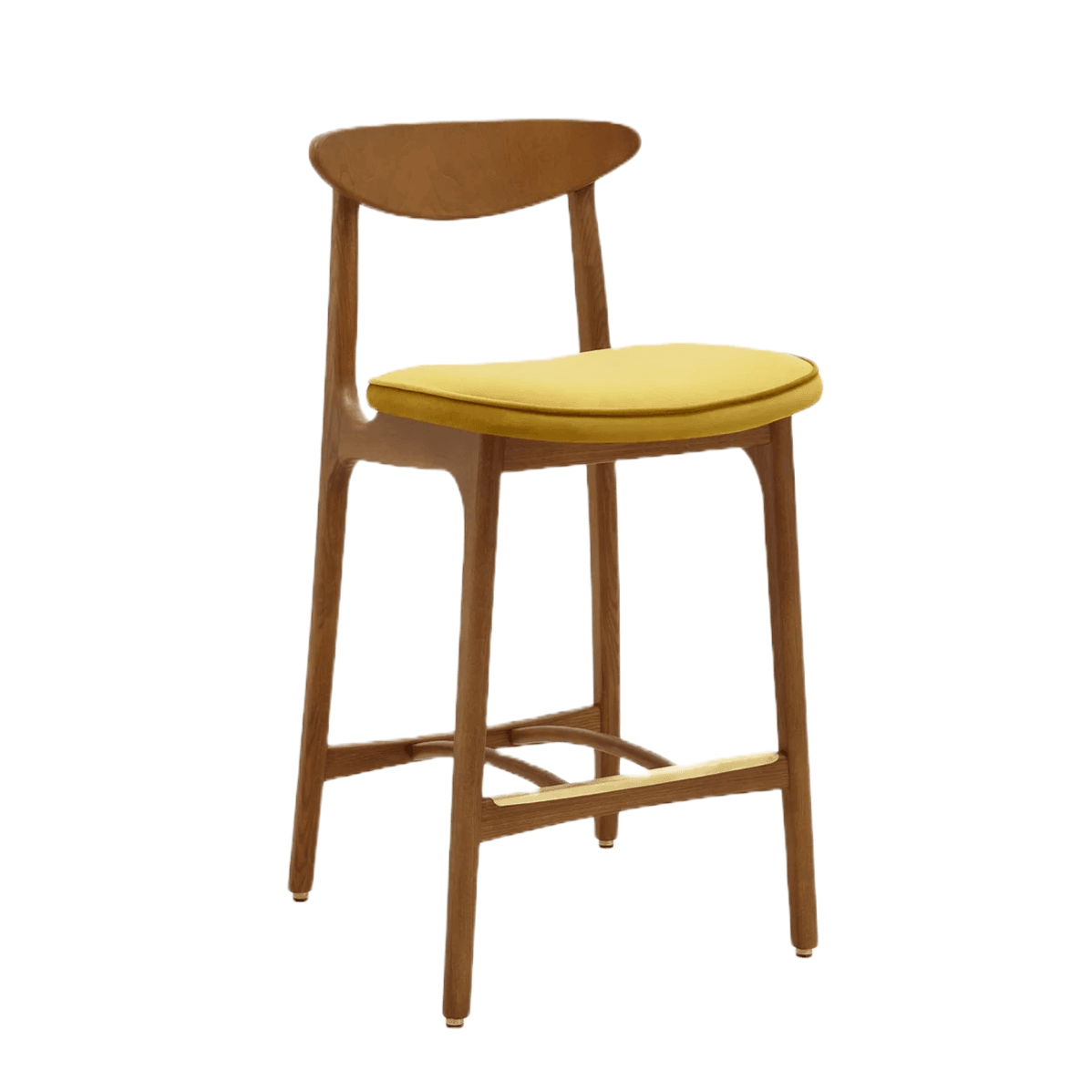
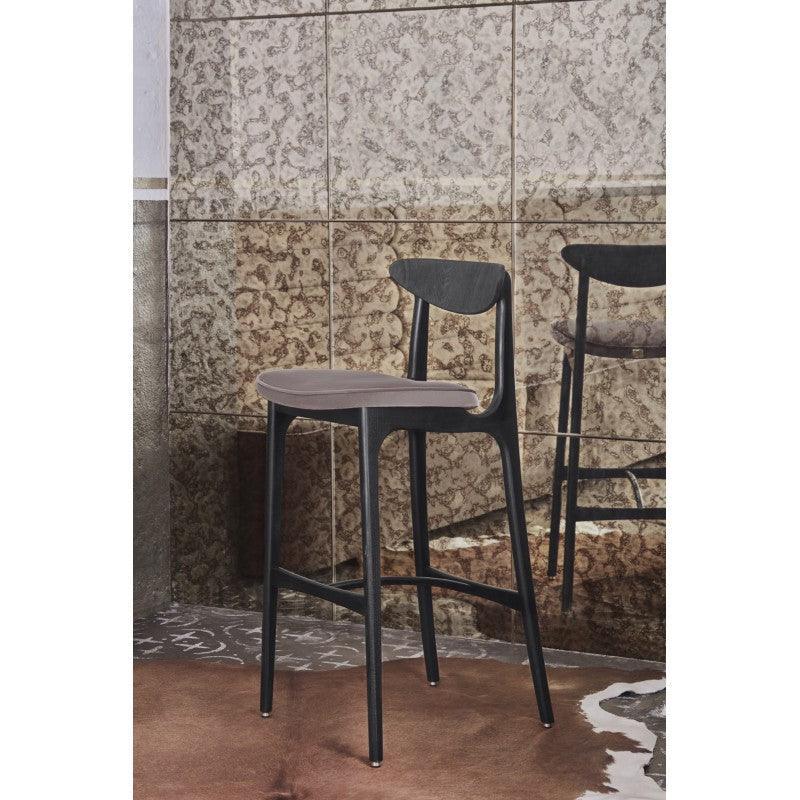
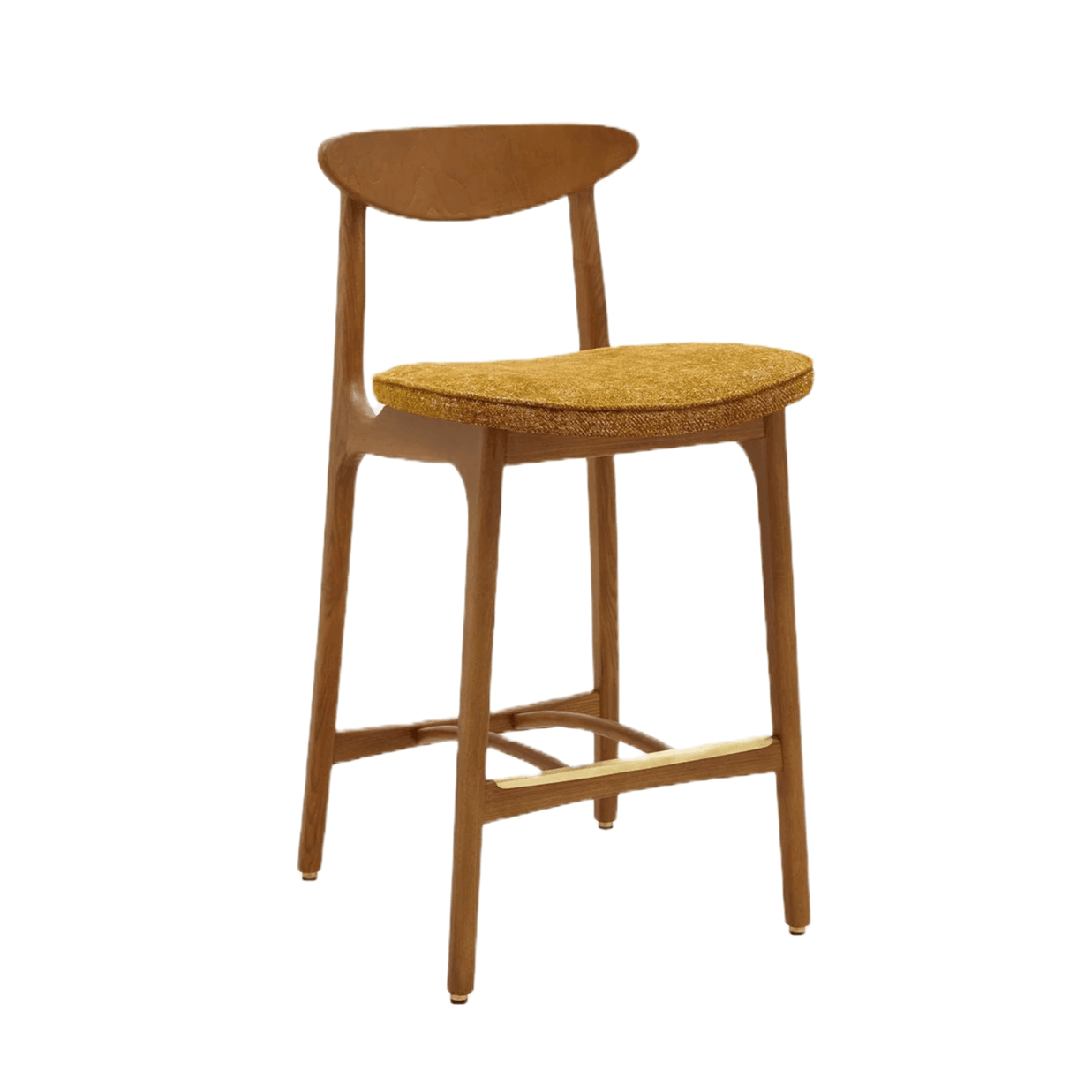
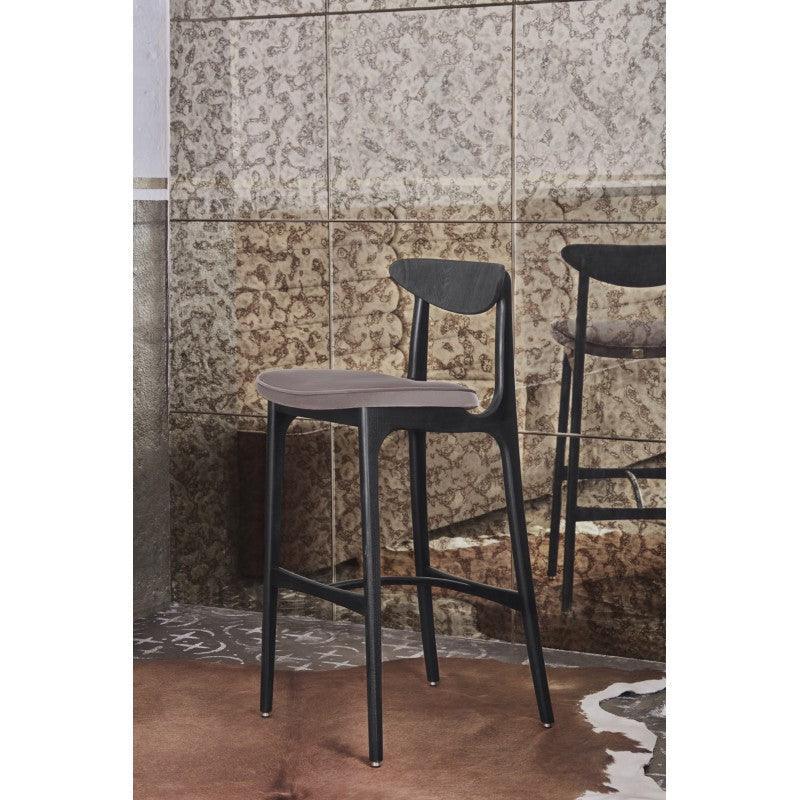
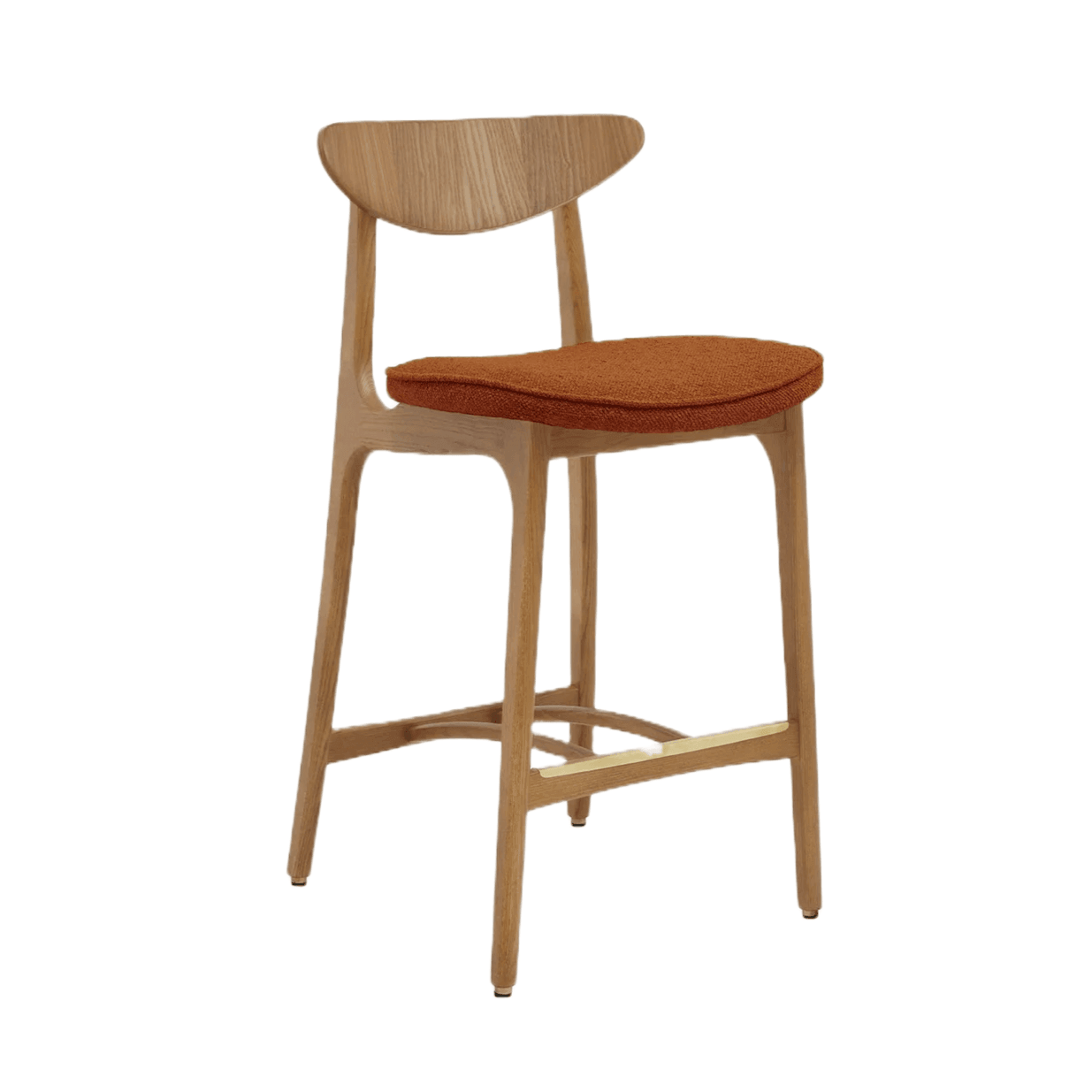
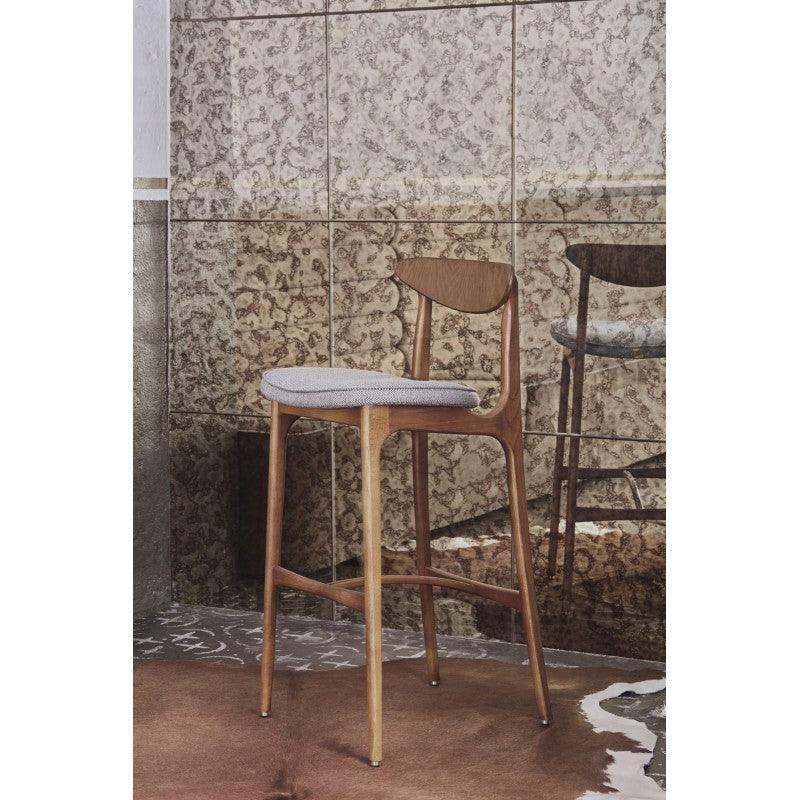
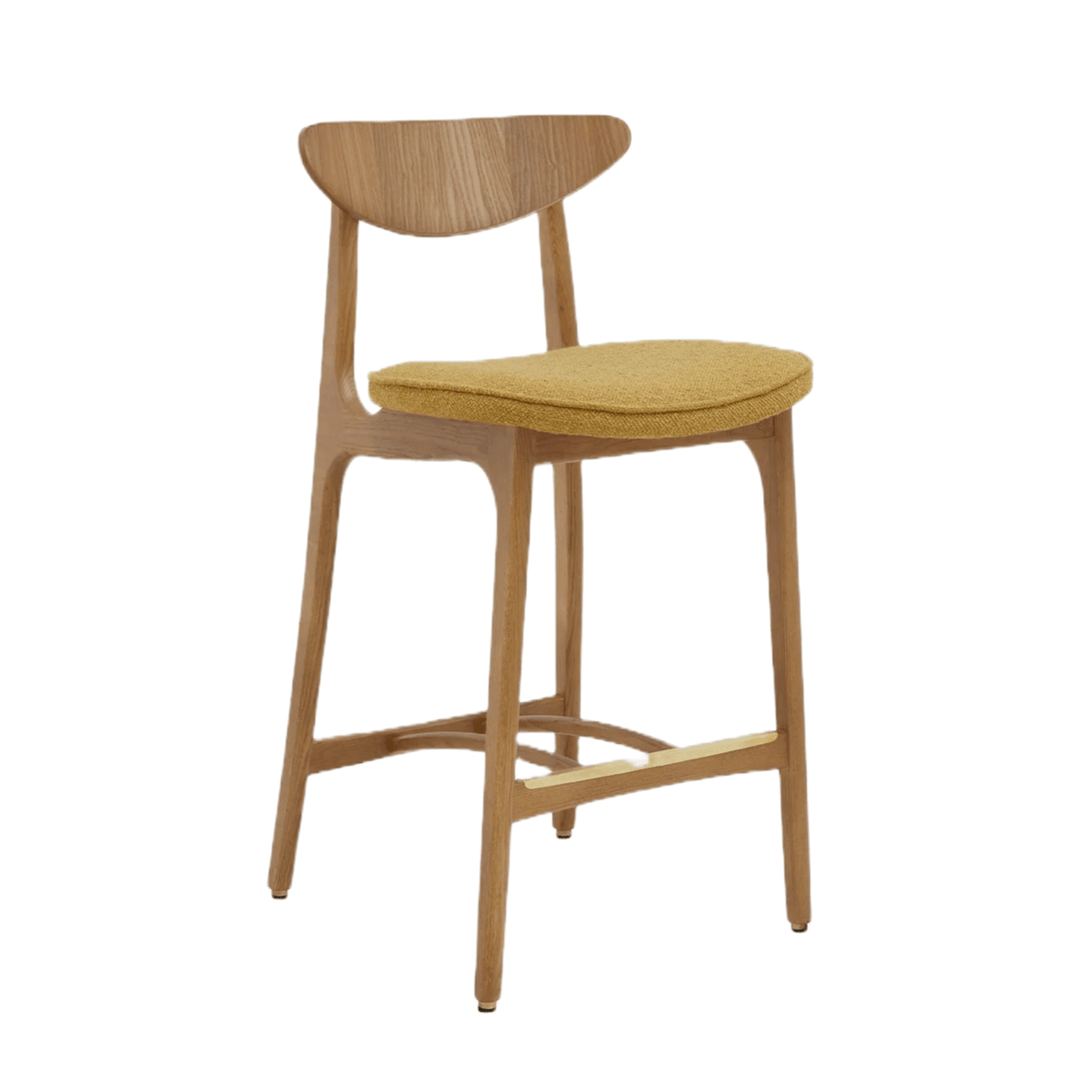
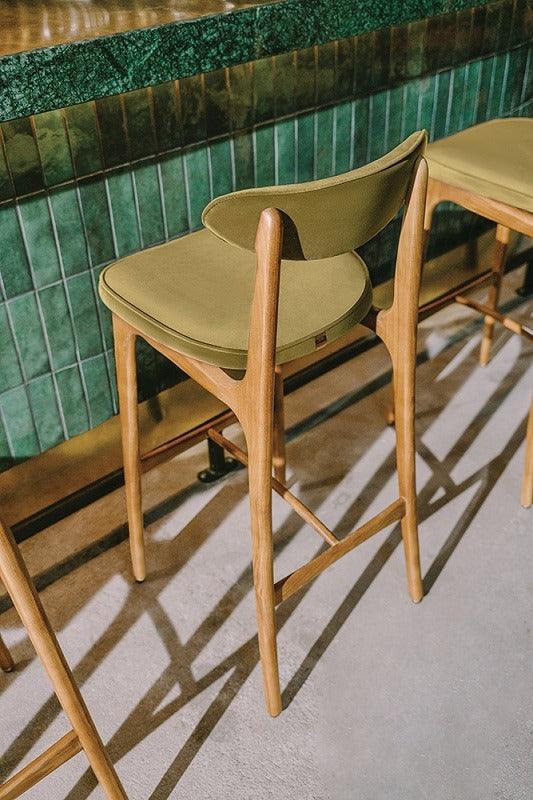
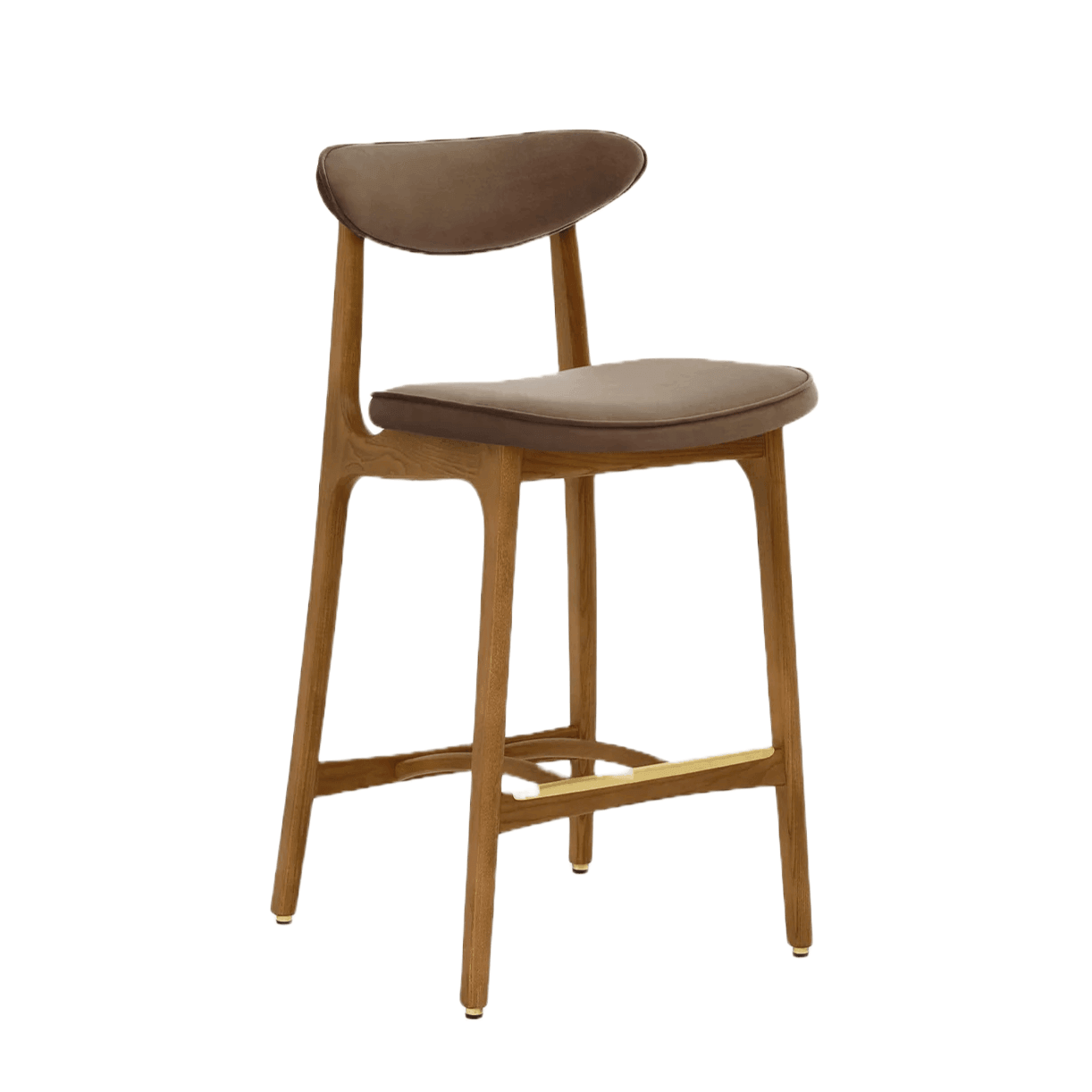
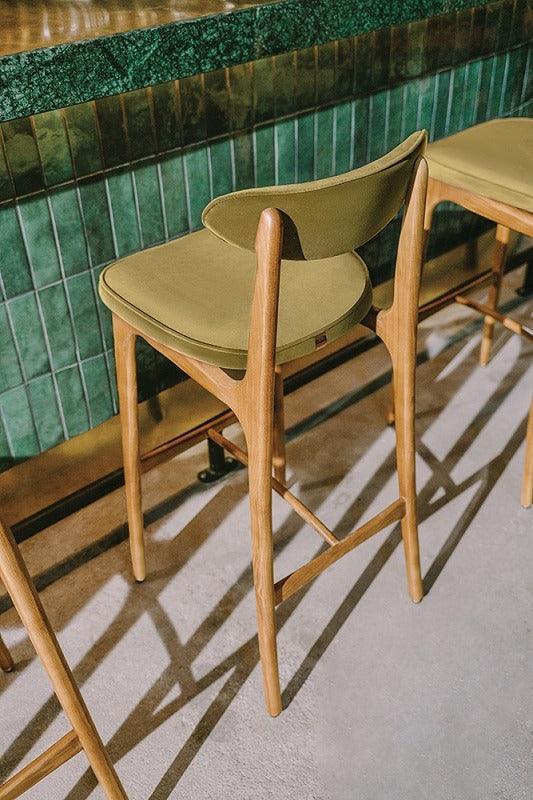
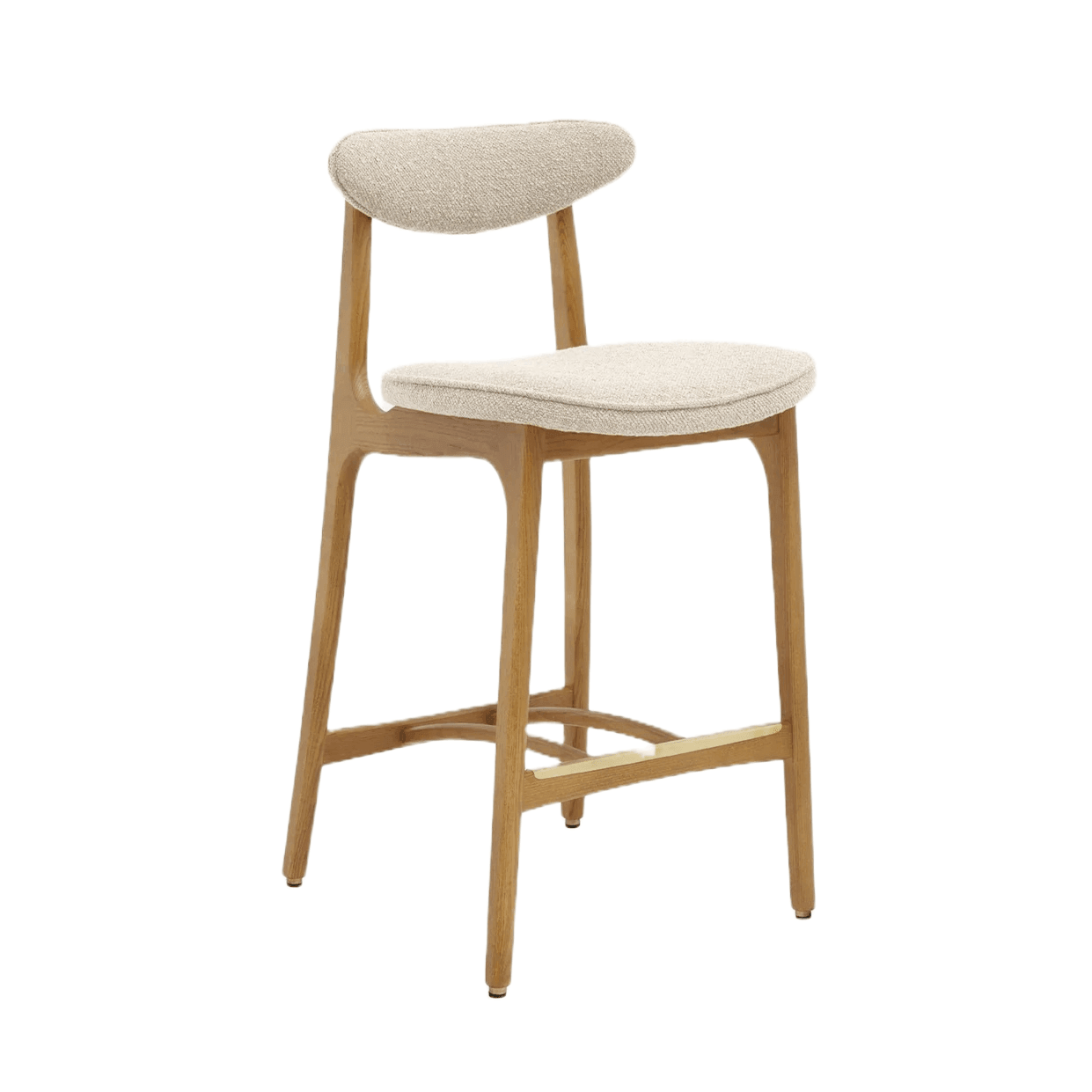
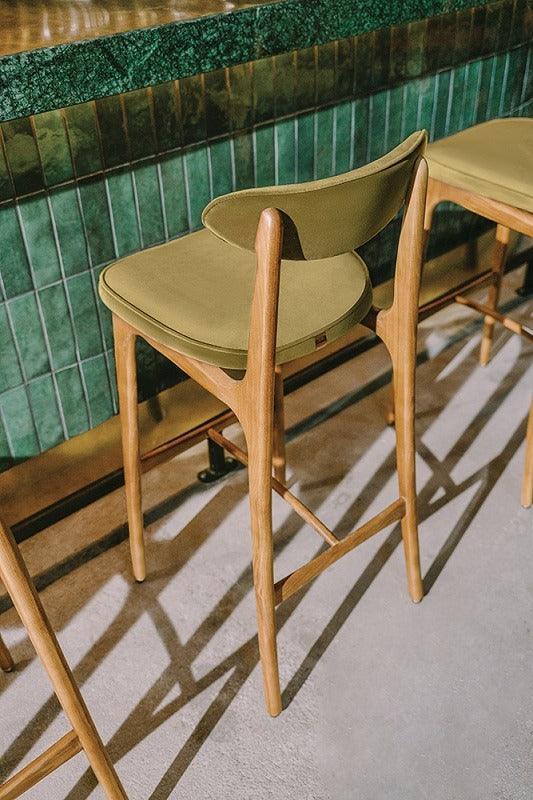
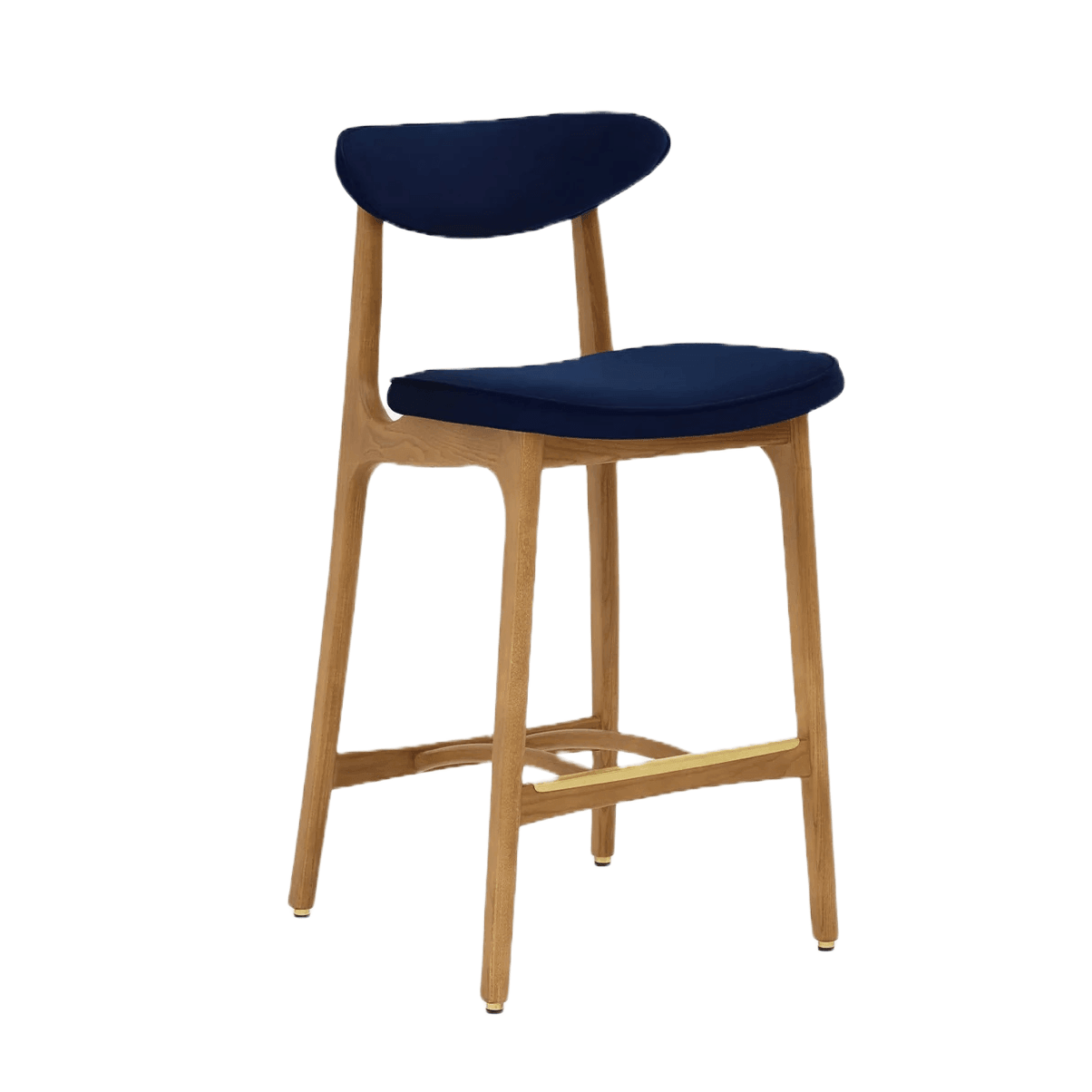
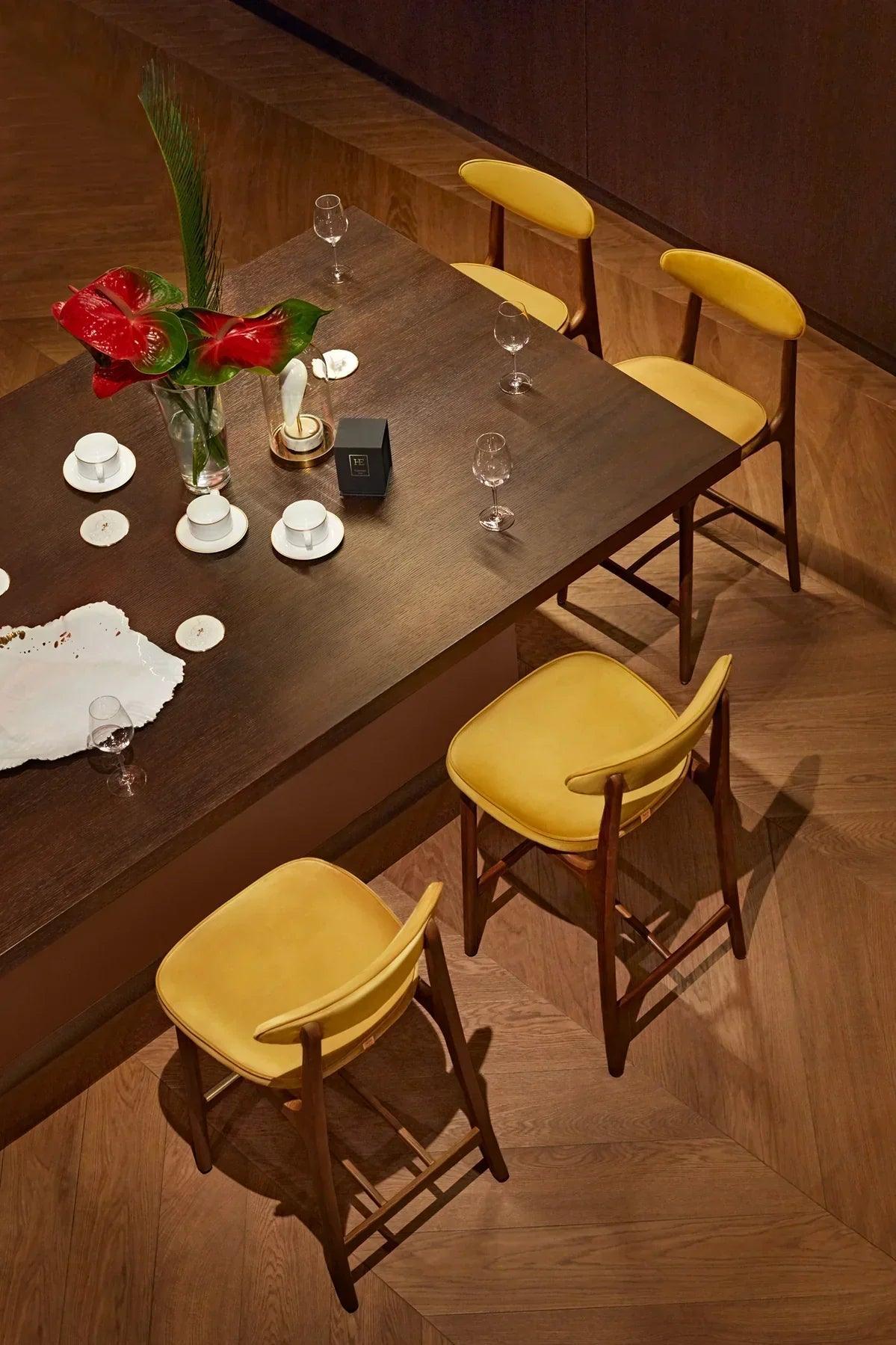
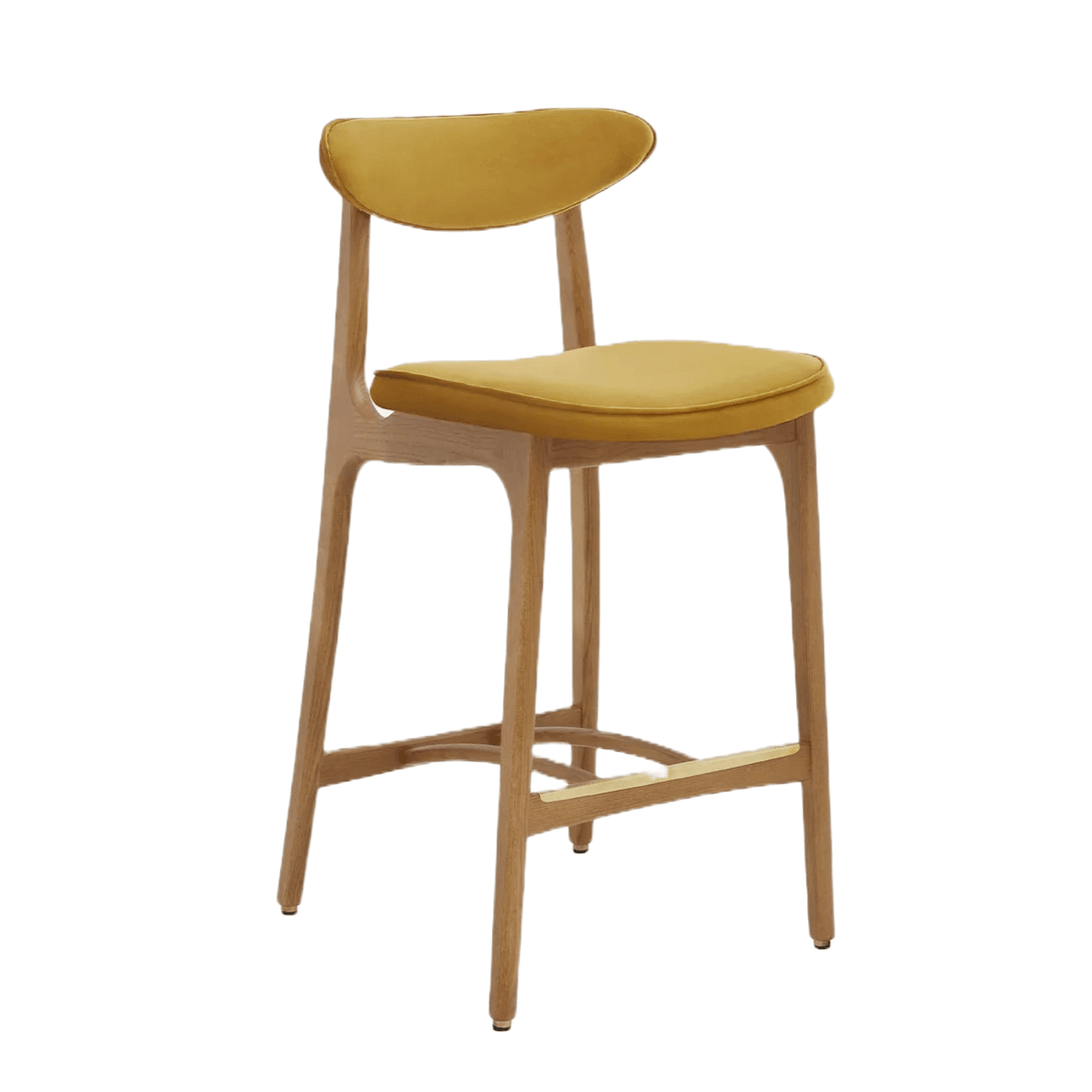
A bar stool is a piece of furniture where one often makes a common mistake: choosing the wrong height. A difference of ten centimeters determines whether you sit comfortably at the island or with your knees pressed against the cabinetry. Below, you will find guidelines for selection, and you can view all models in the collection of bar stools and counter chairs.
Step 1: Measure the Countertop
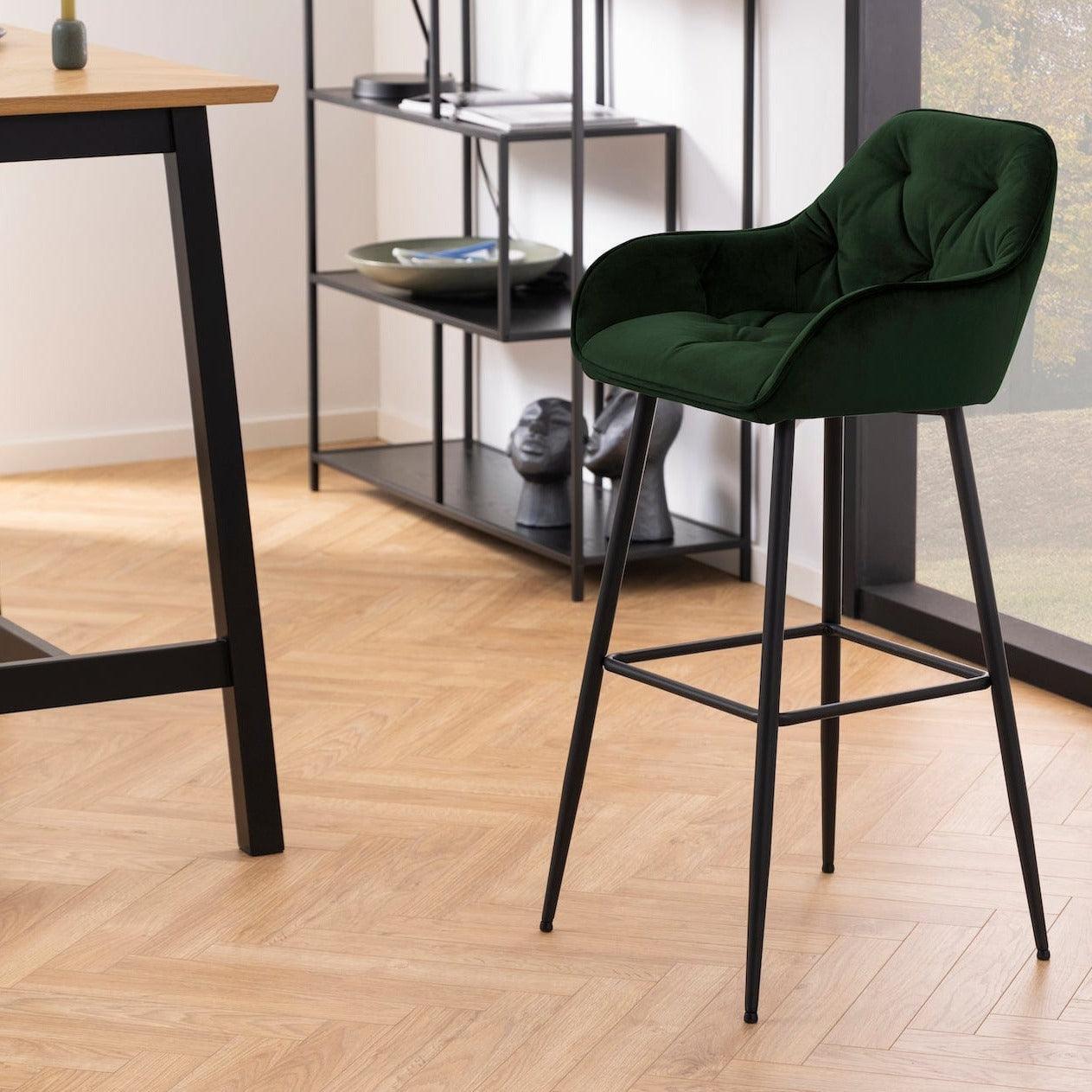
The starting point is the height of the countertop, not the appearance of the stool. Measure the distance from the floor to the top surface of the countertop and subtract 25–30 cm – this is the desired seat height.
Typical values: a kitchen island at 90–95 cm corresponds to a stool of about 65 cm, a home bar at 105–110 cm corresponds to a stool of 75–80 cm, and a low countertop at 75–85 cm corresponds to a model of 45–55 cm. For a standard dining table, a bar stool will be too high – regular chairs are needed there.
Step 2: Check the Counter Overhang
A frequently overlooked detail. If the countertop does not extend beyond the front of the cabinetry by at least 25–30 cm, your knees will hit the cabinets, even with the correctly chosen stool height.
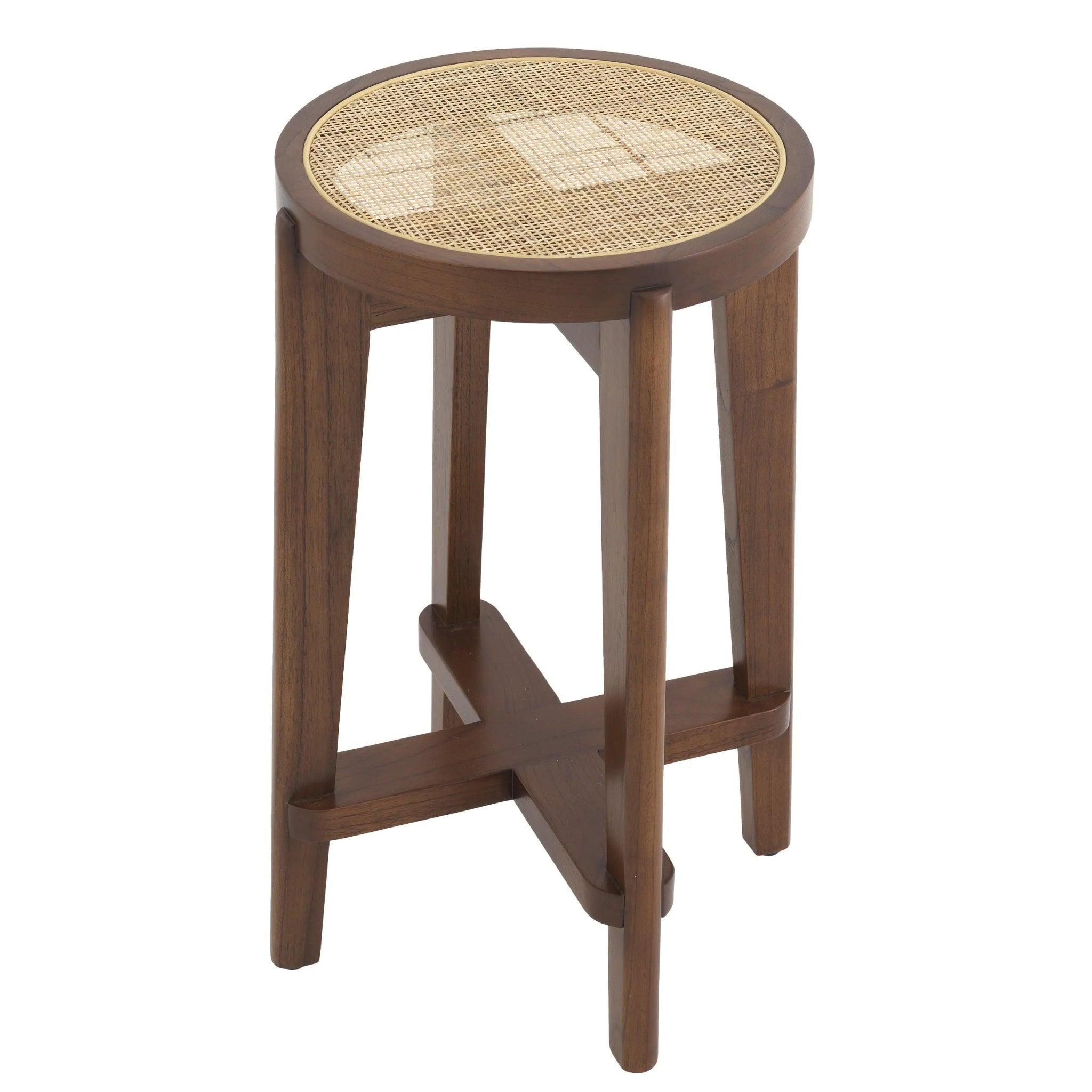
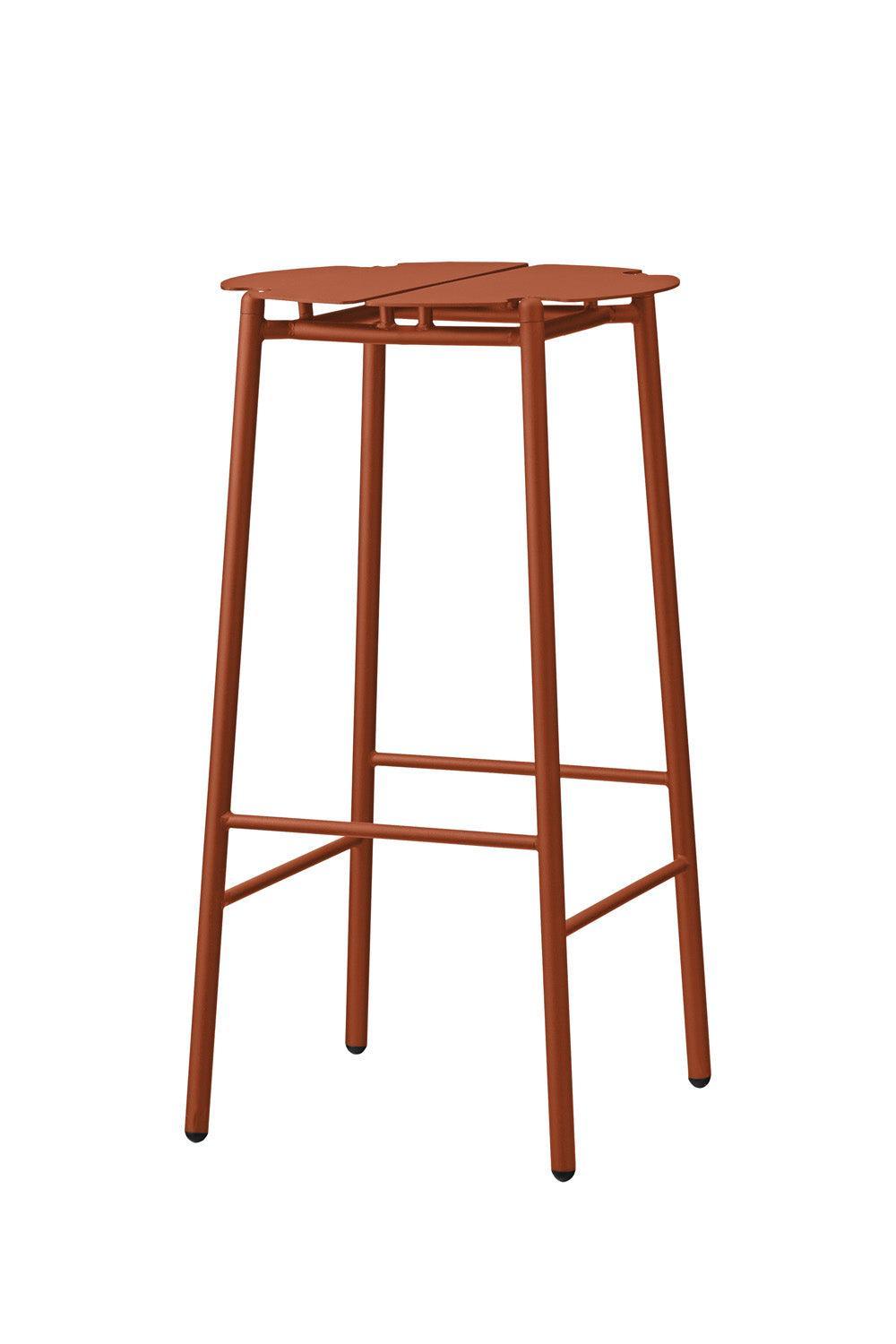
With too little overhang, it’s better to choose a model without a backrest and with a narrower seat, allowing you to sit sideways.
Step 3: Count the Seats
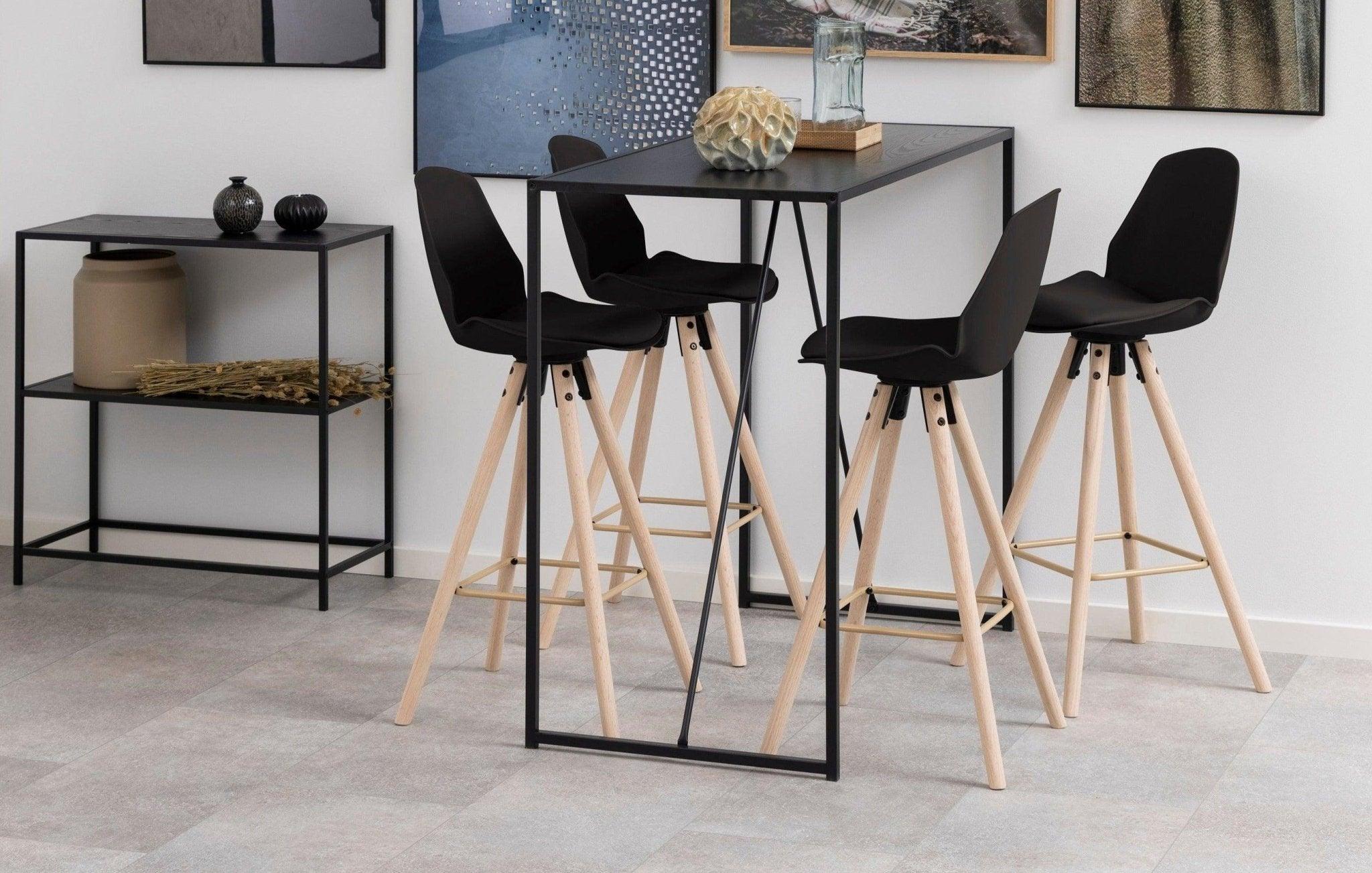
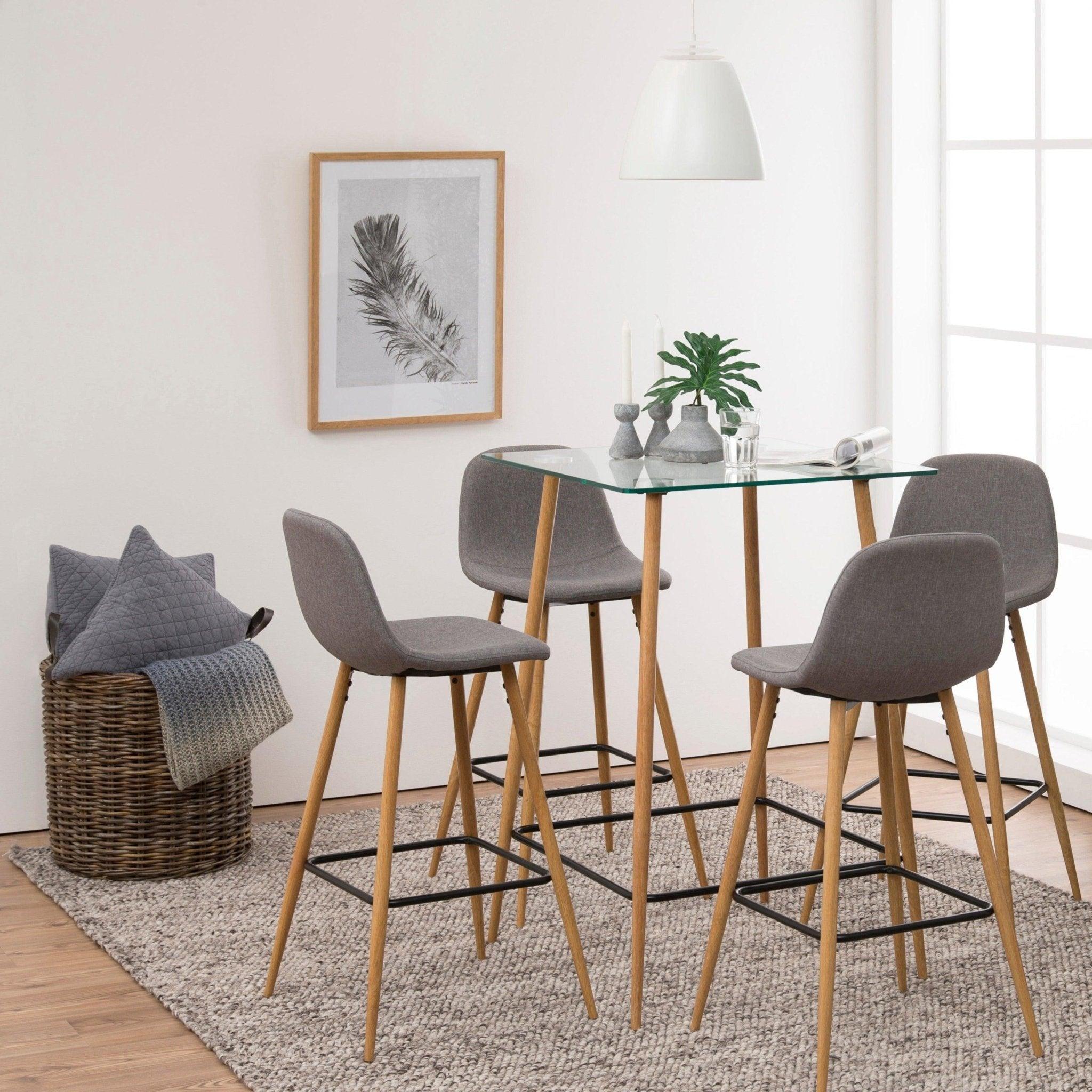
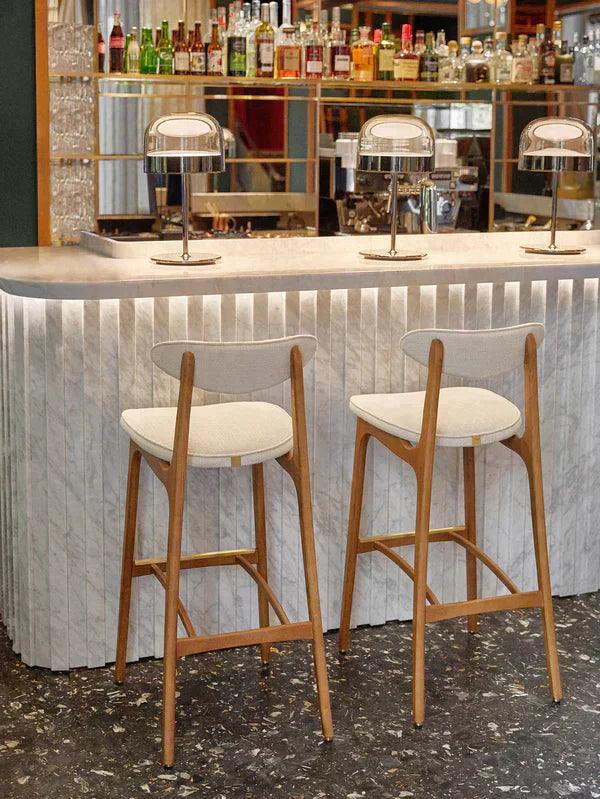
Assume about 60 cm of width per person at the counter. A 120 cm island will accommodate two stools, 180 cm – three, and 240 cm – four. With narrower spacing, seated individuals will interfere with each other.
If the stools are to be swivel, add a little extra space – when turning, they take up more room than just the width of the seat itself.
Step 4: Backrest, Footrest, Swivel
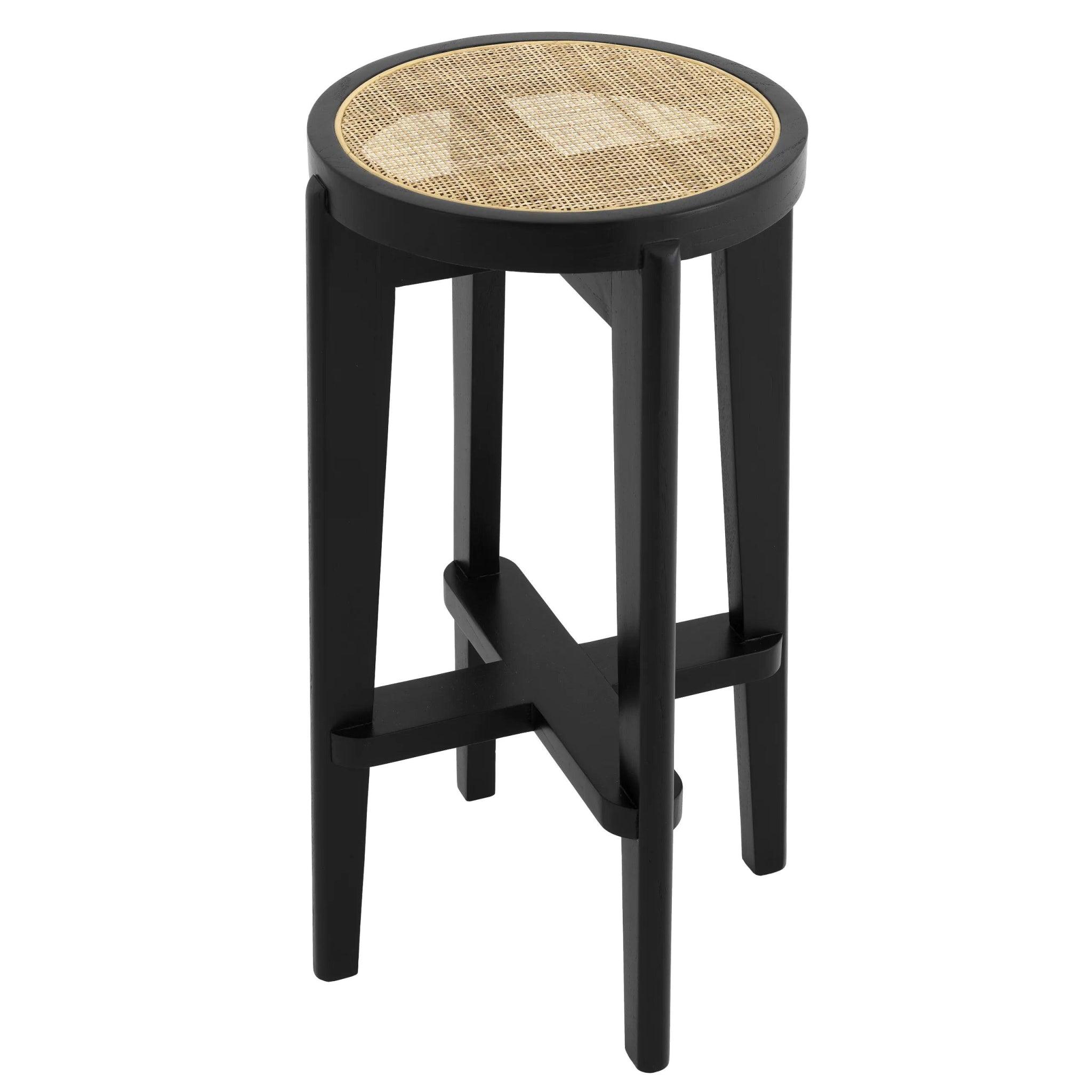
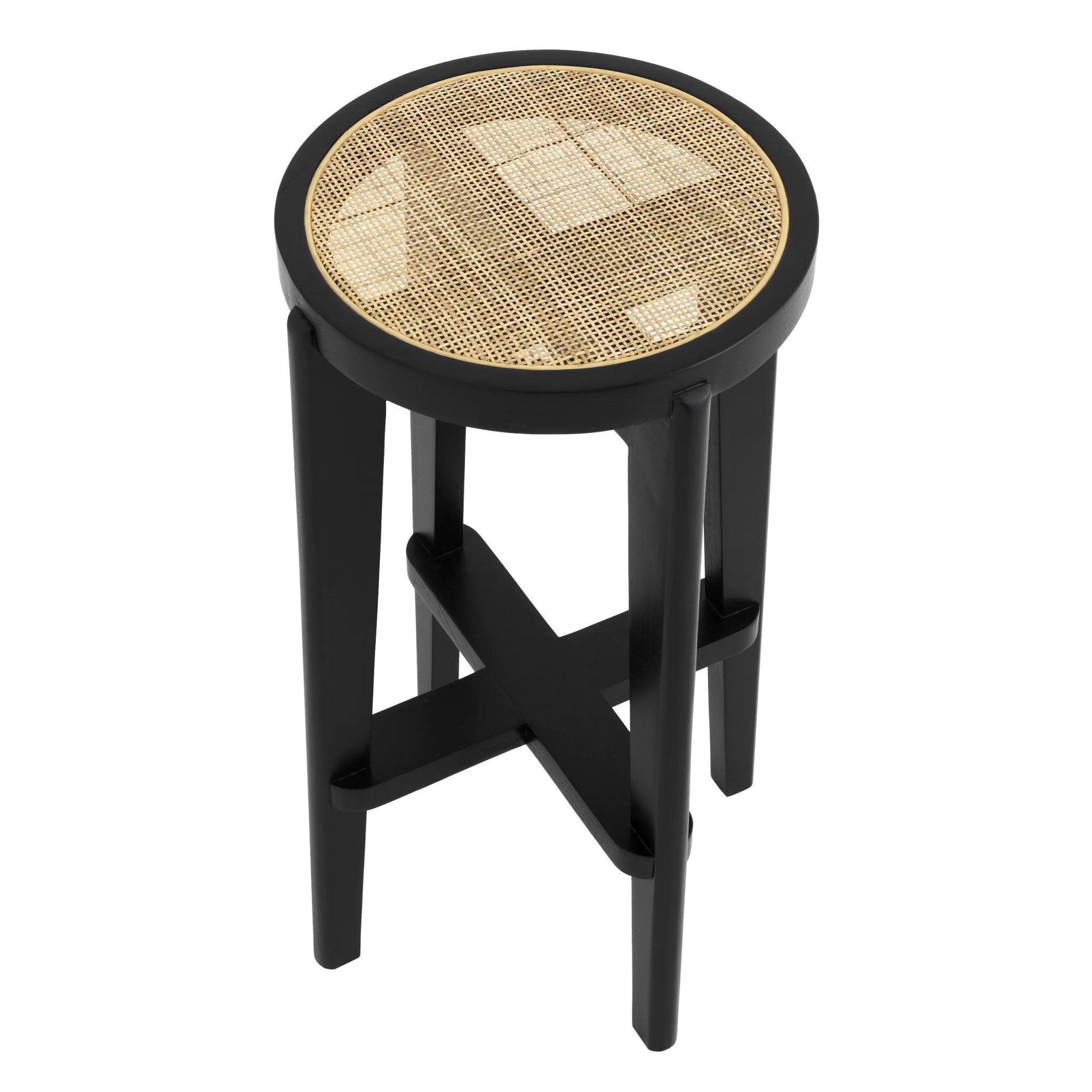
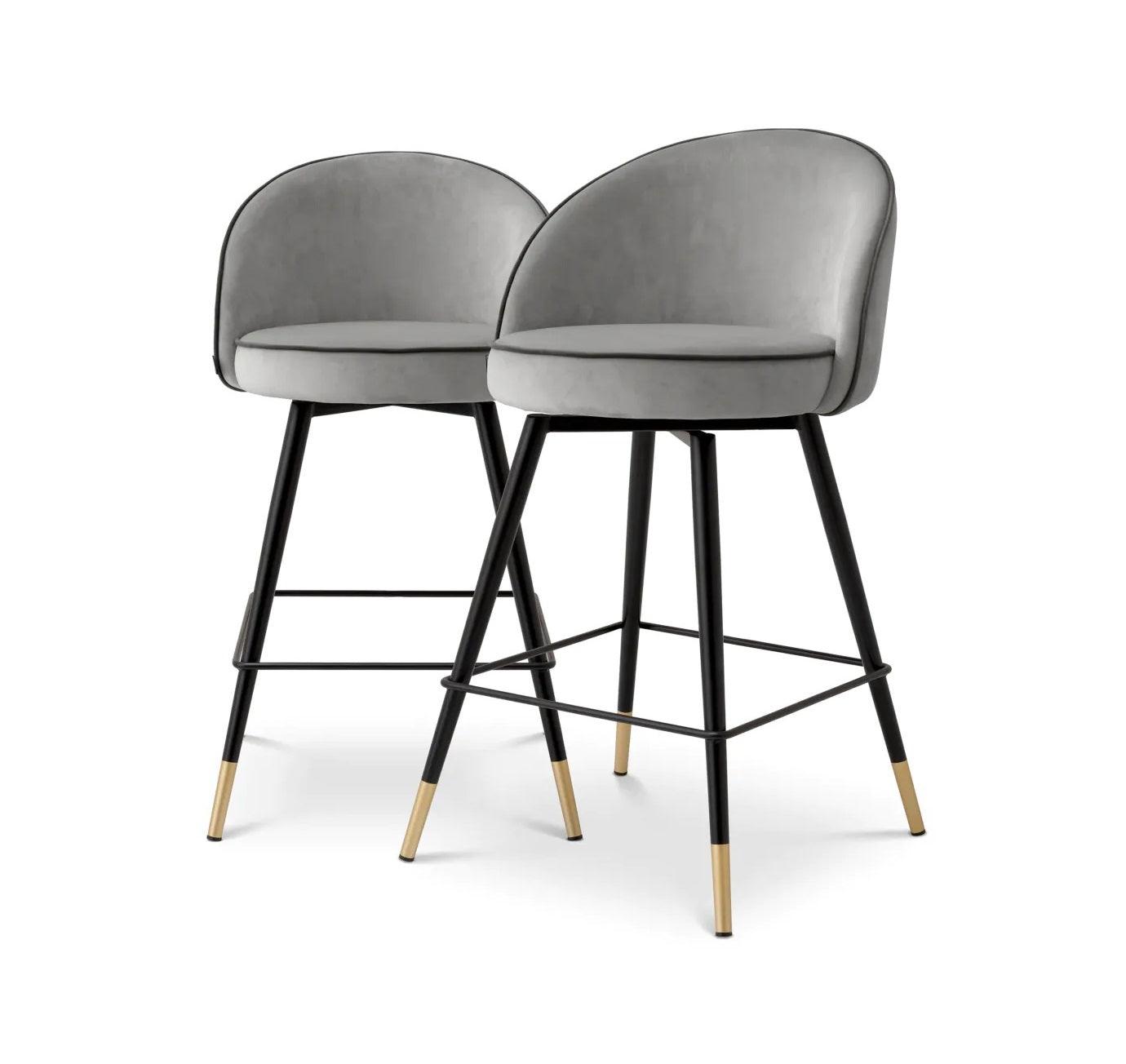
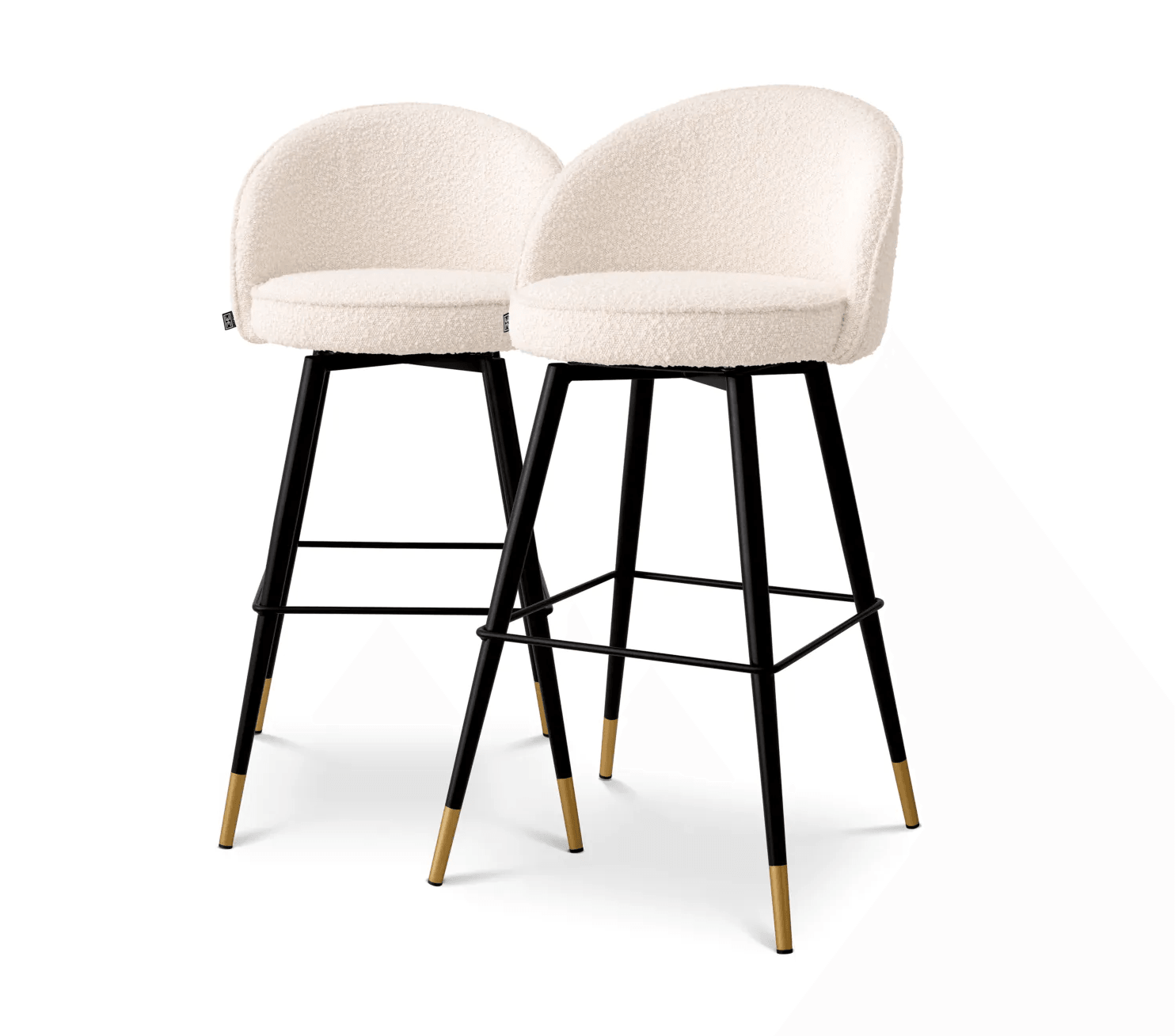
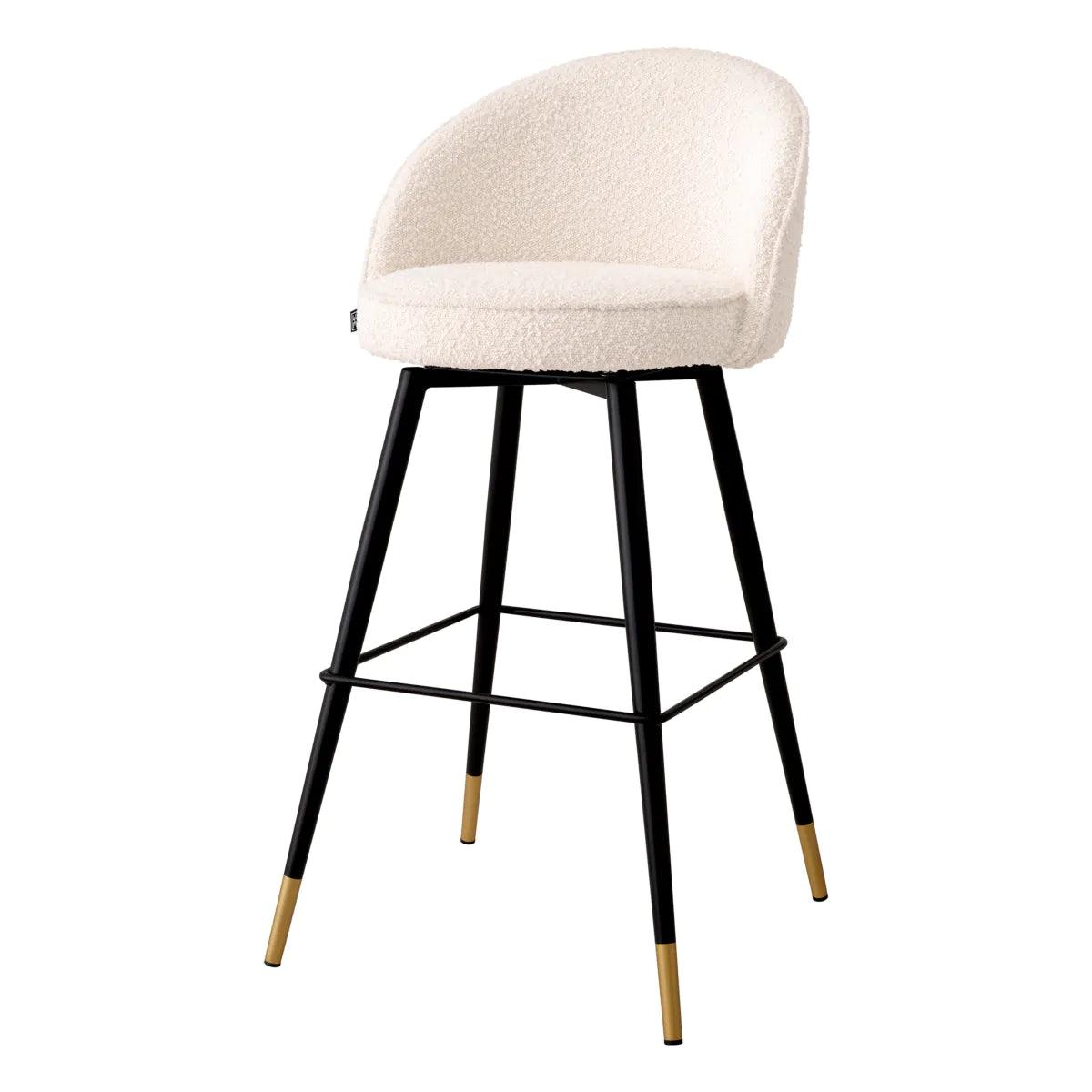
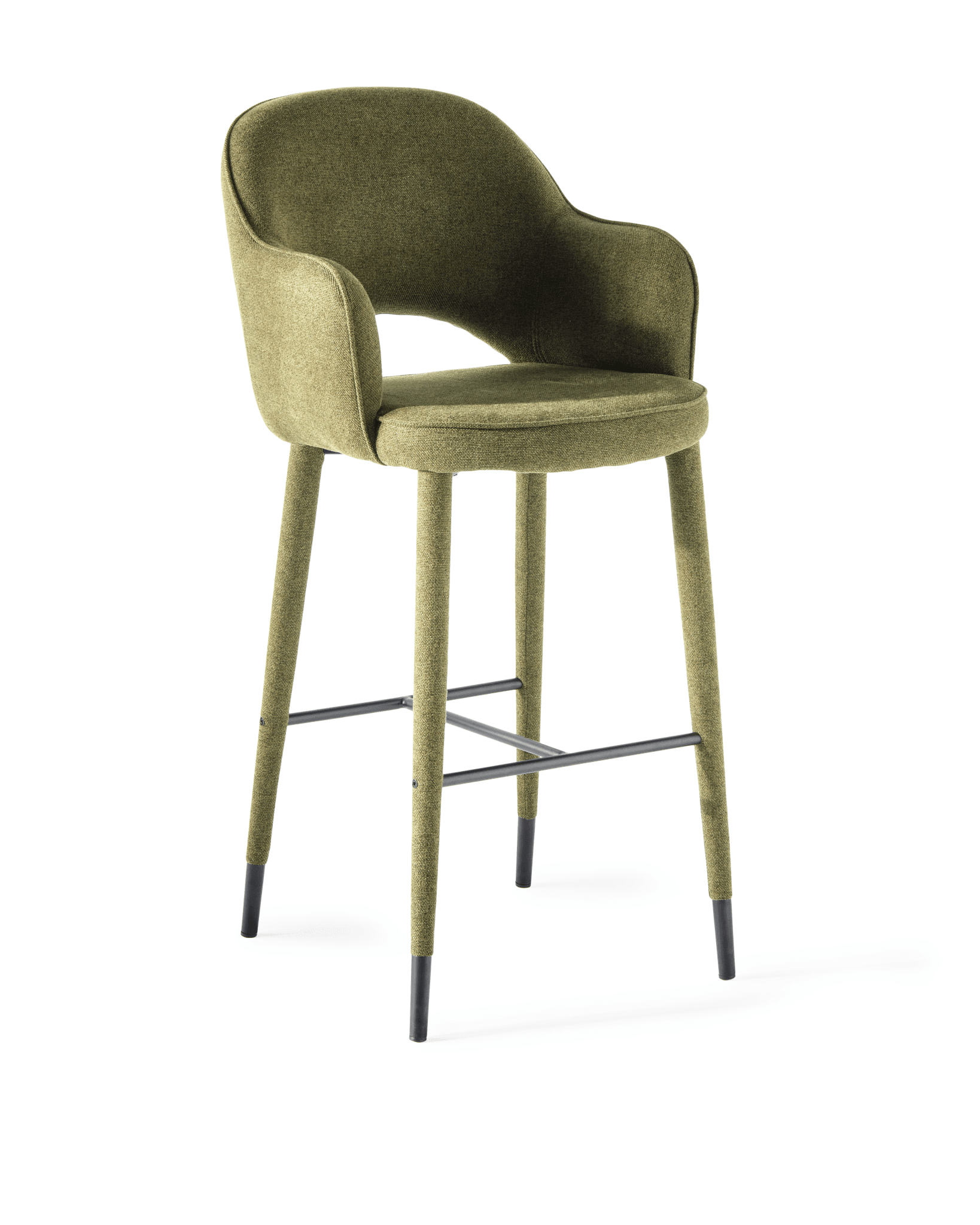
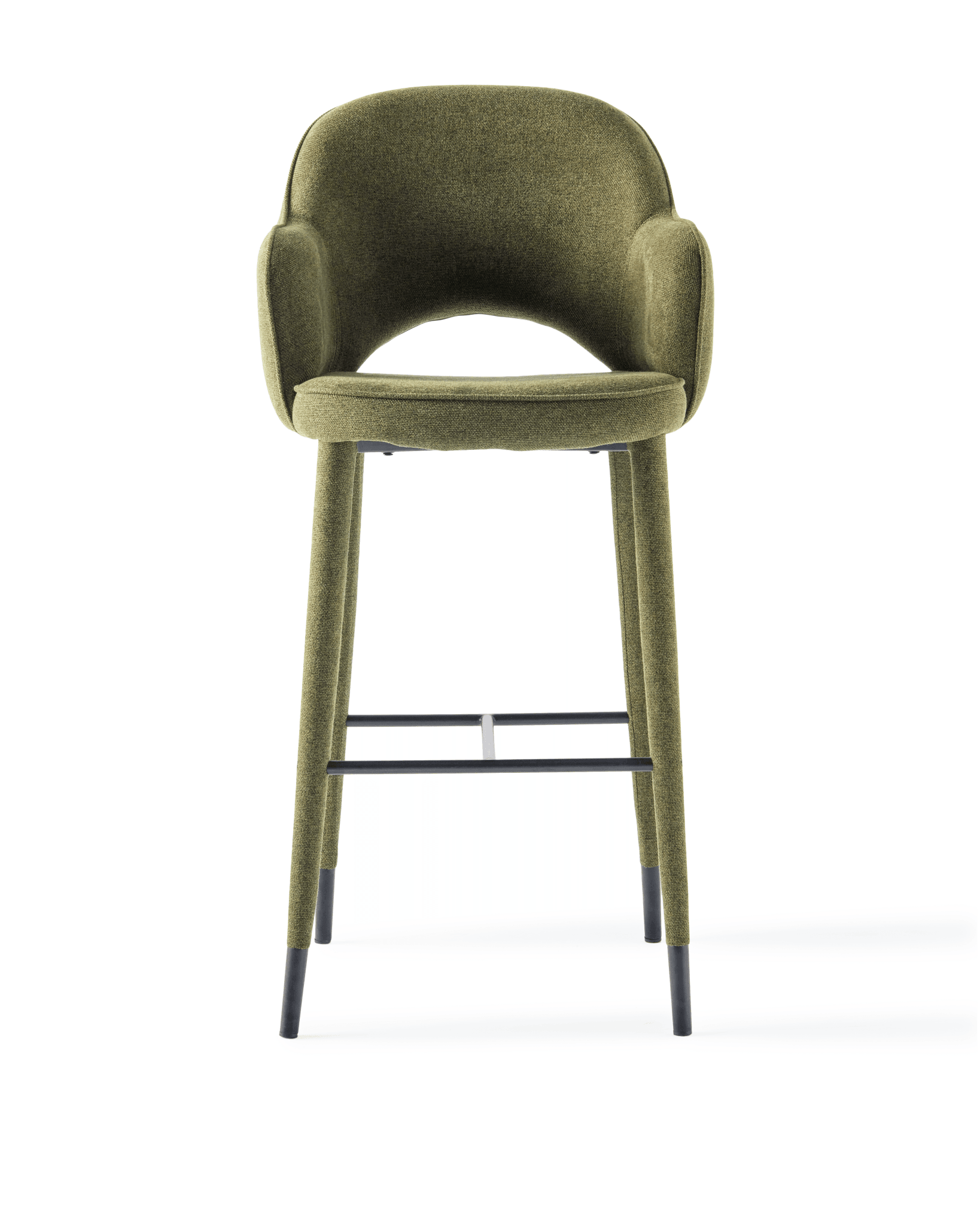
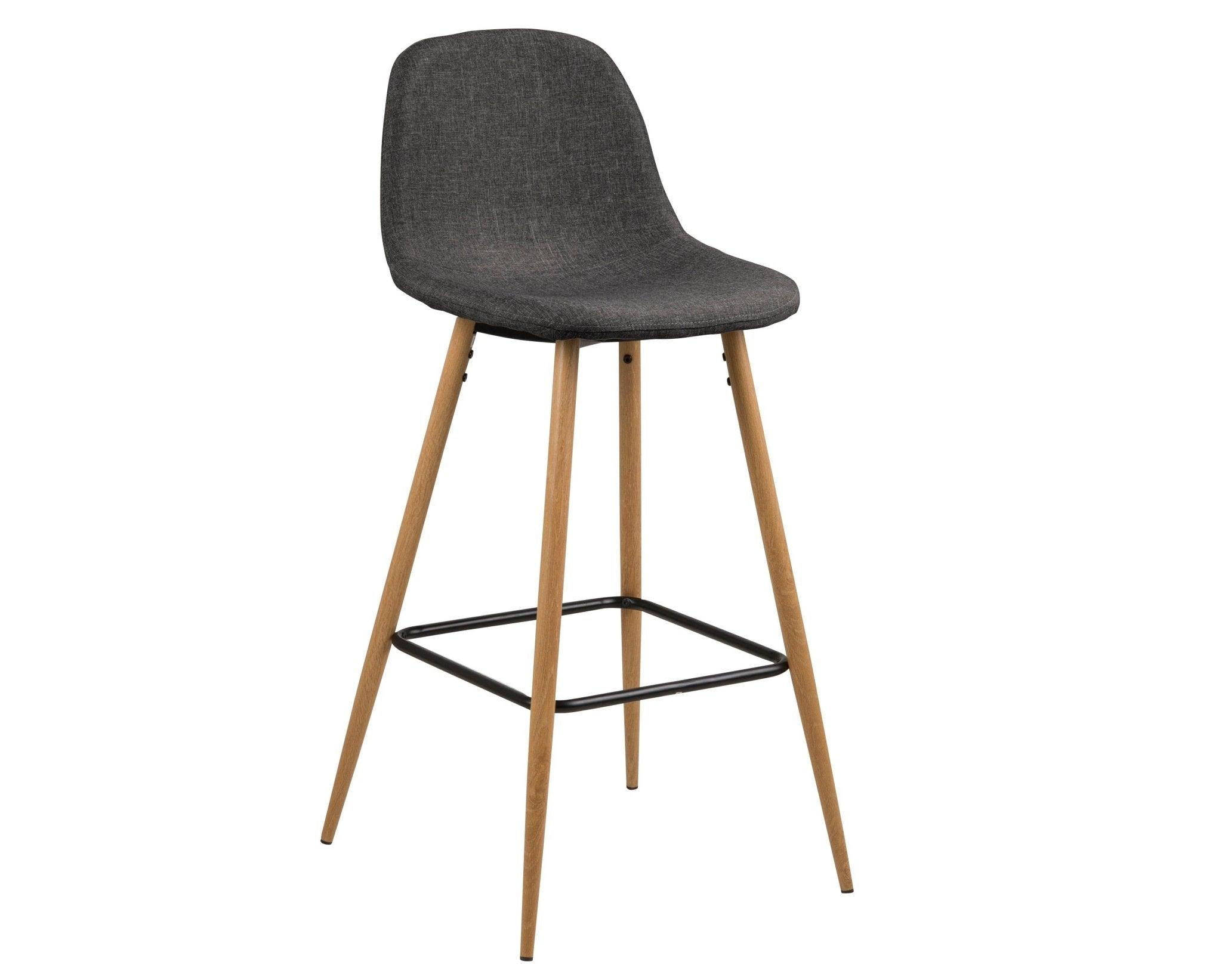
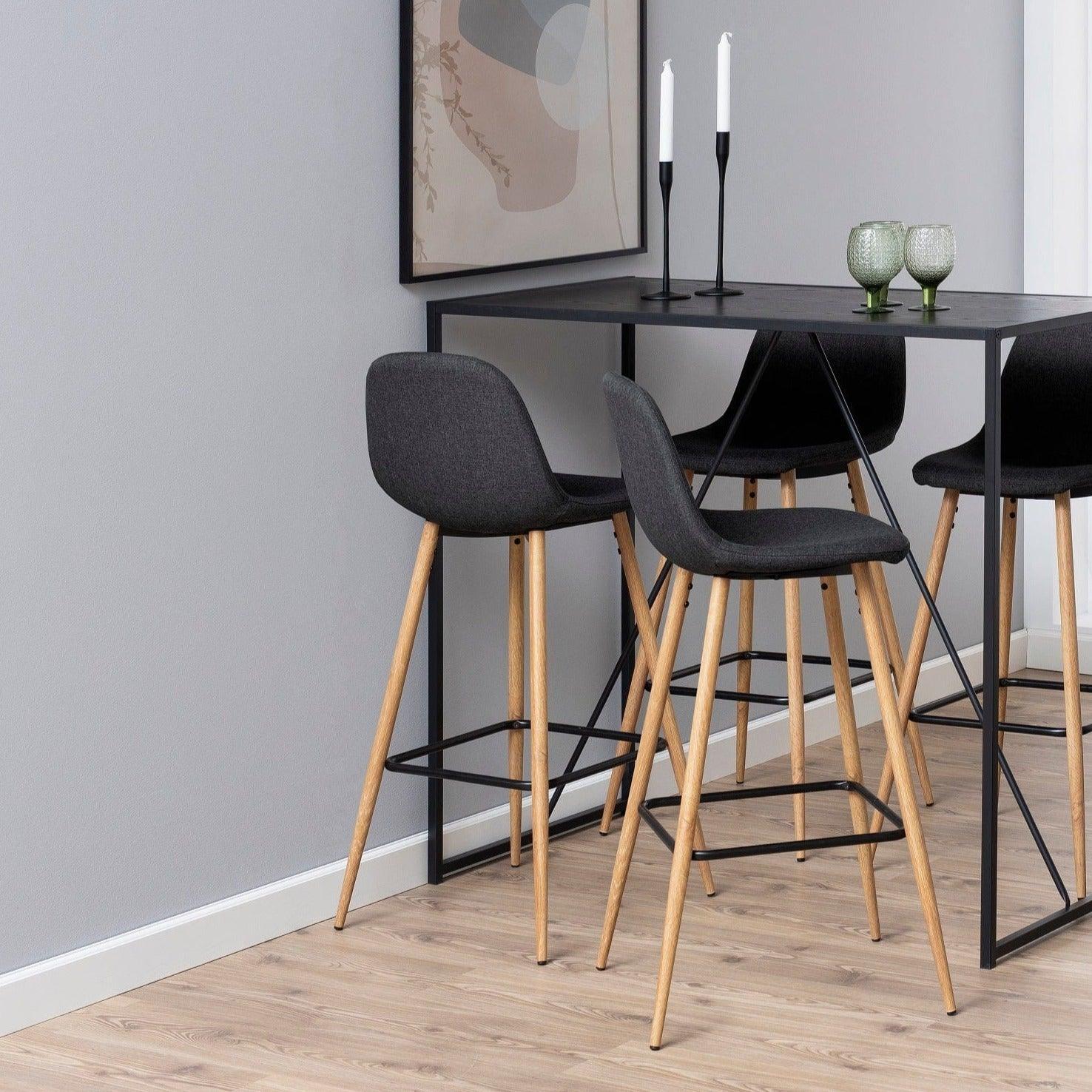
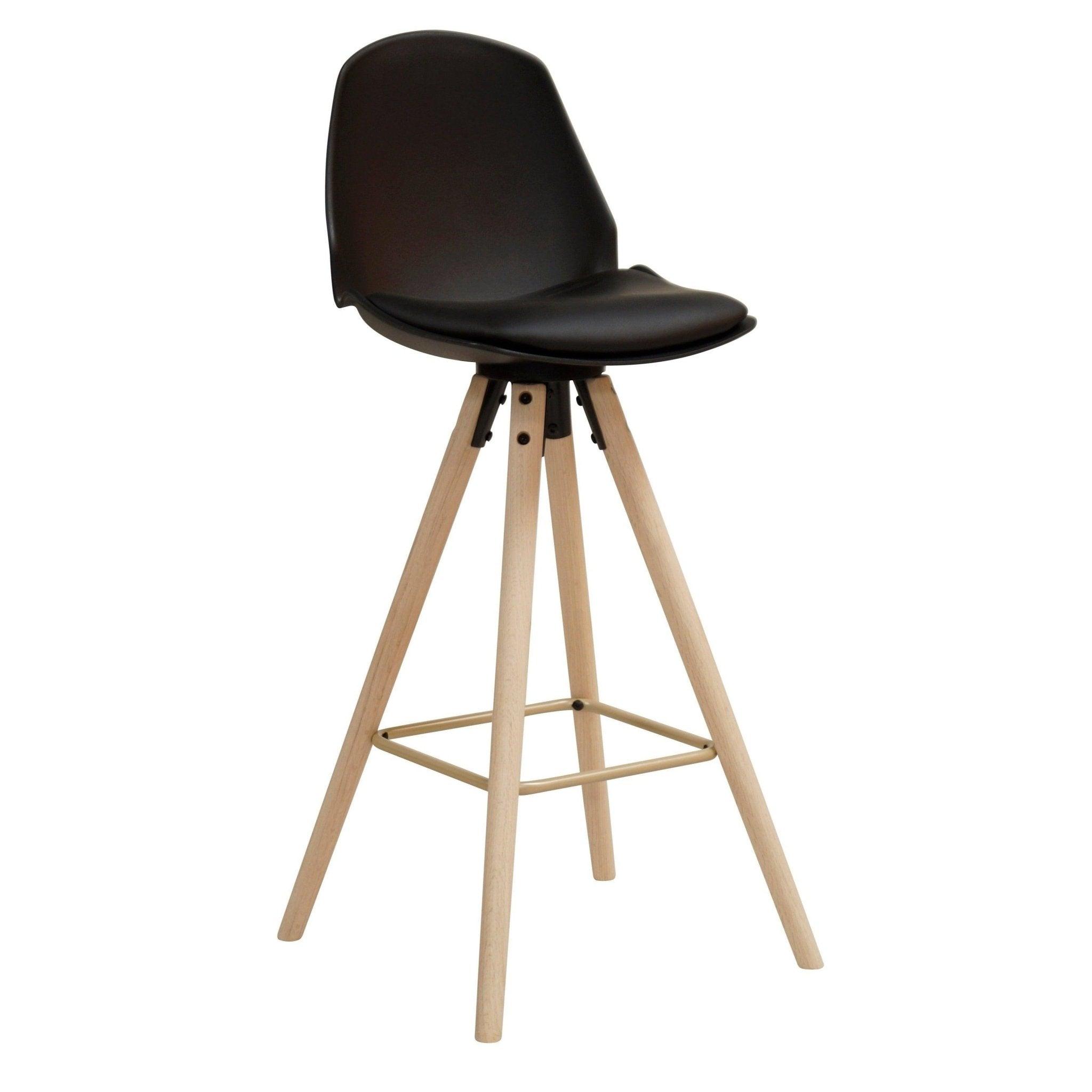
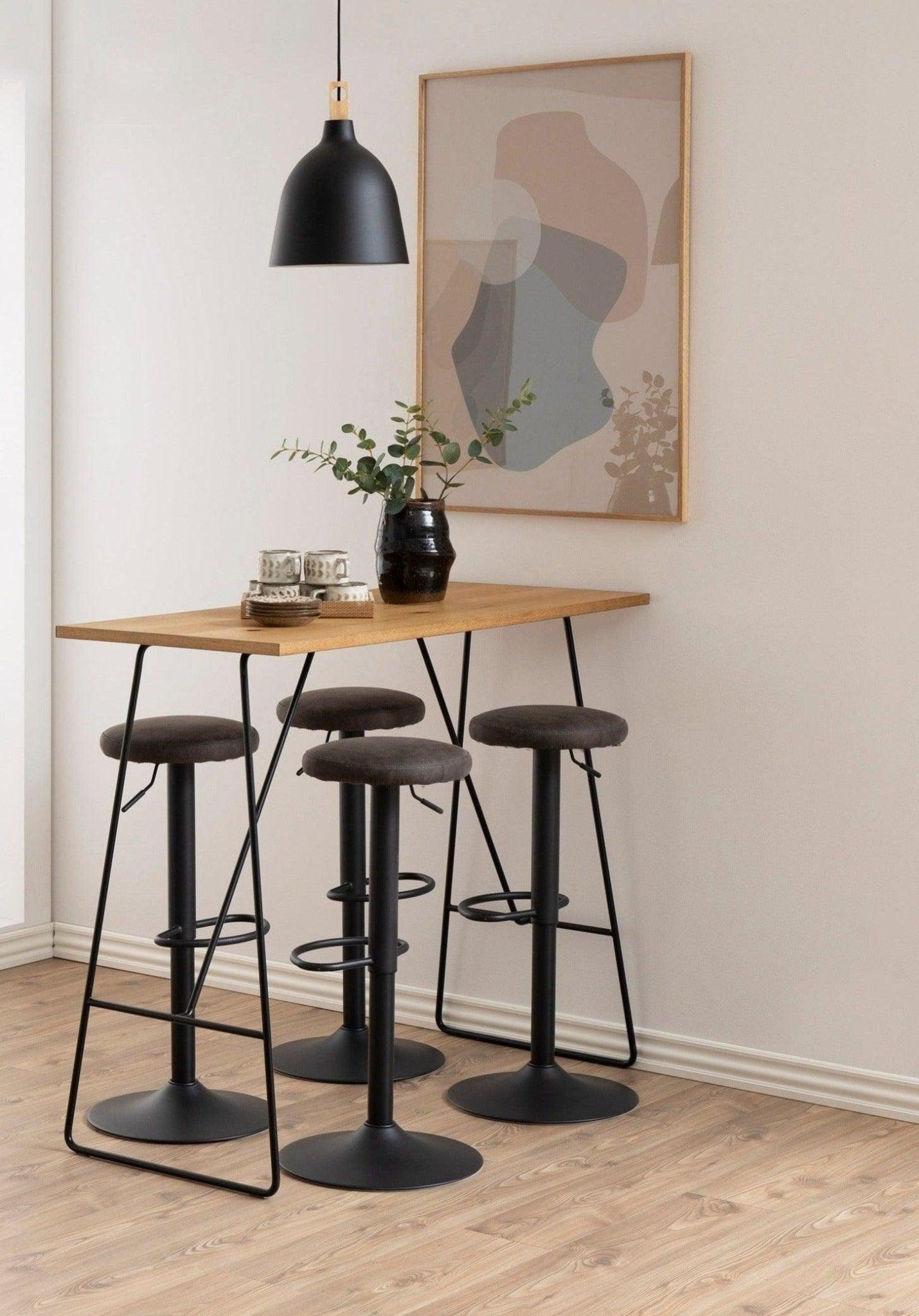
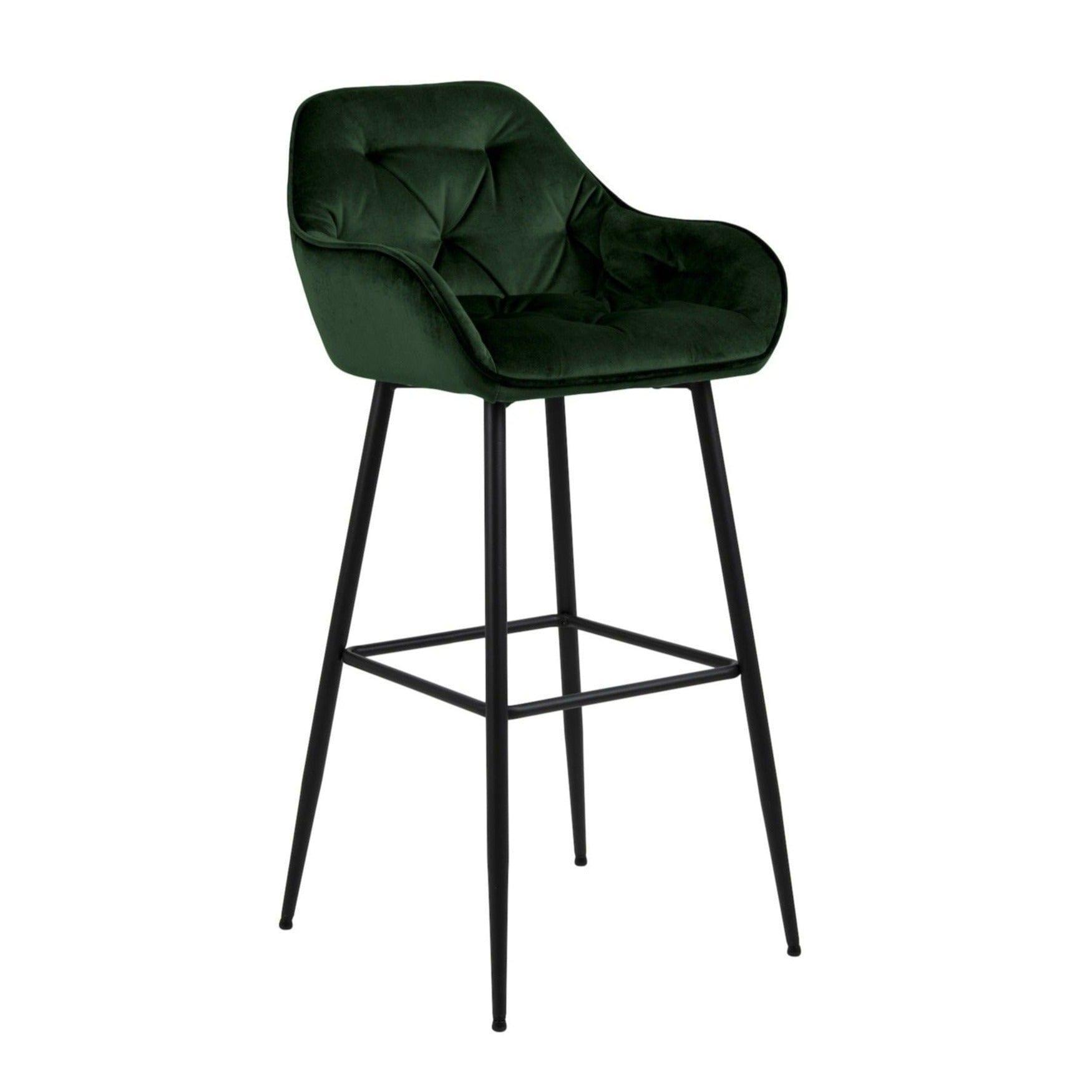
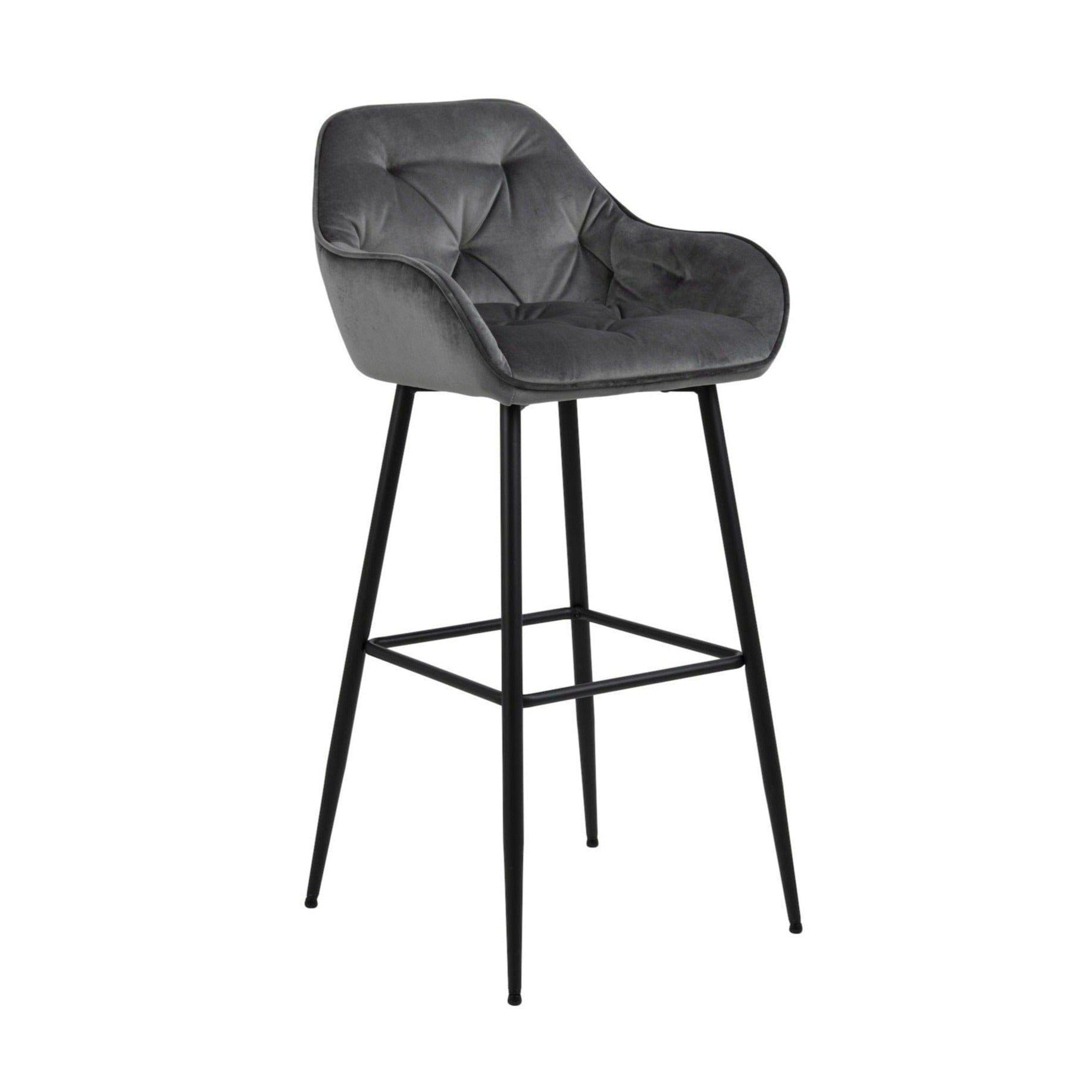
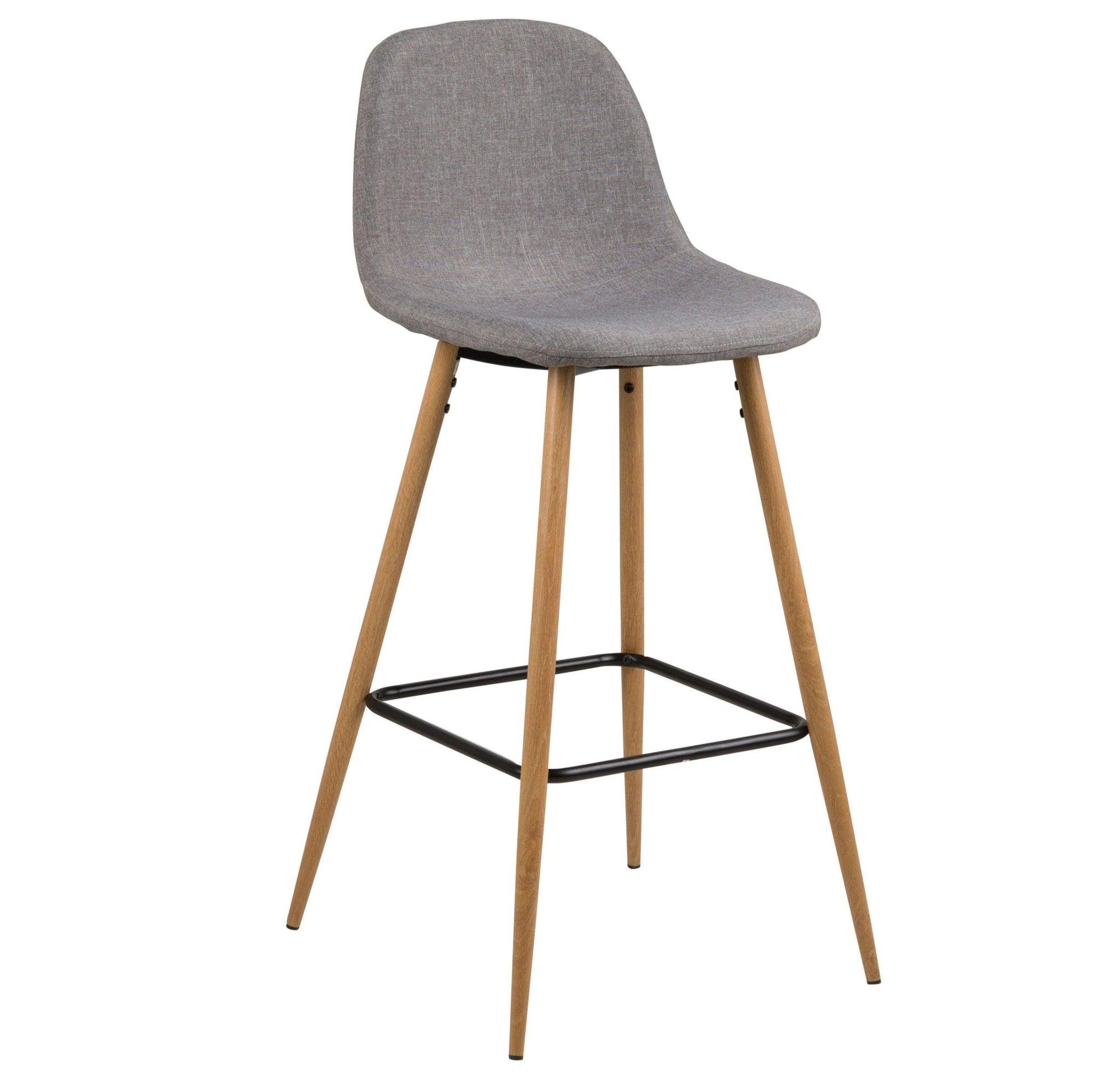
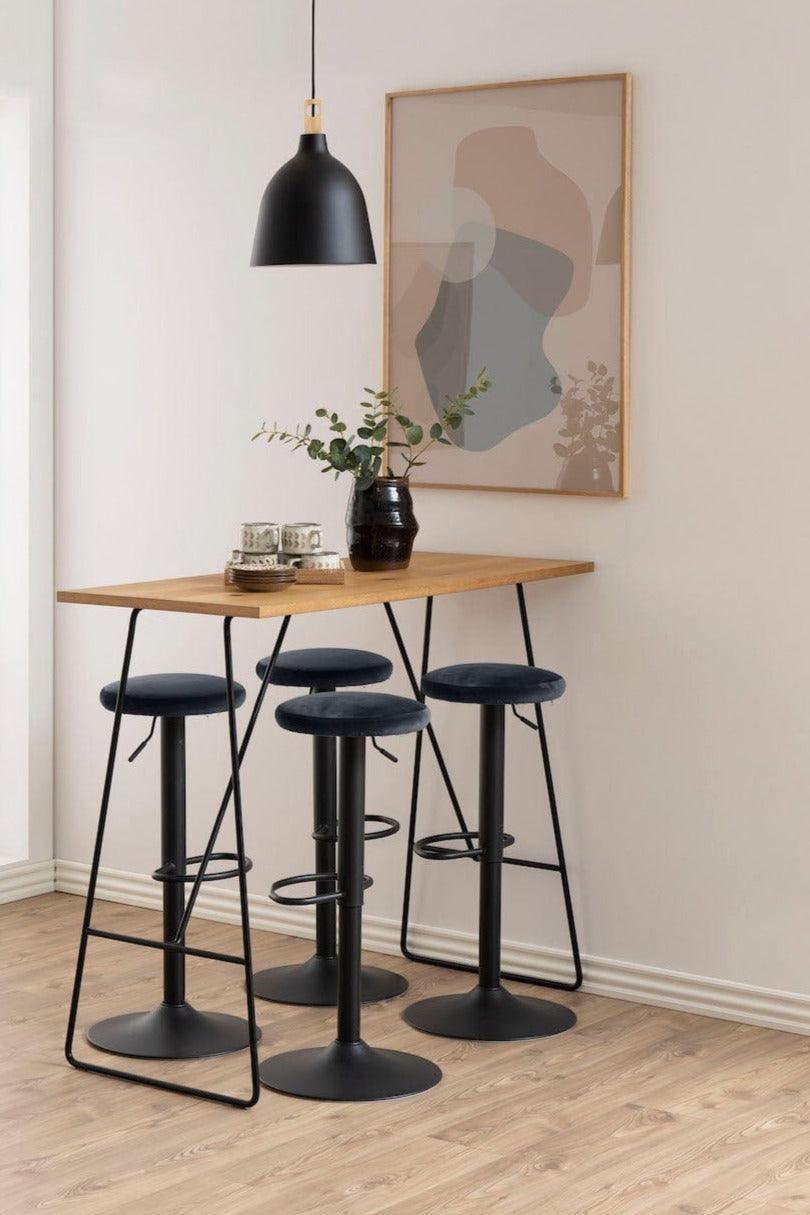
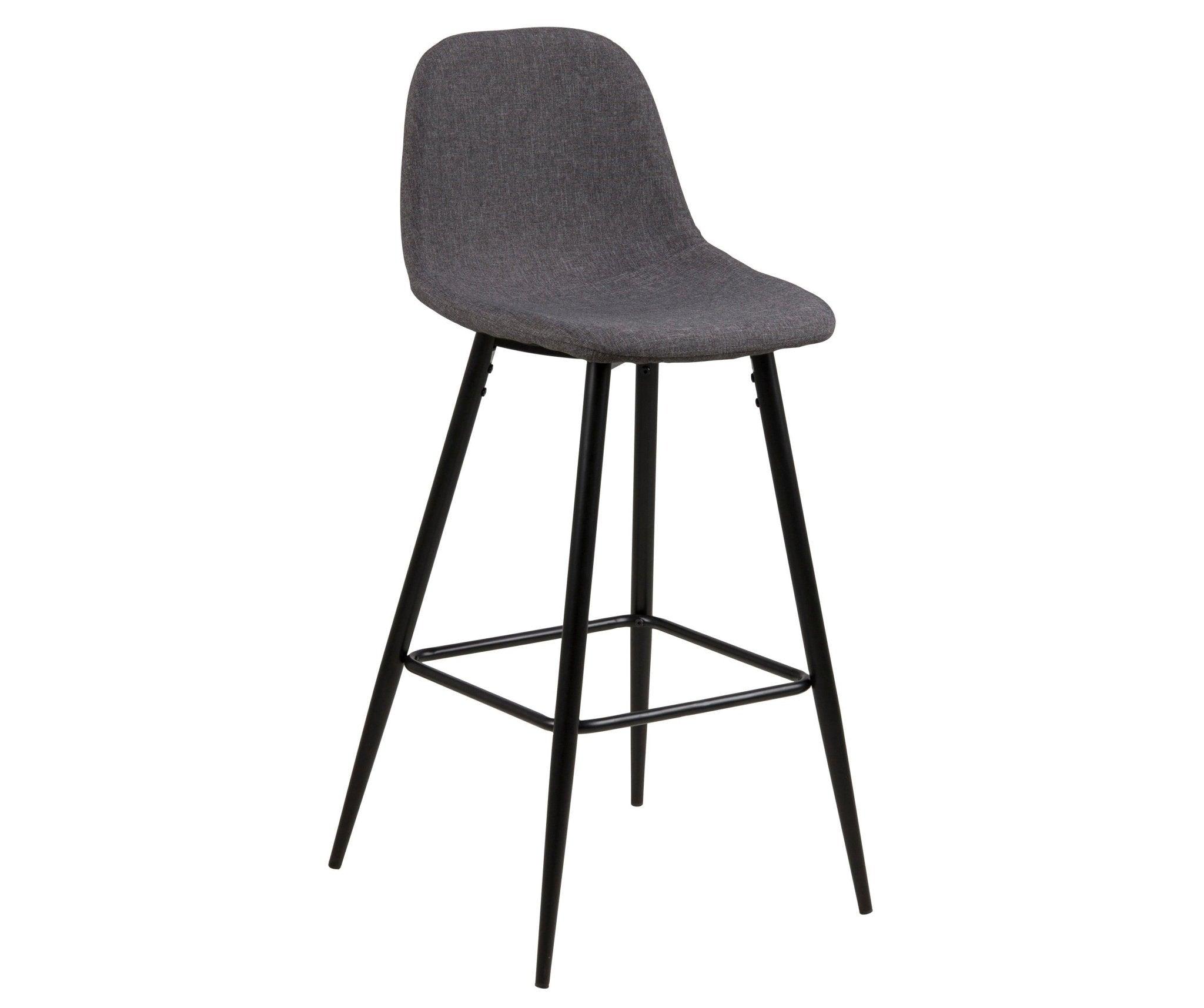
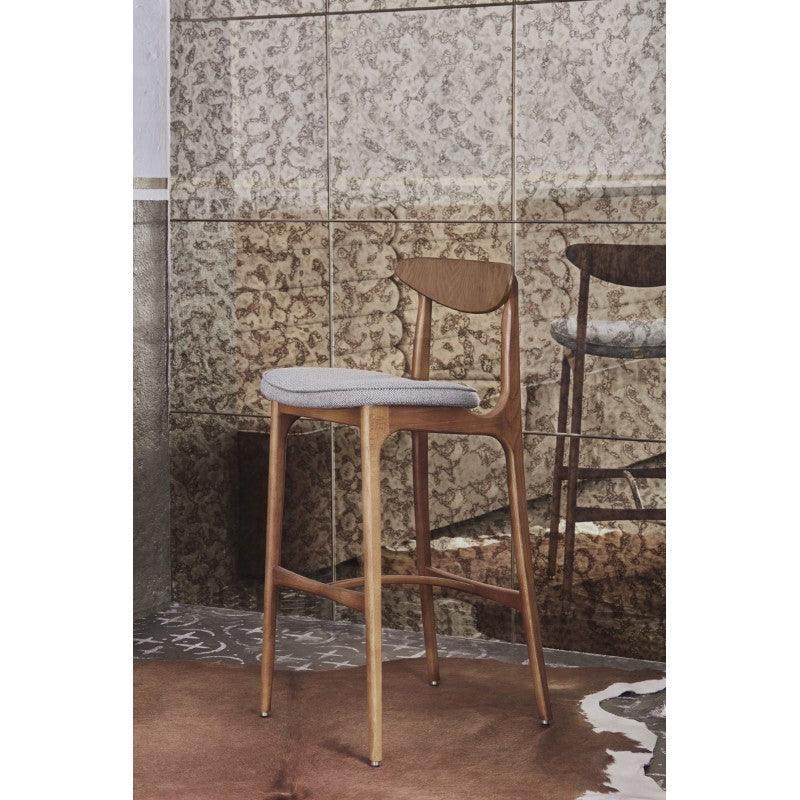
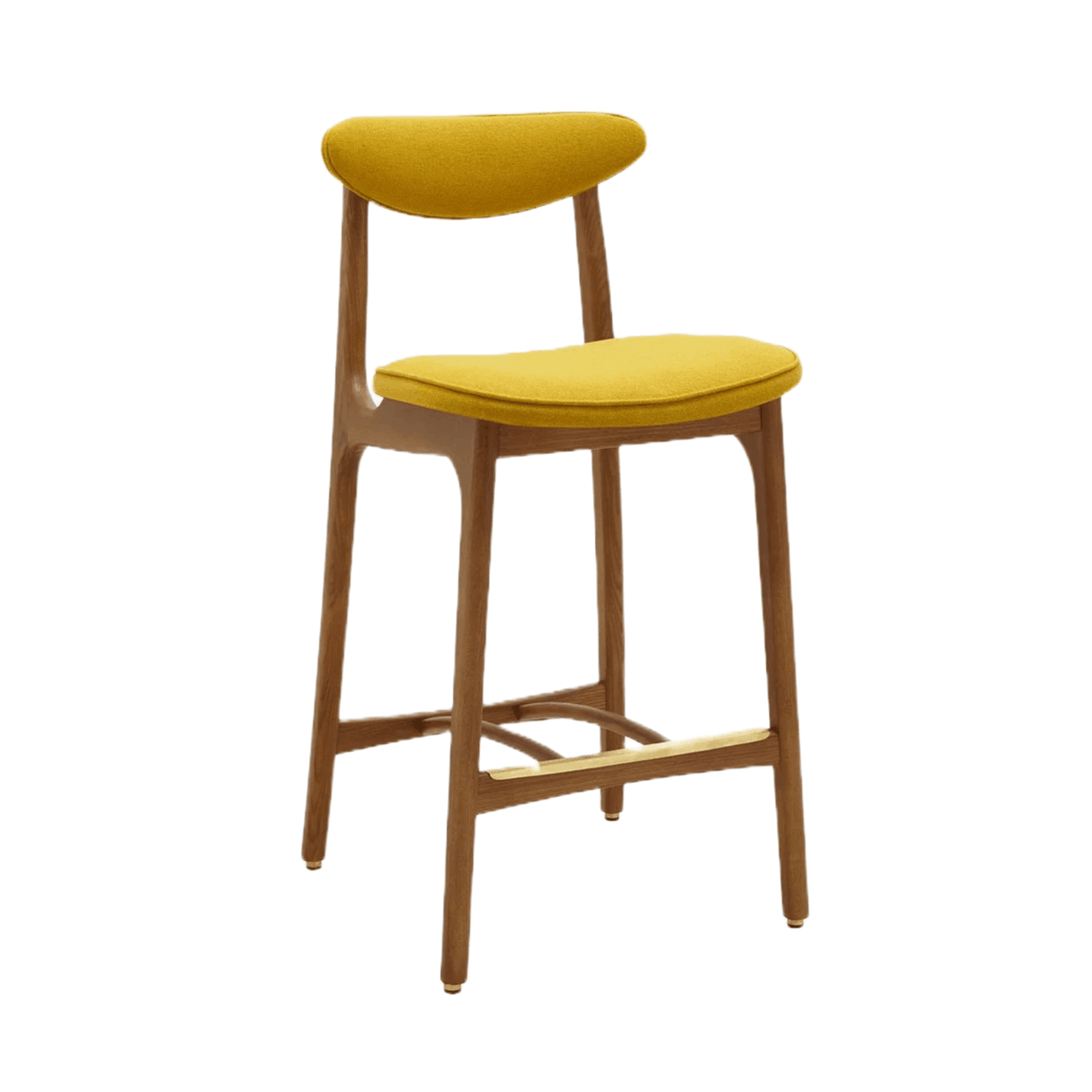
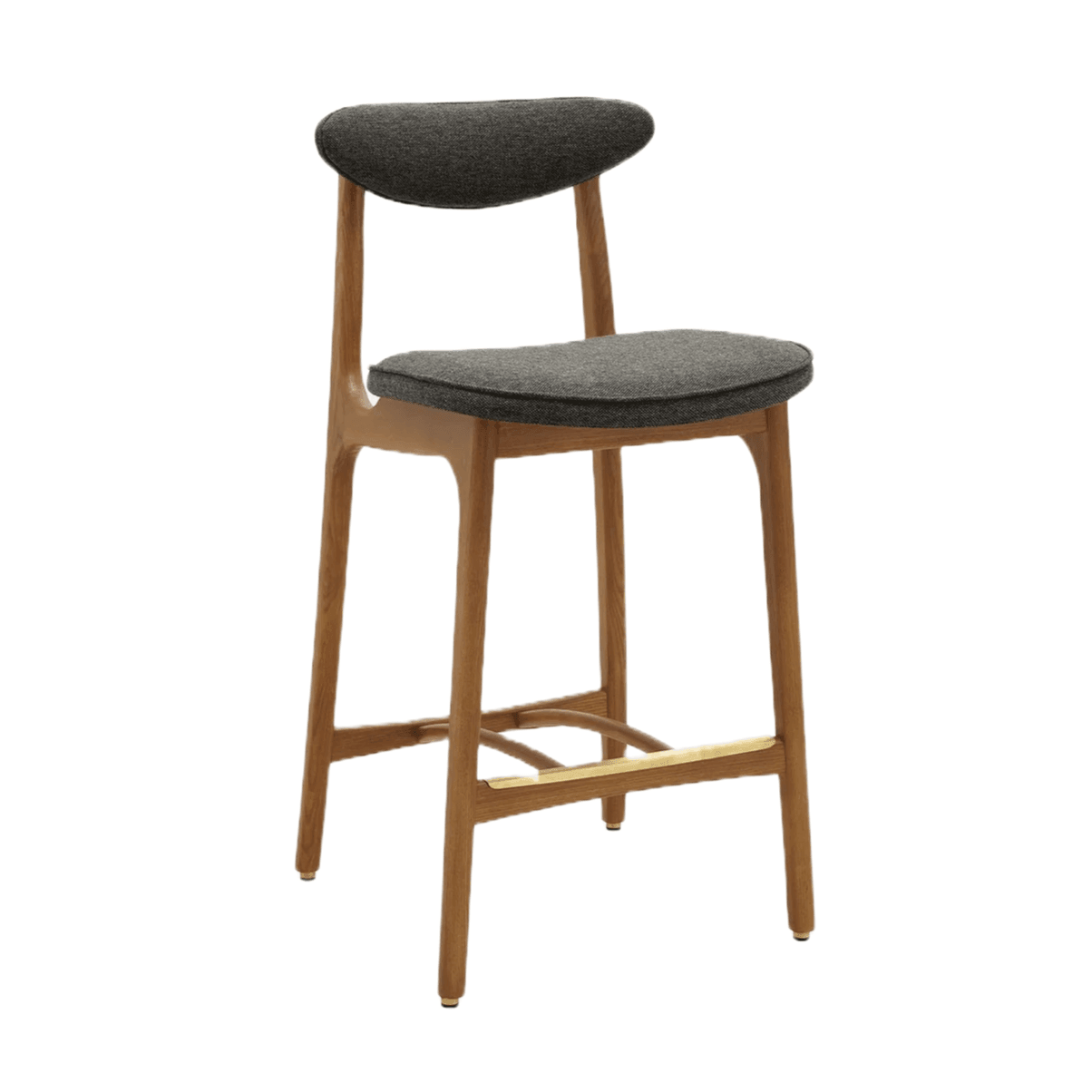
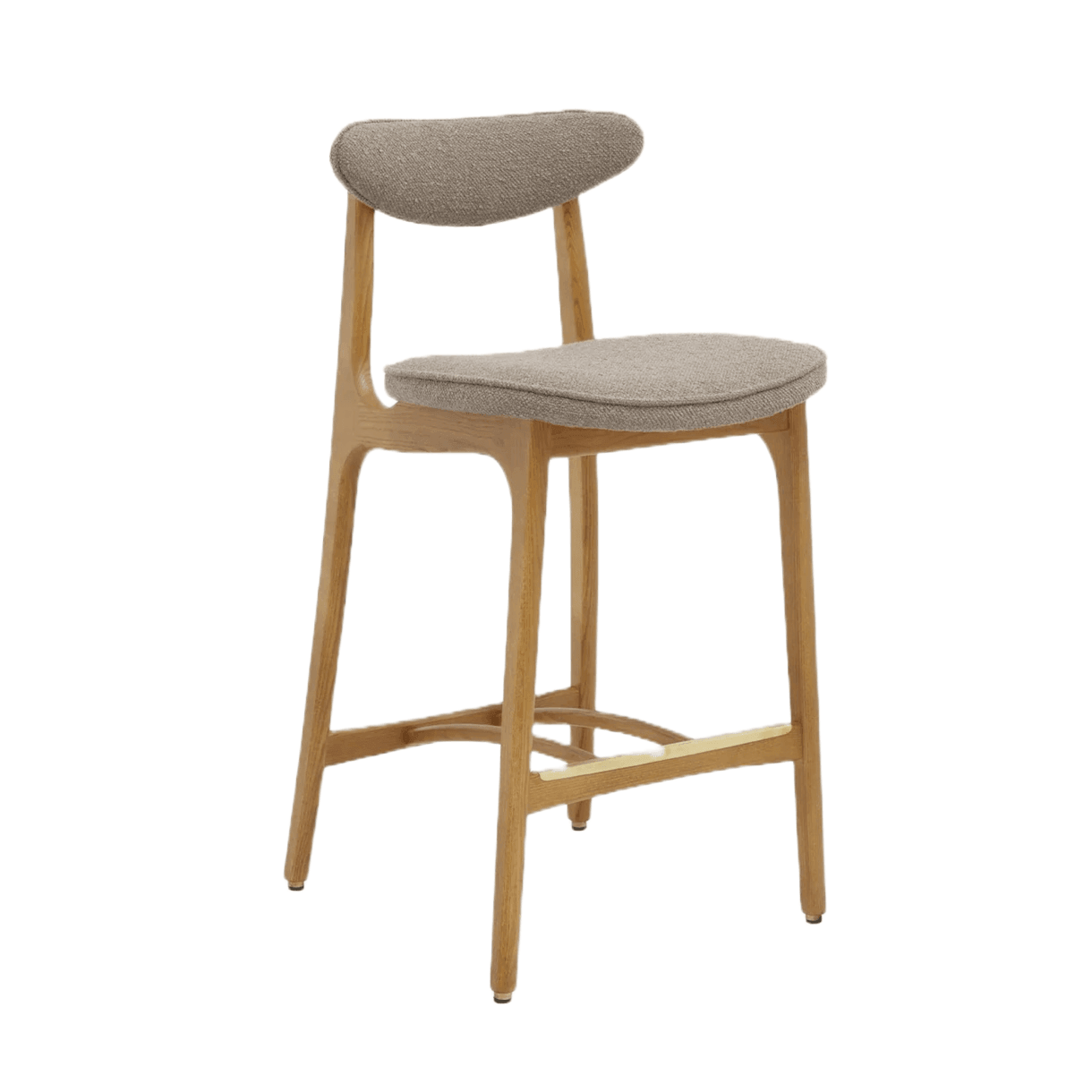
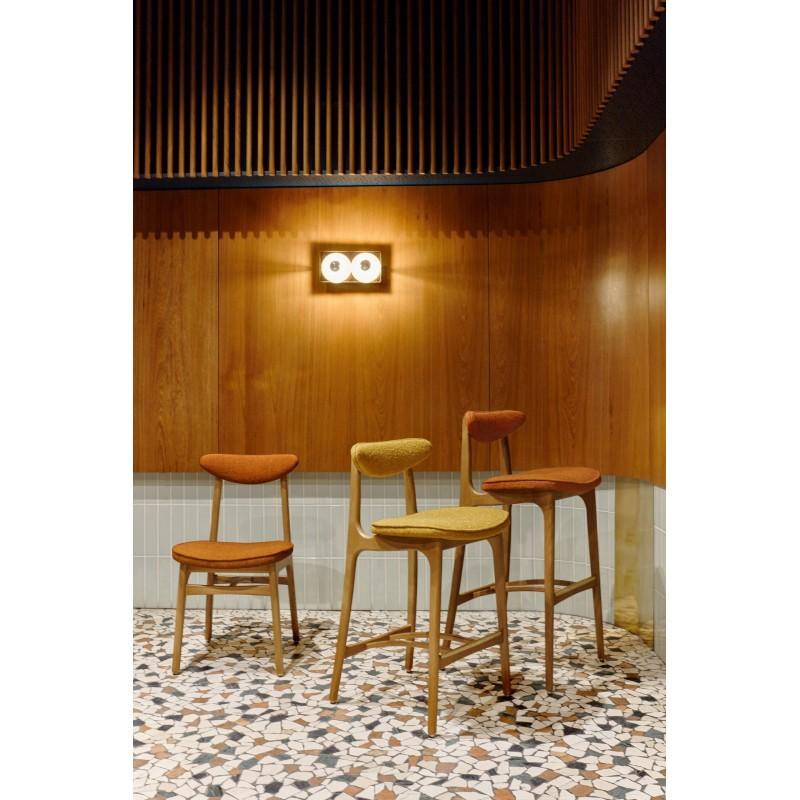
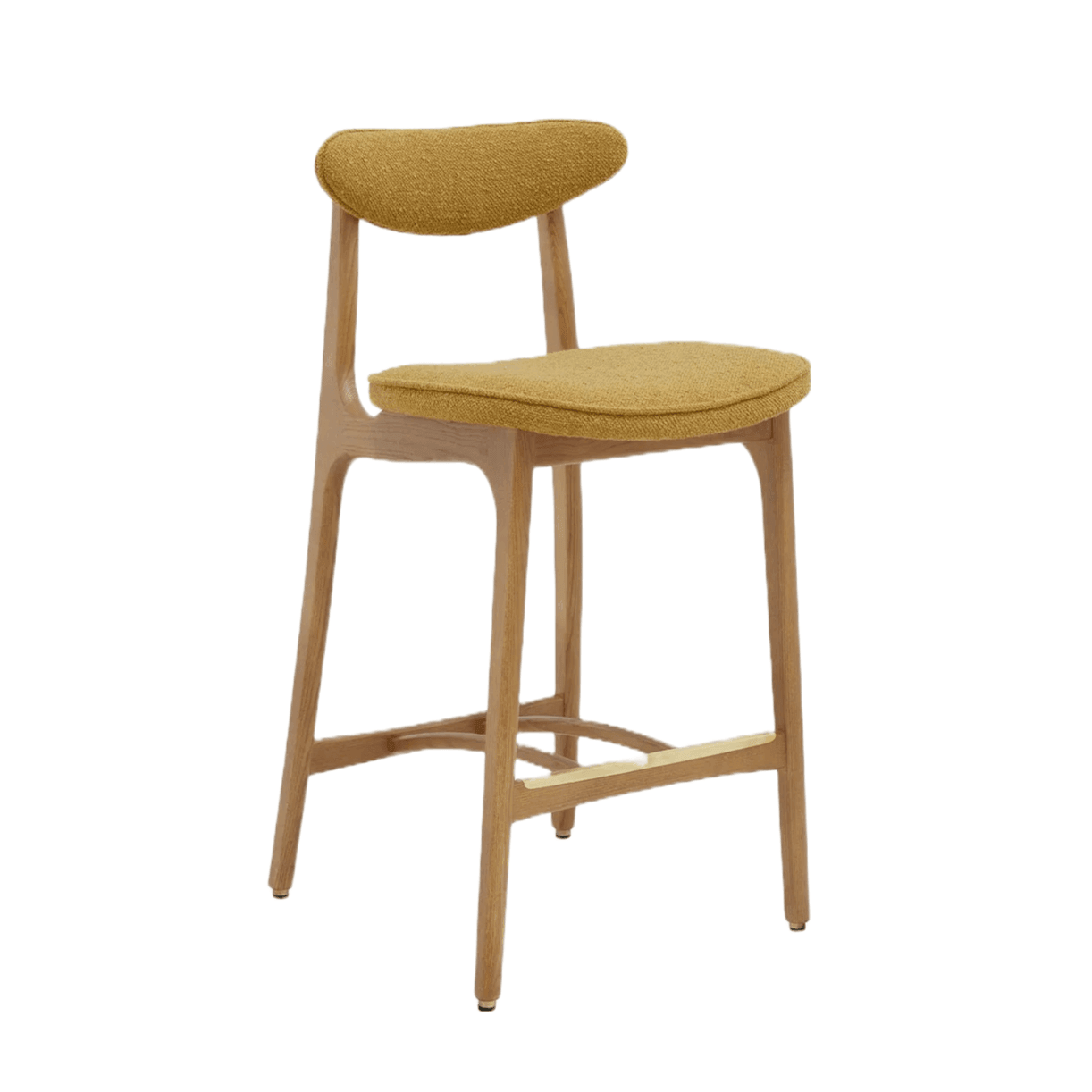
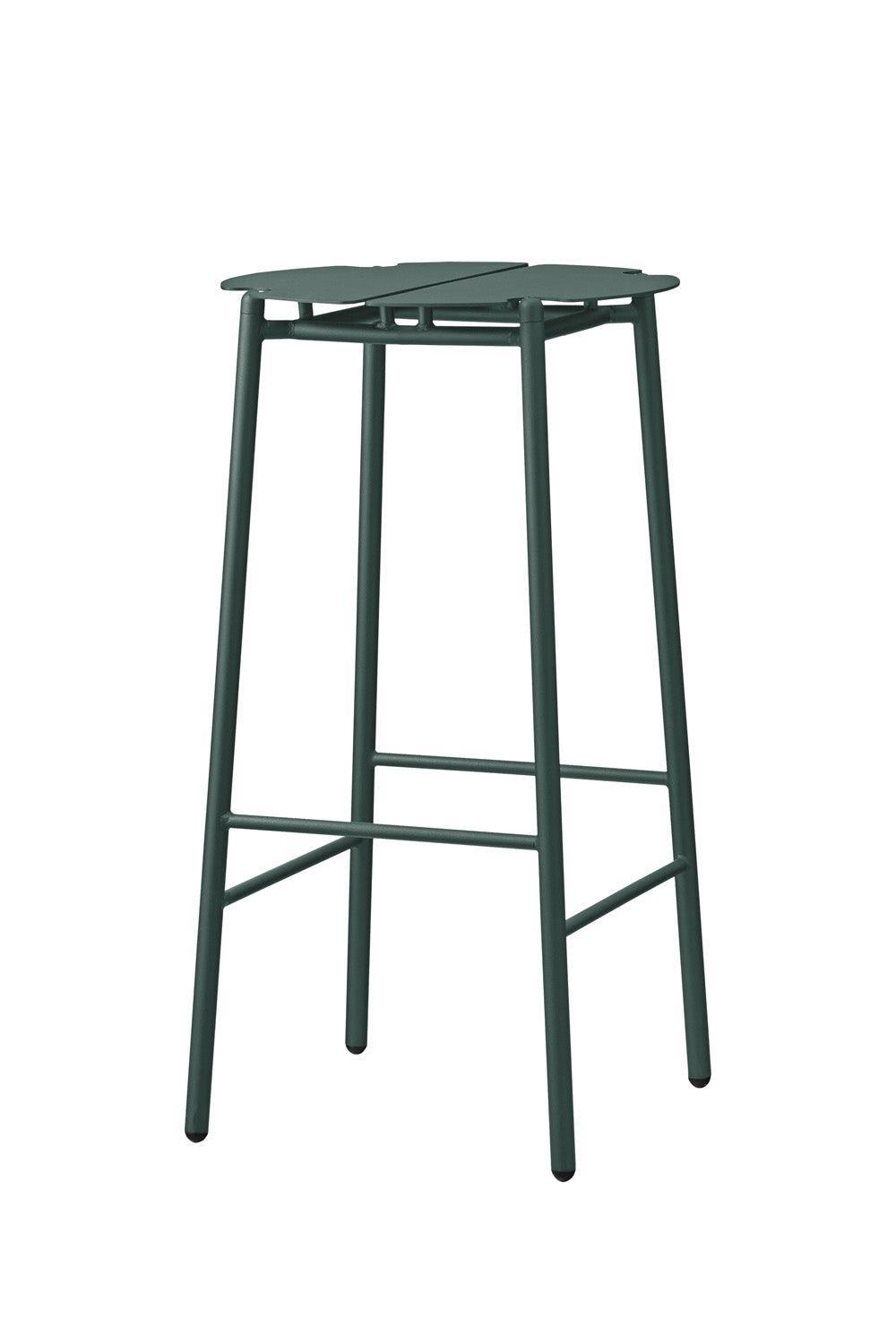
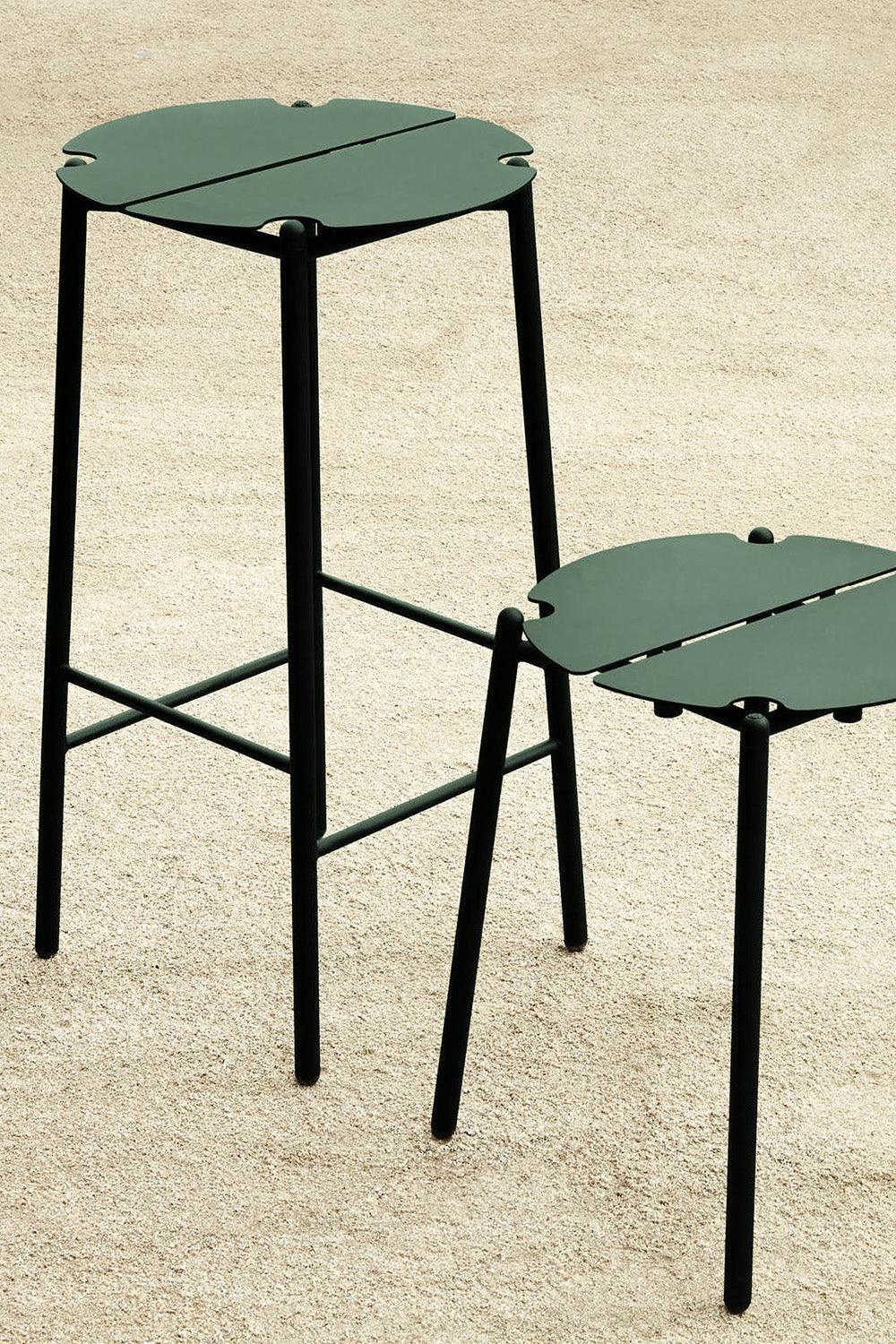
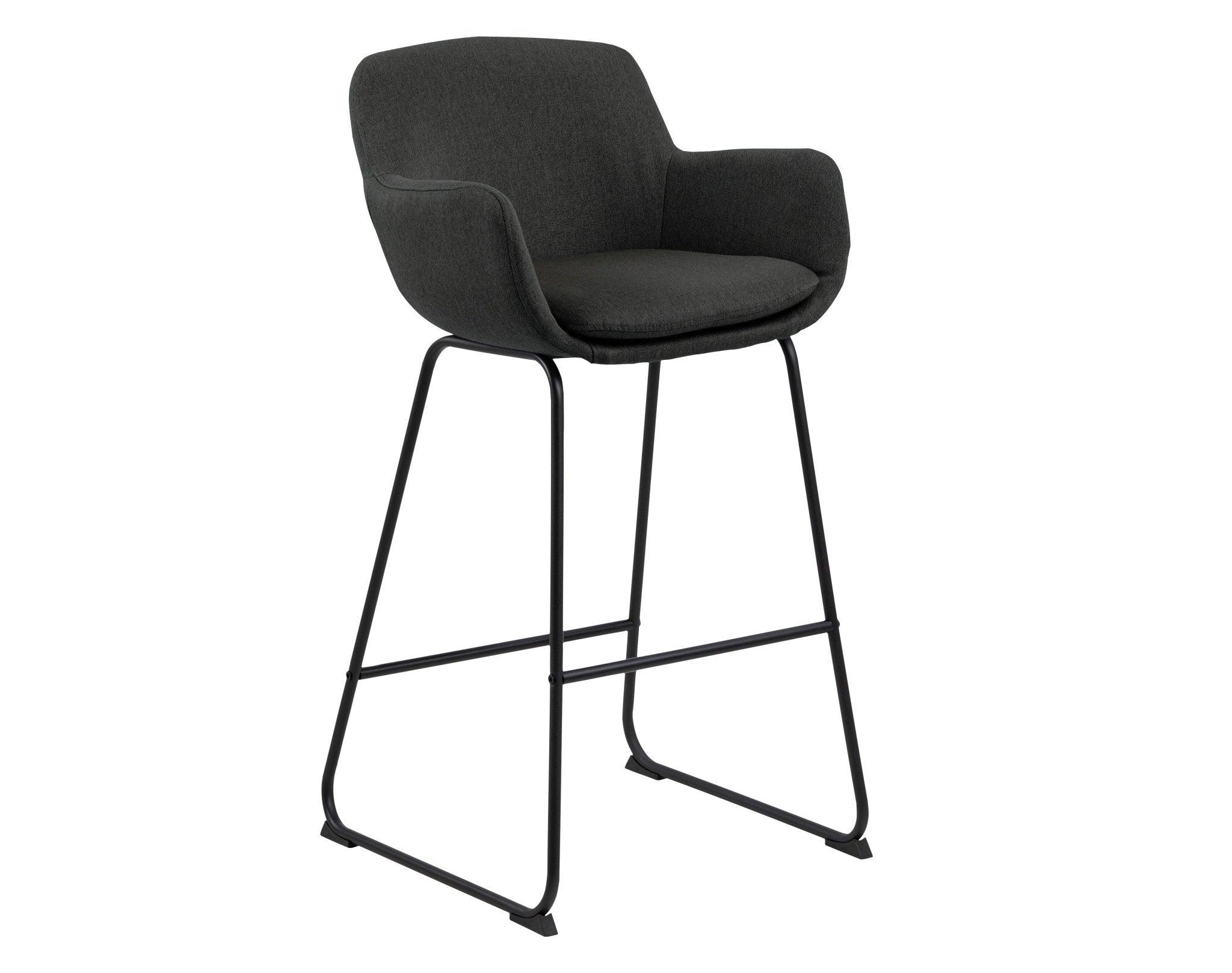
A backrest matters when you are eating meals or working at the island – it is unnecessary for a few minutes of sitting. A footrest, however, is practically essential for high stools: without it, your legs dangle, and sitting quickly becomes tiring.
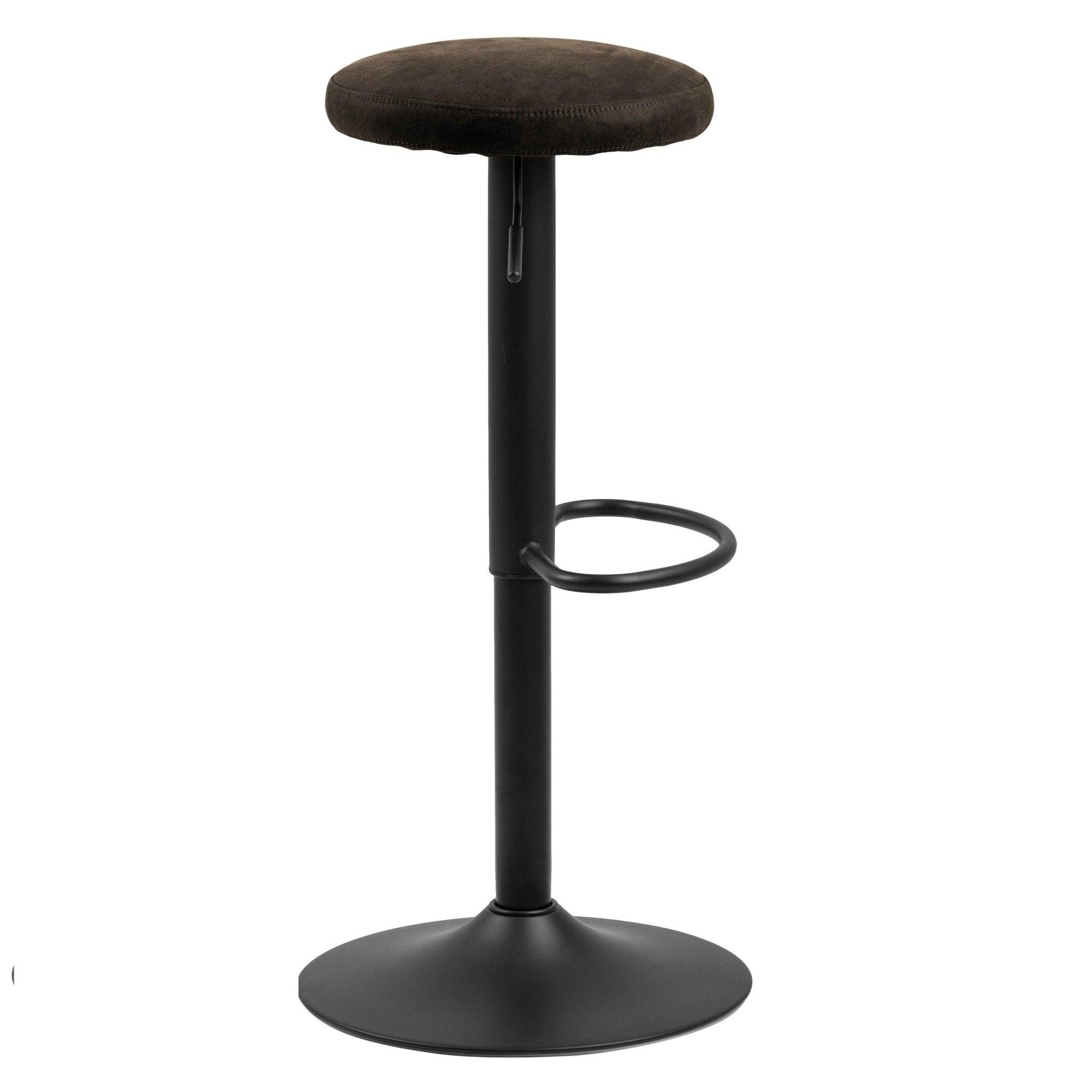
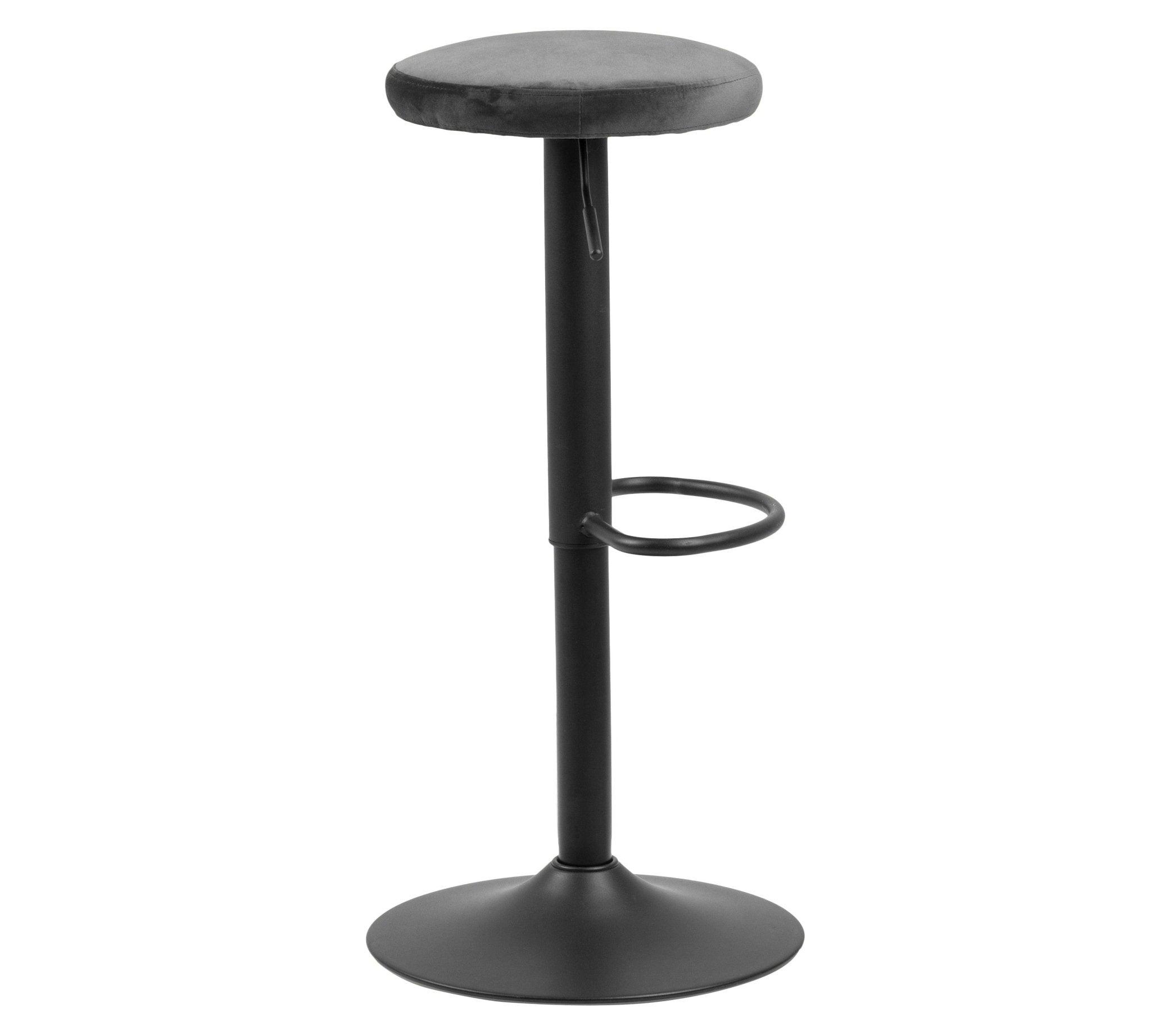
A swivel mechanism makes it easier to get up and converse with people in the living room when the kitchen is open. Height adjustment is useful when the stool is used by people of different heights.
Material Considerations for Usage
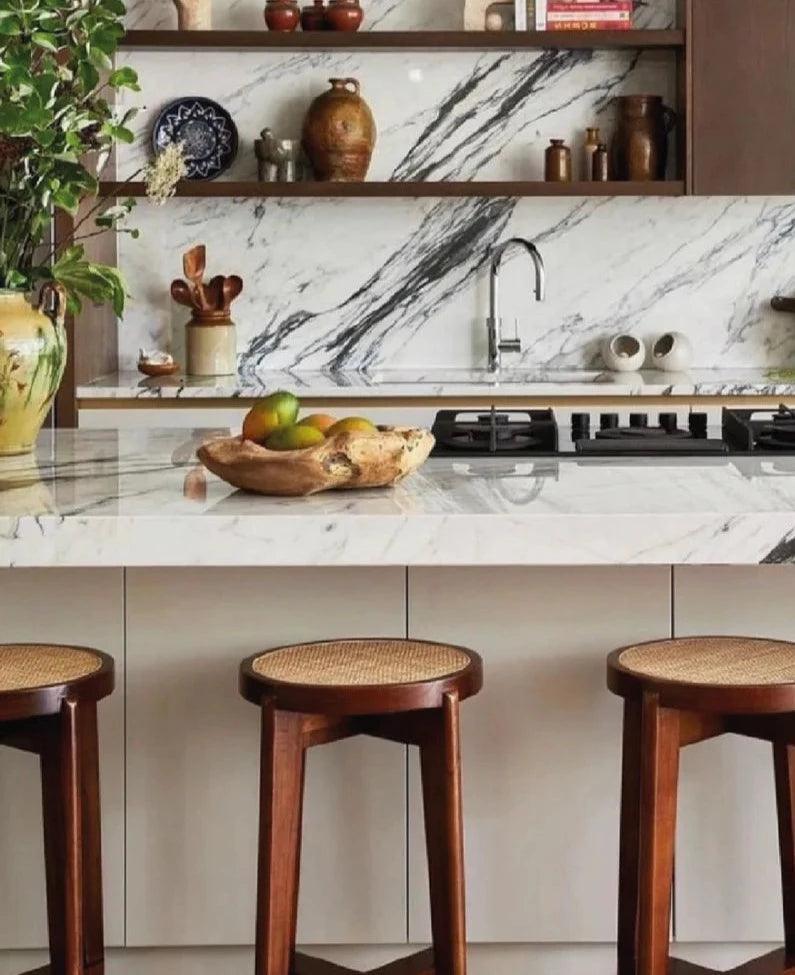
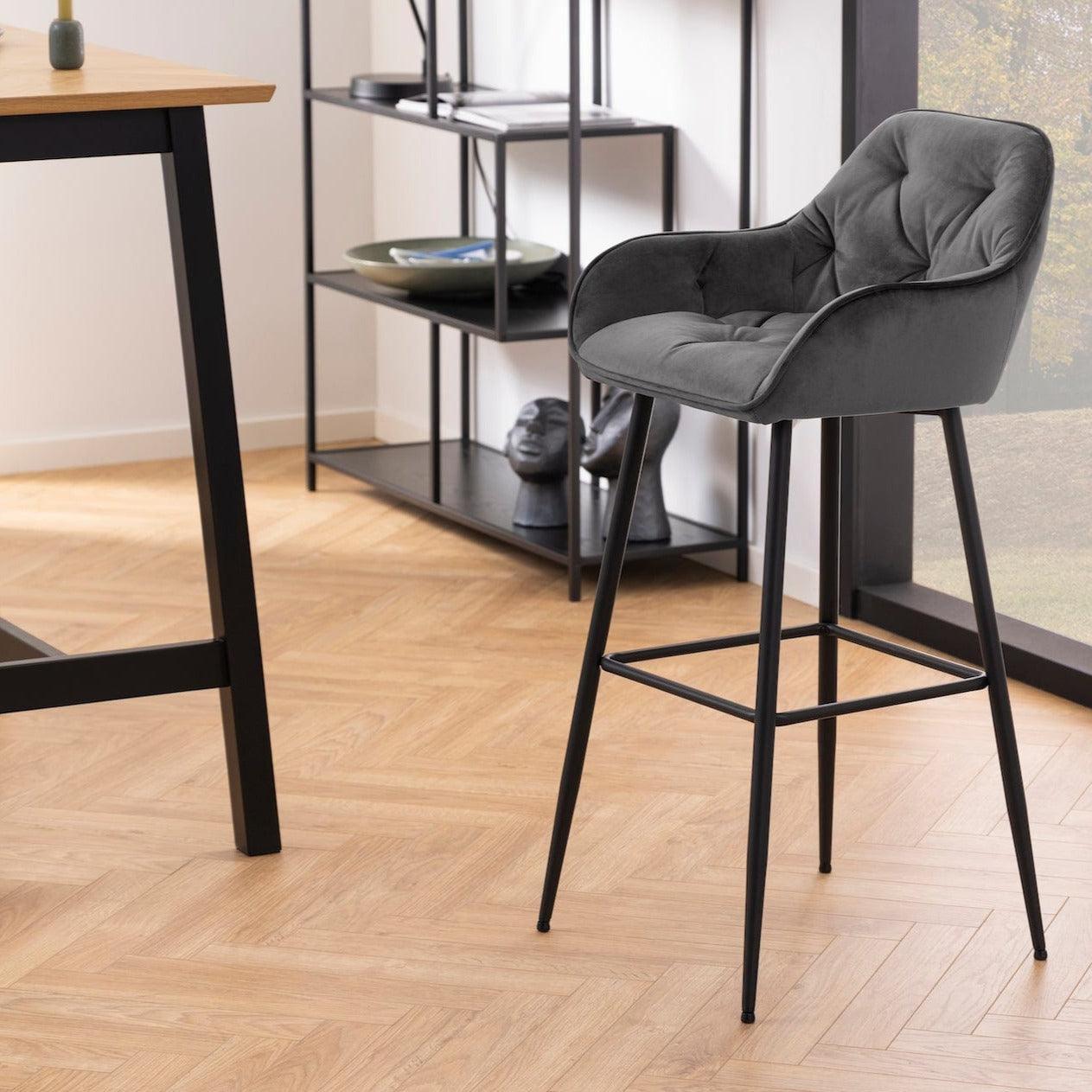
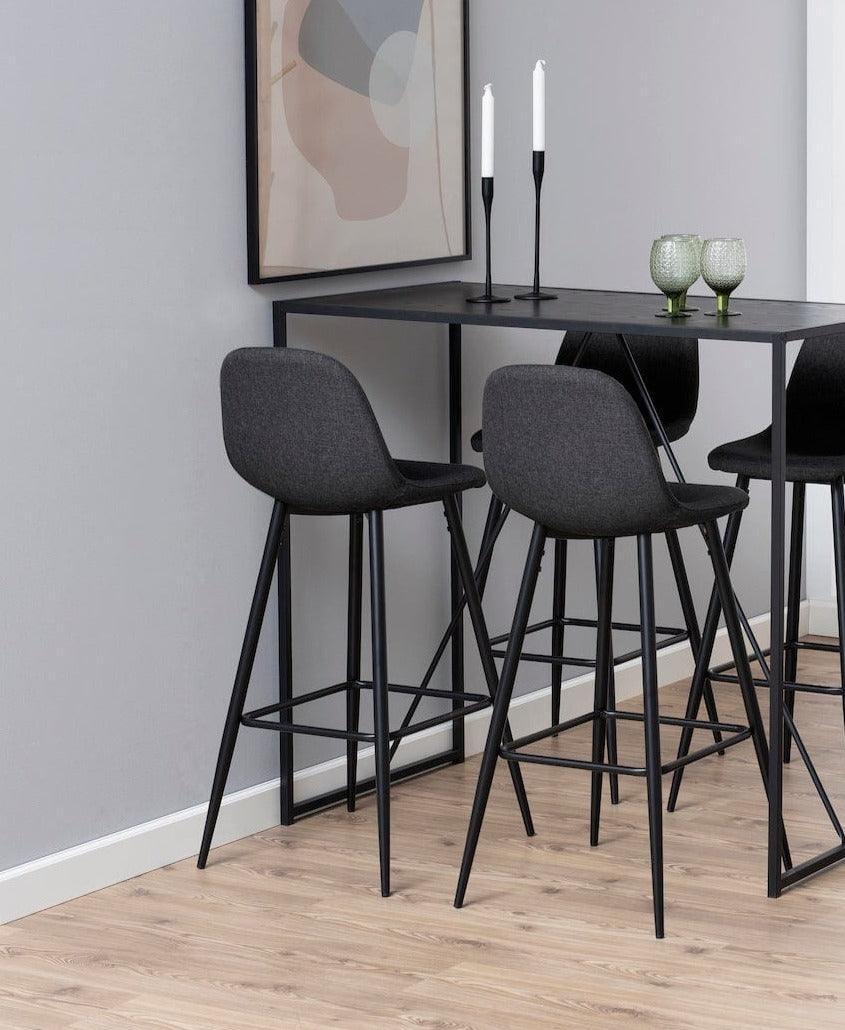
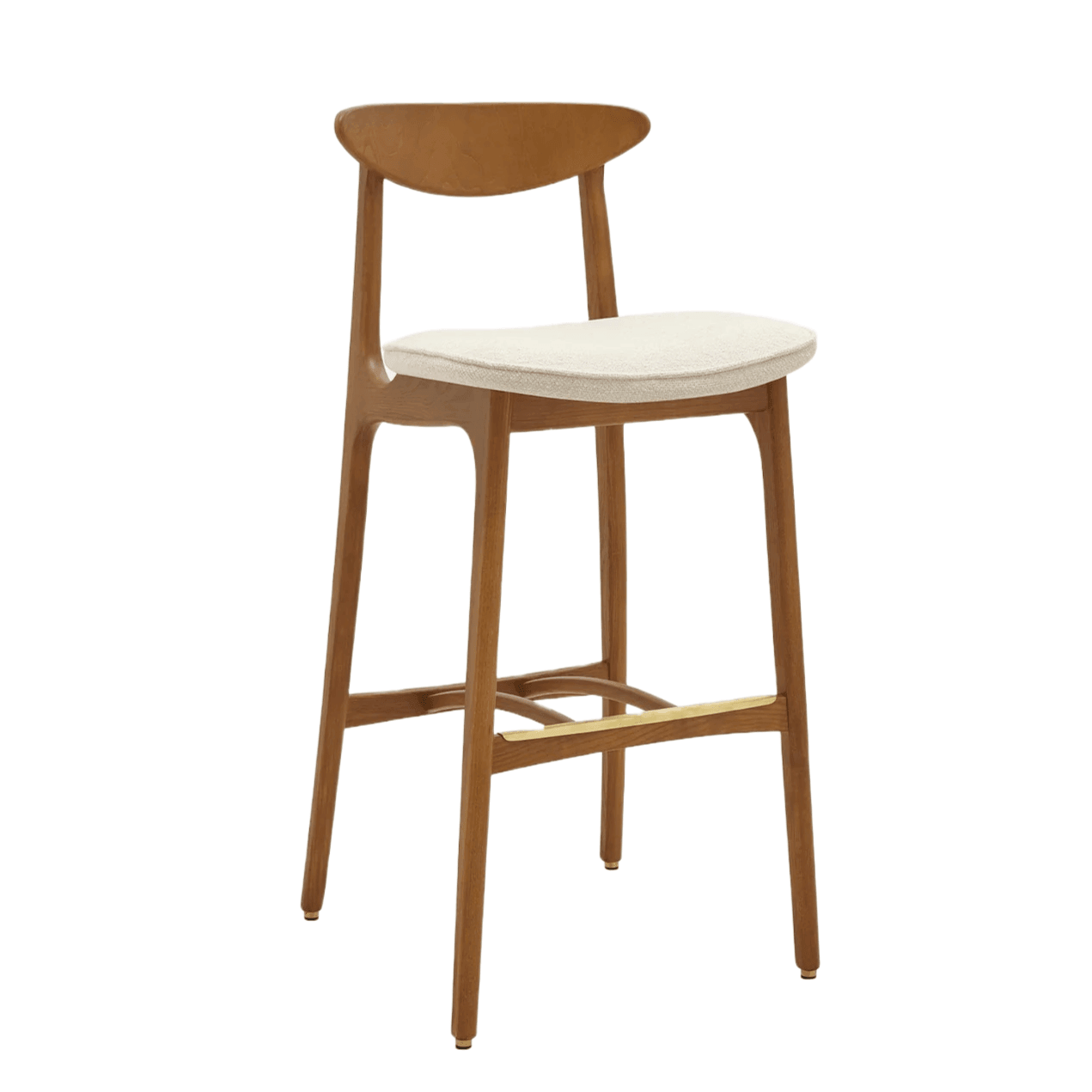
In the cooking area, upholstered seats require easy-to-clean fabrics – for heavy use, wood, faux leather, or plastic will be more practical. Wood pairs well with cabinetry in natural colors, while black metal complements stone and concrete countertops.
How to Match Stools to the Rest of the Interior
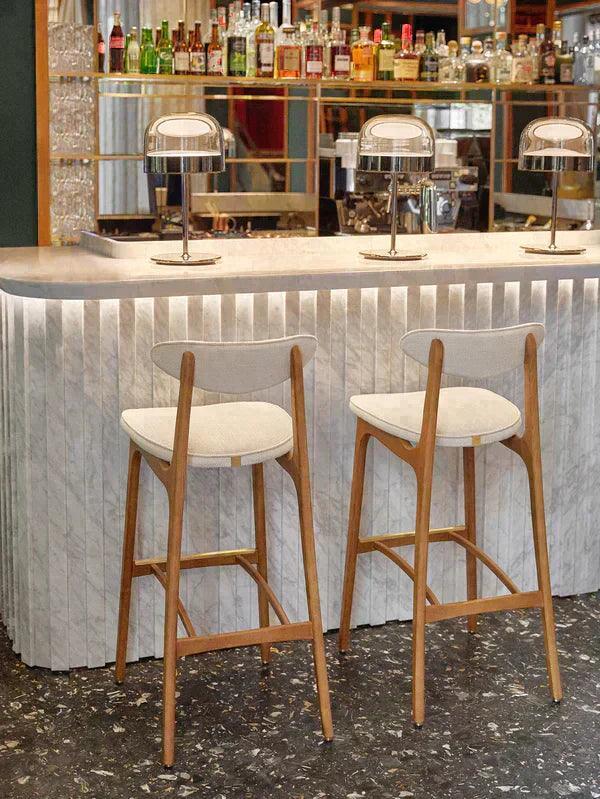
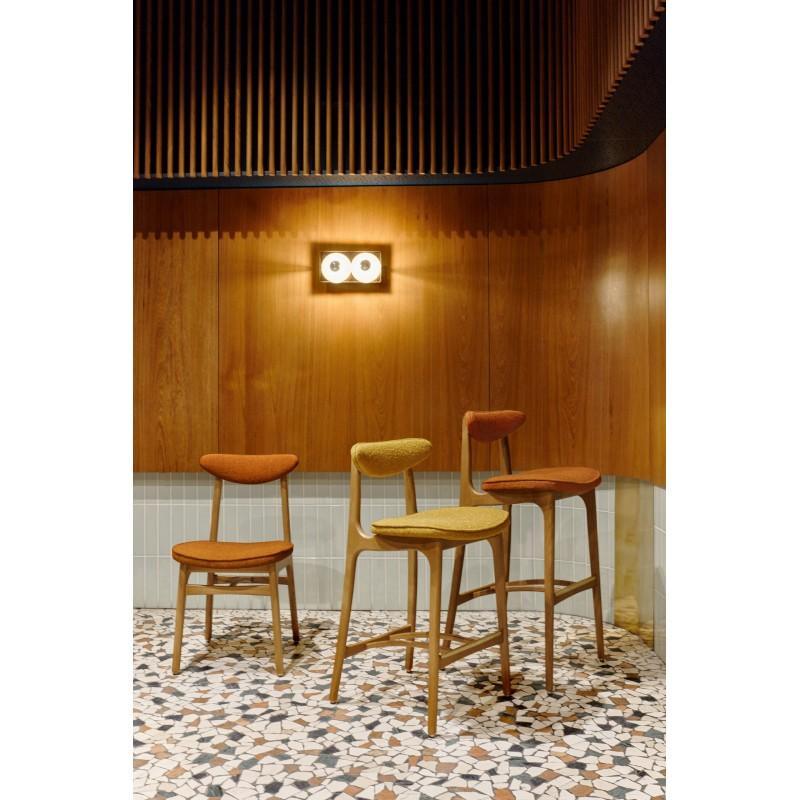
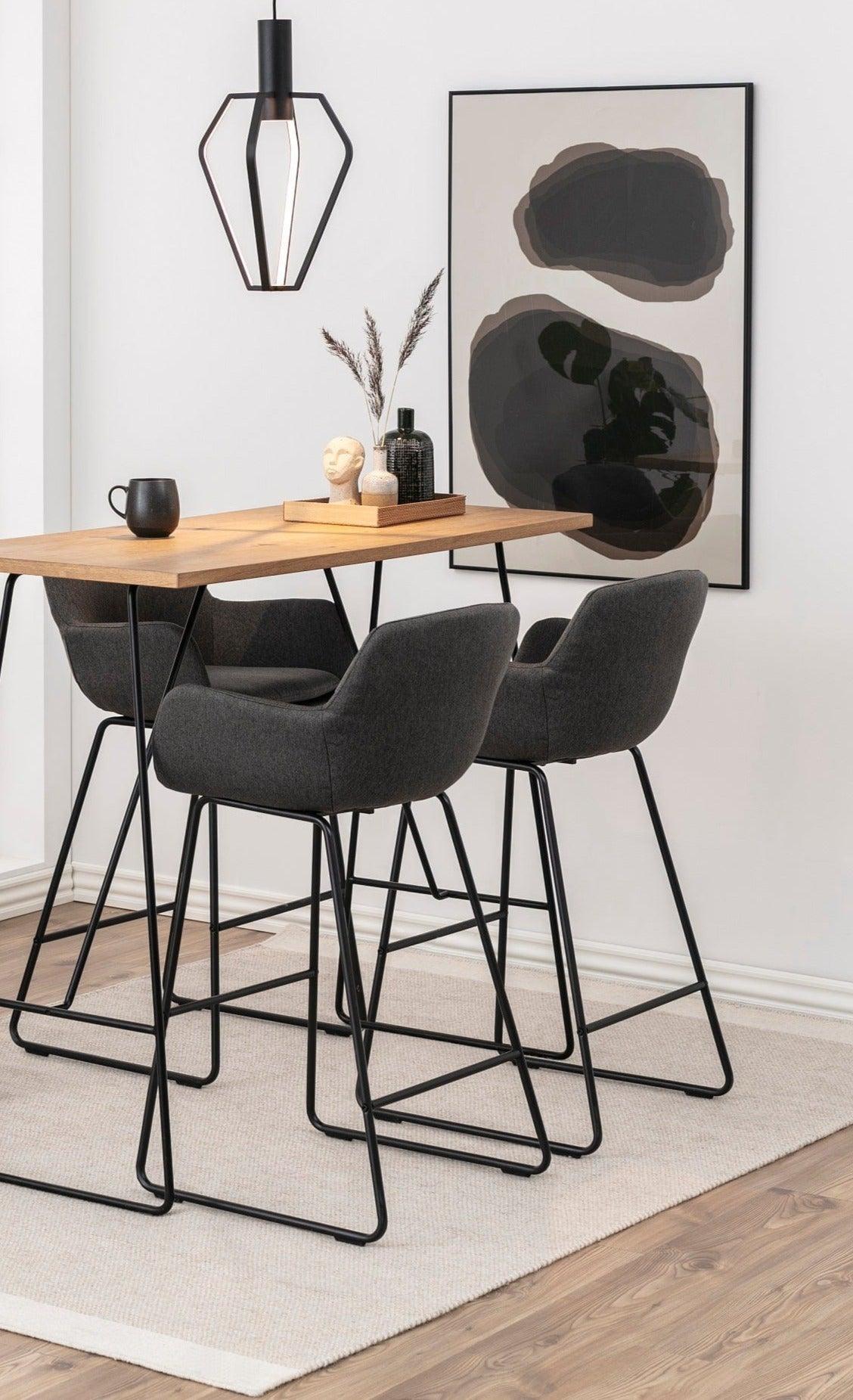
In a kitchen open to the dining area, stools and chairs do not have to be identical – a common color for the base or the same material for the seat is sufficient. It’s also worth coordinating them with hanging lamps above the island, repeating the metal finish.
You can find the entire arrangement in the collections of Kitchen and Dining Room, with complementary furniture in the categories of bar tables and bars.
Common Mistakes
First – buying a stool without measuring the countertop. Second – overlooking the overhang, resulting in a lack of space for knees. Third – too many seats at too short an island. Fourth – choosing a model without a footrest for a high bar.
Ready to make your choice? Check out all bar stools and counter chairs – free delivery on orders over 1000 PLN, showroom in Warsaw.