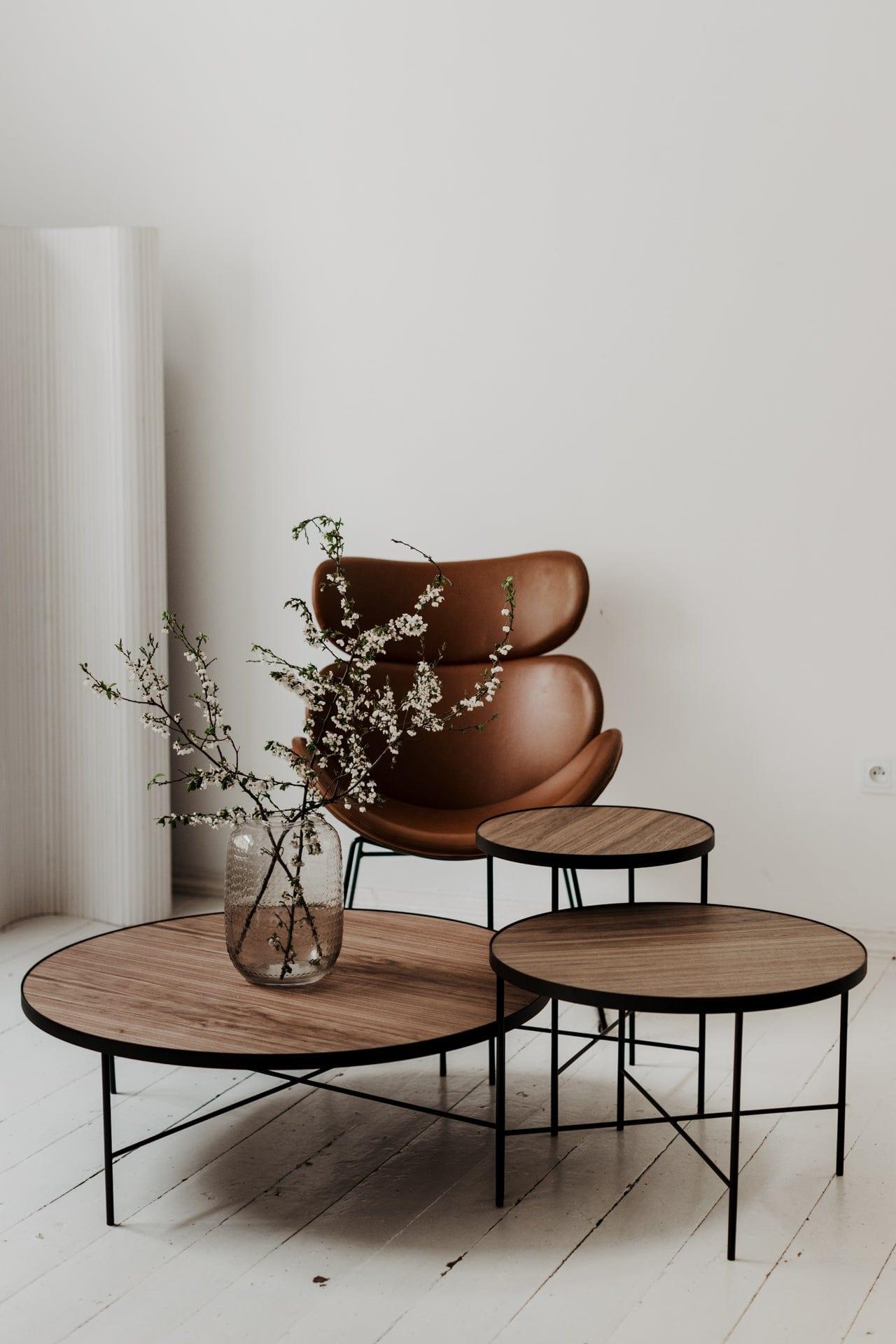
How to Choose a Table? Types and Selection Guidelines
“Table” refers to several completely different pieces of furniture – coffee, side, auxiliary, and night tables. Each has a different purpose, height, and place in the interior. Below, we explain the differences and show you how to choose the right model.
Types of Tables
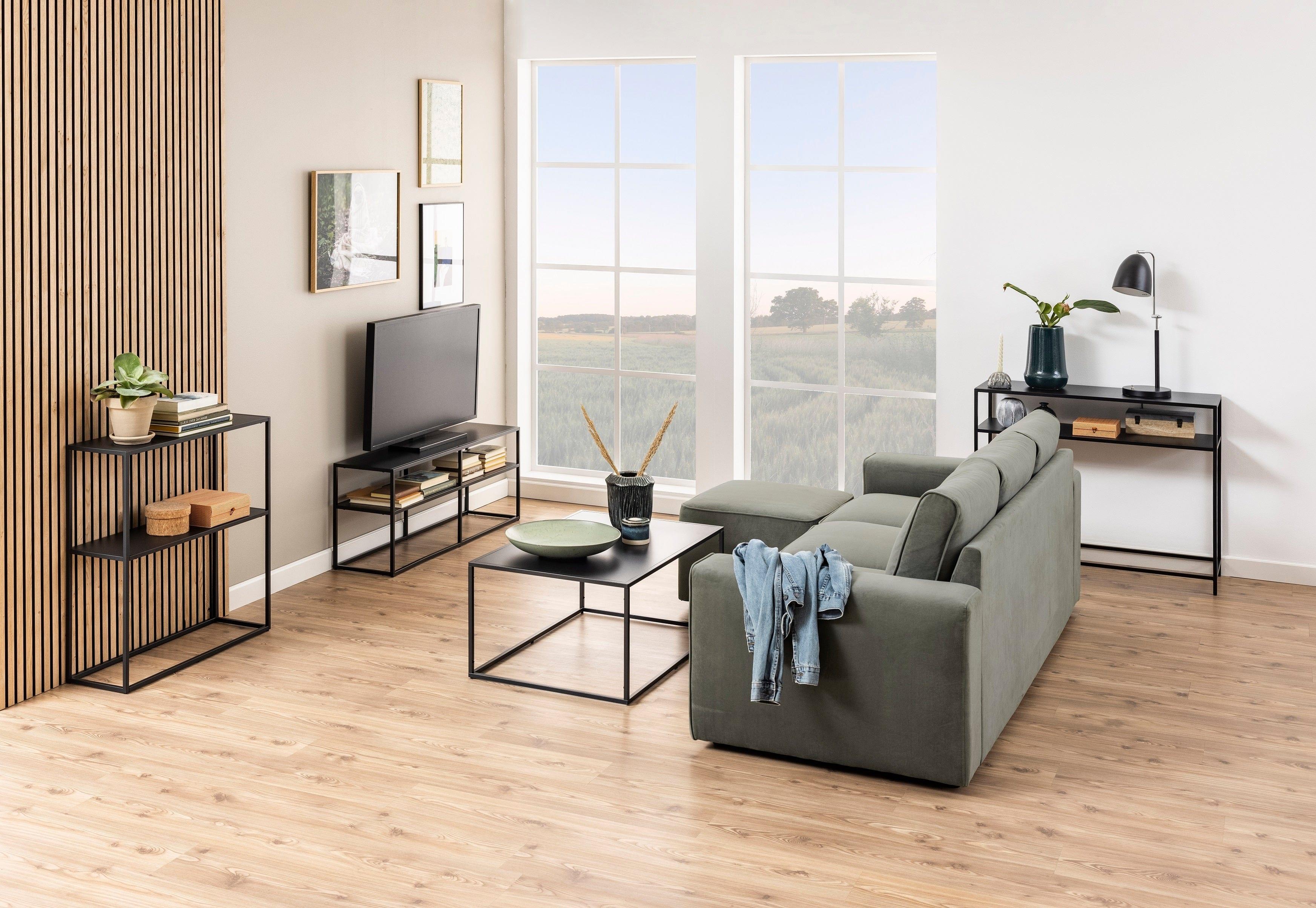
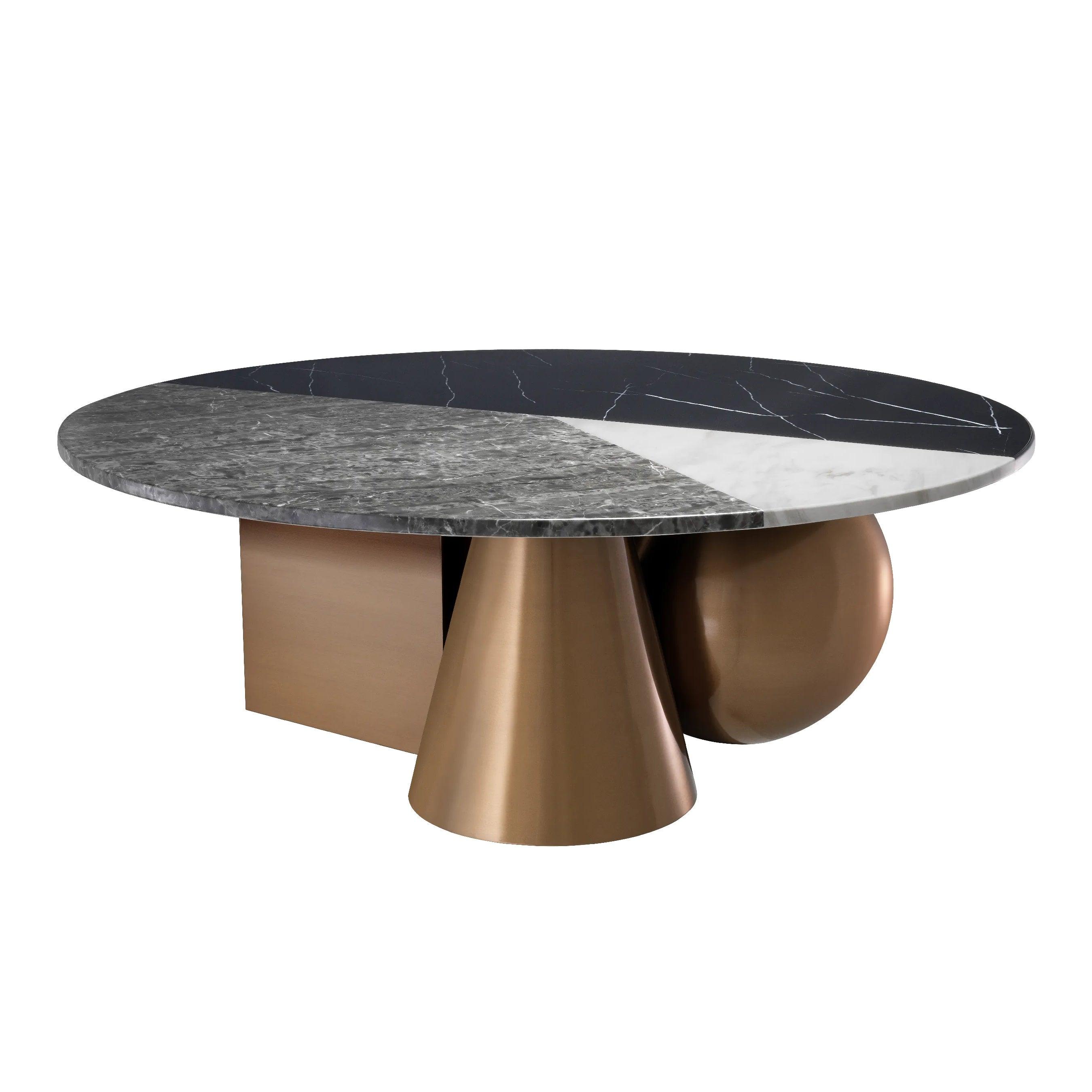
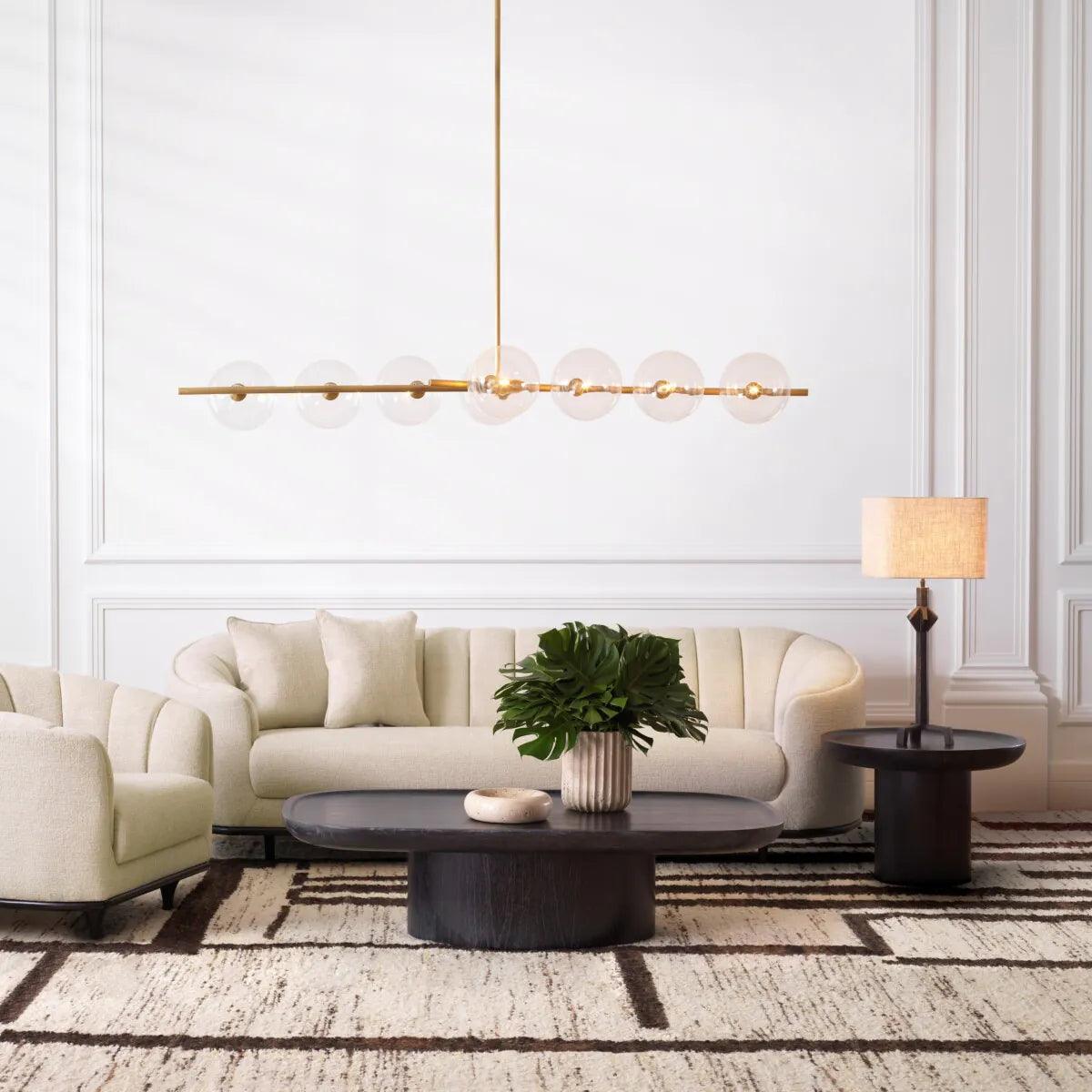
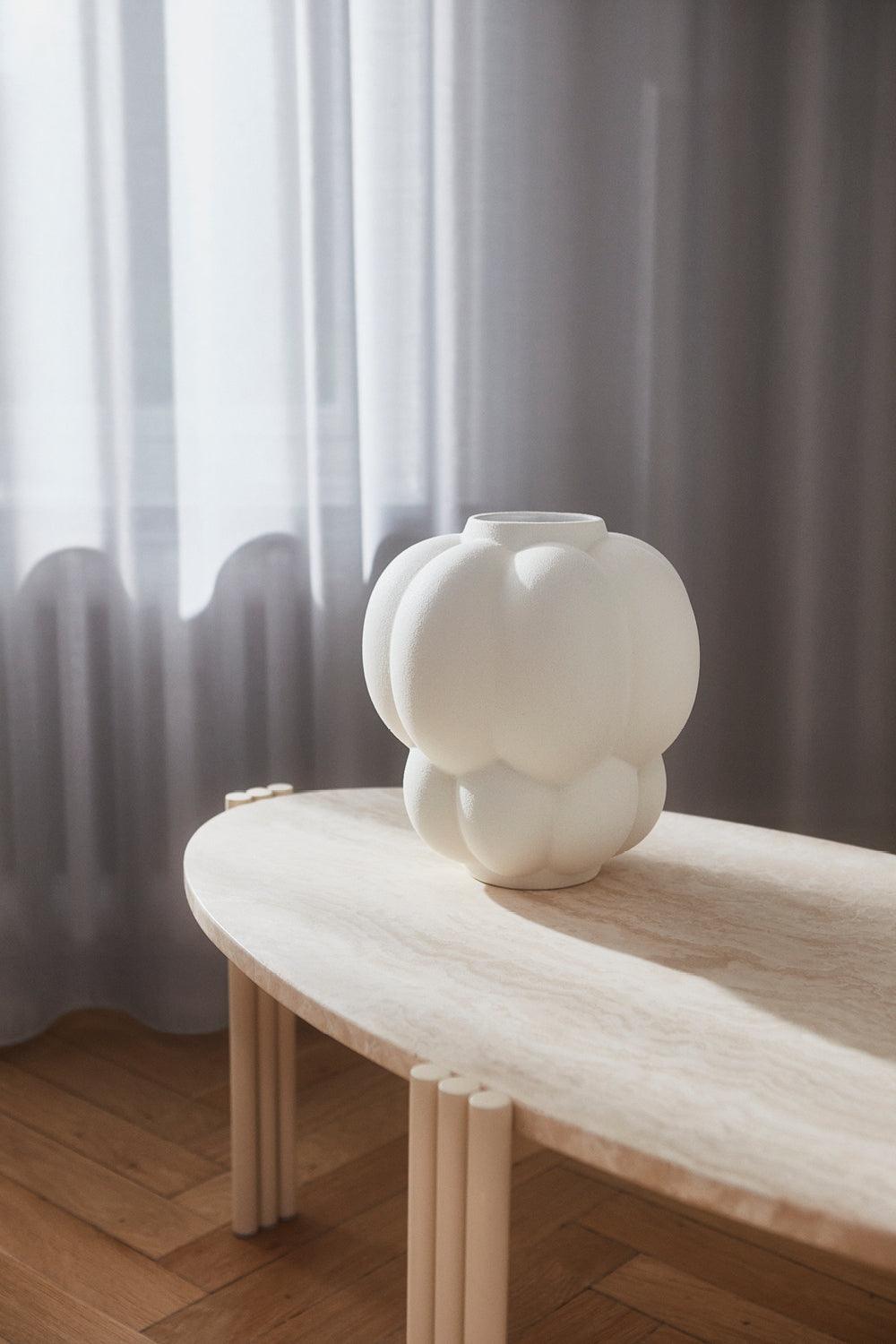
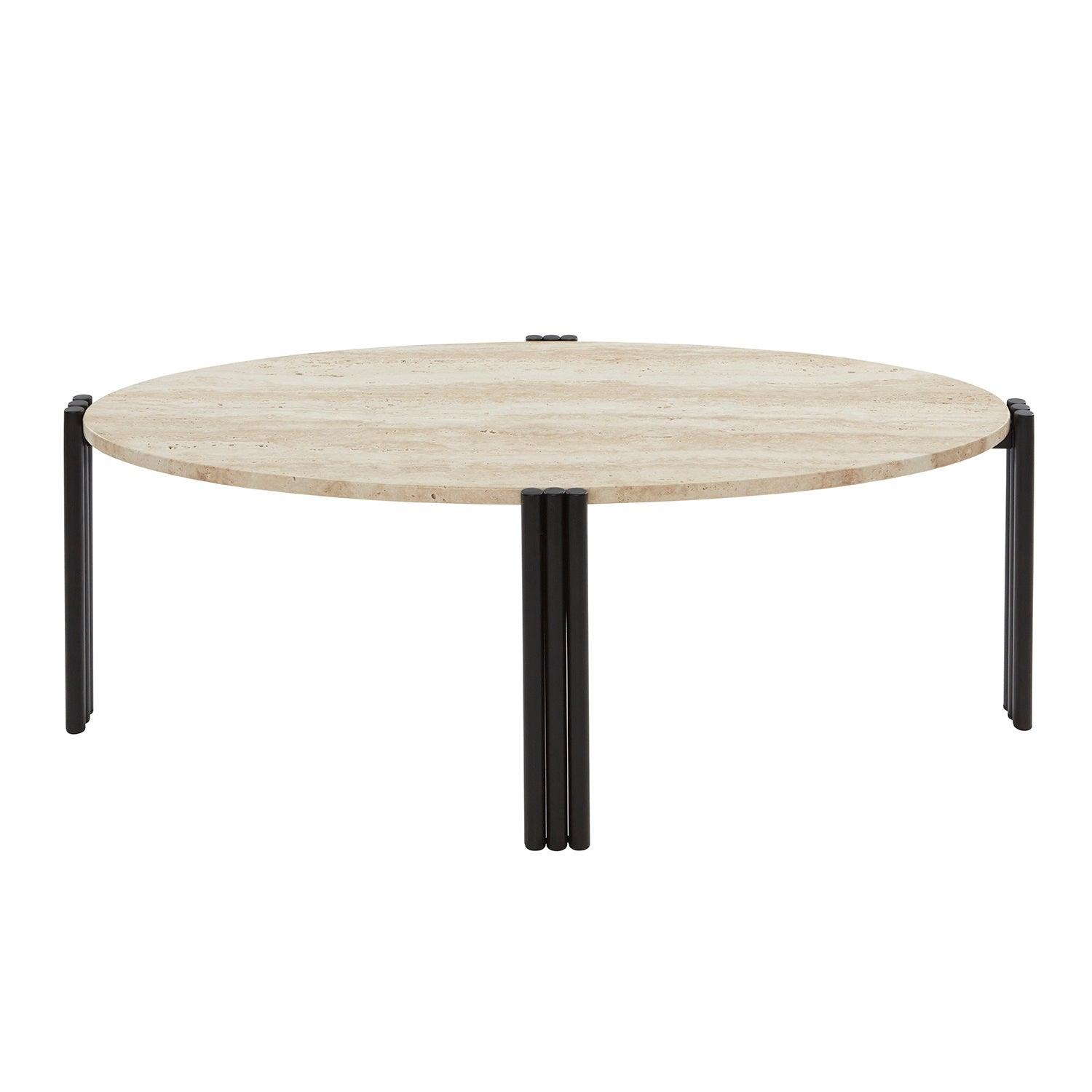
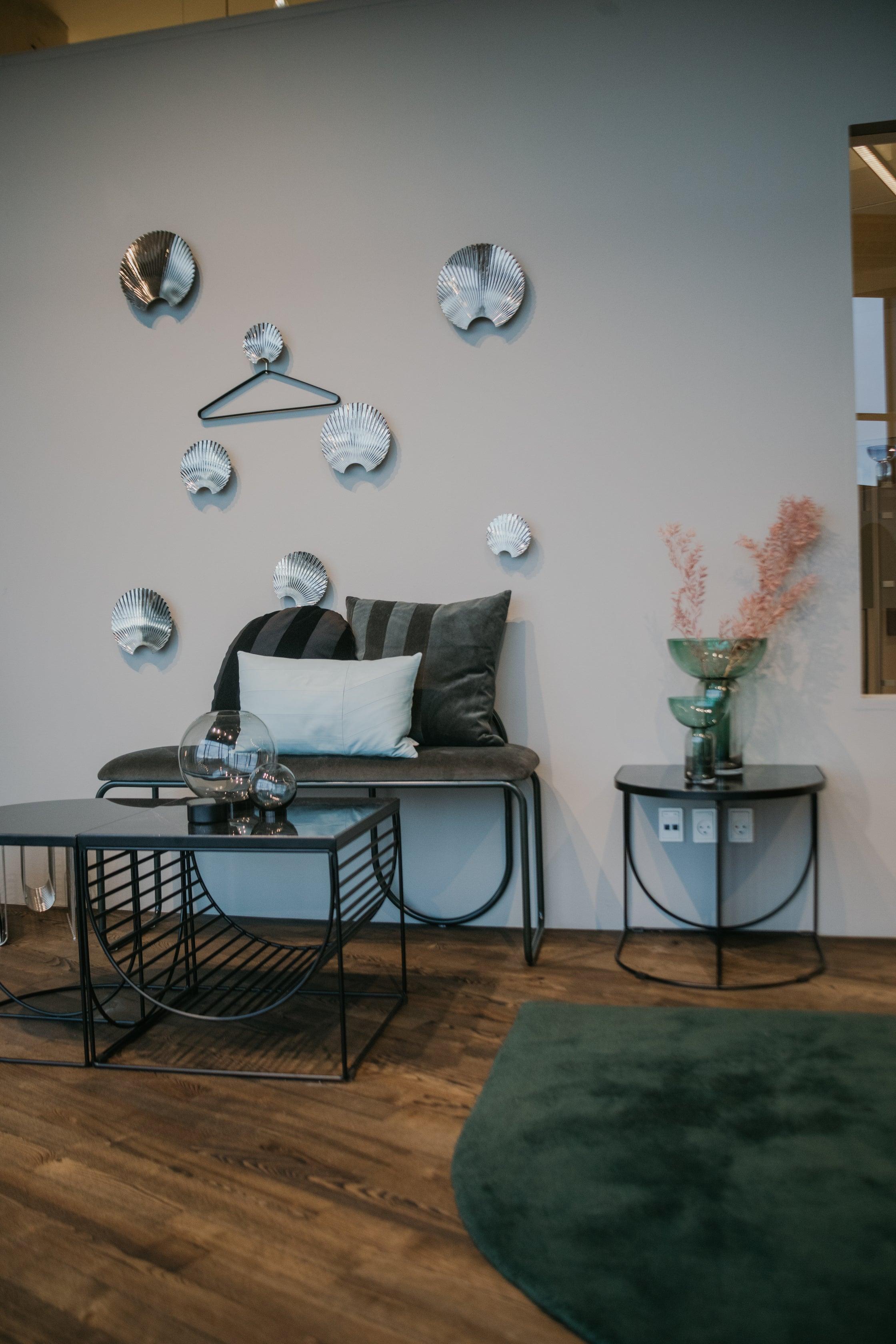
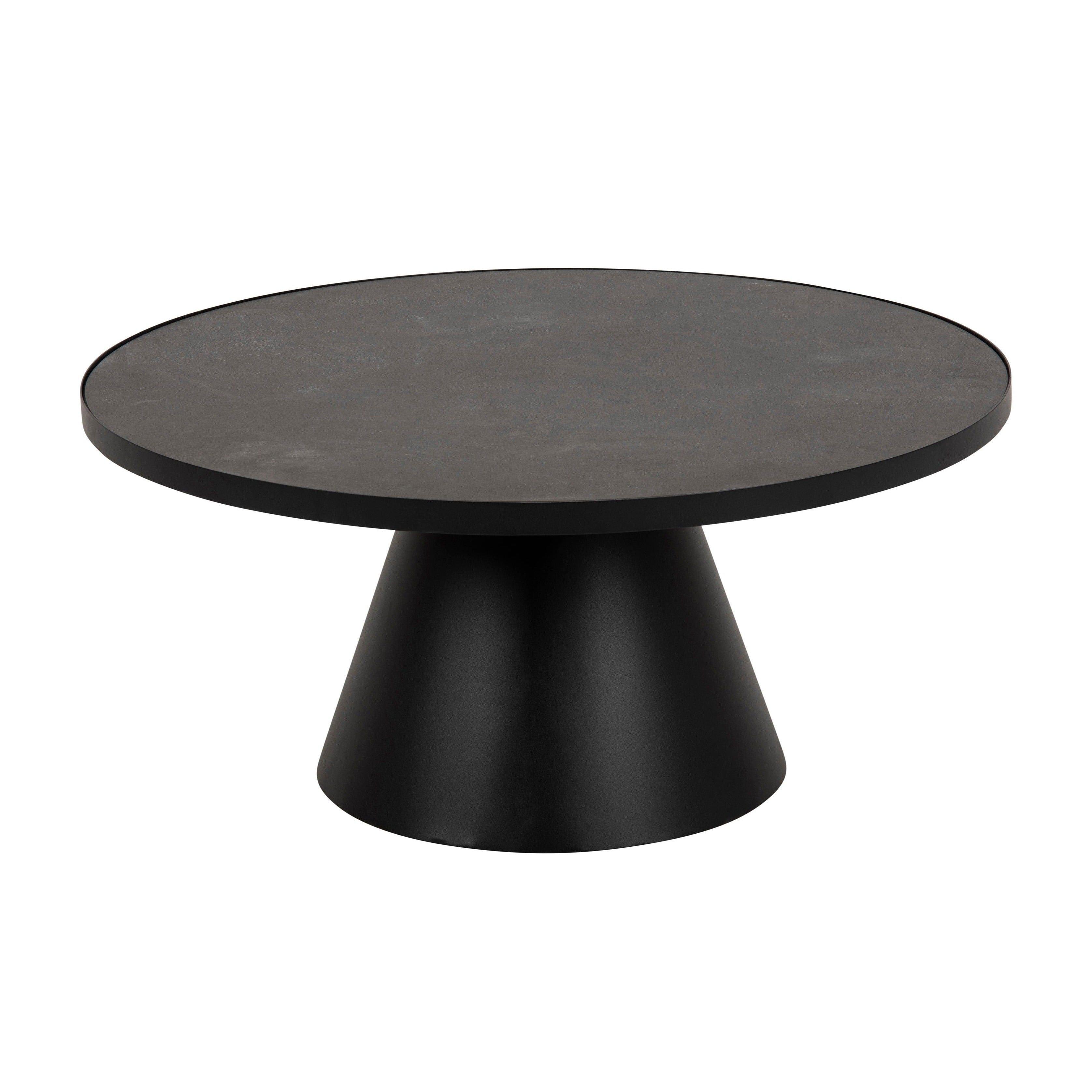
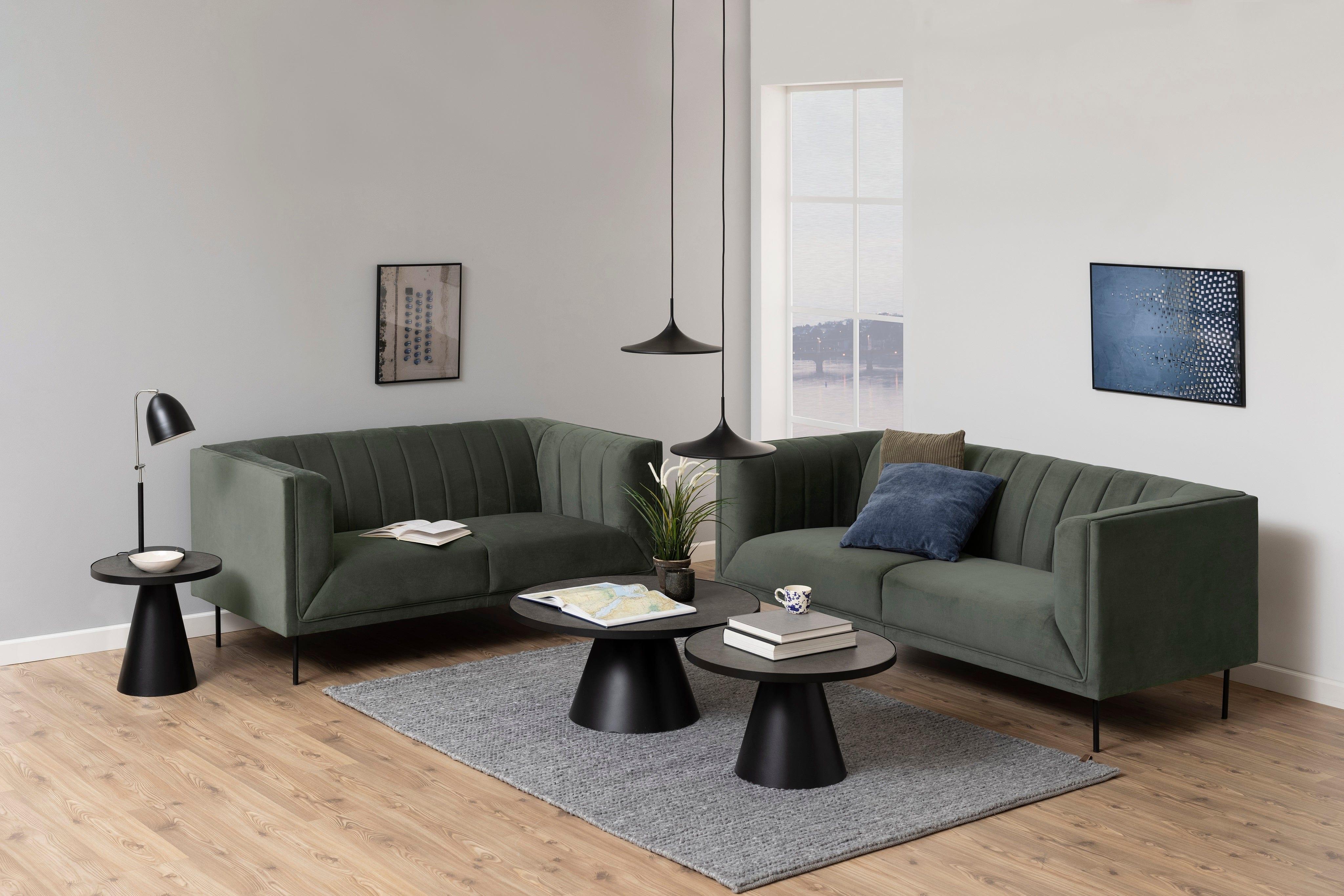
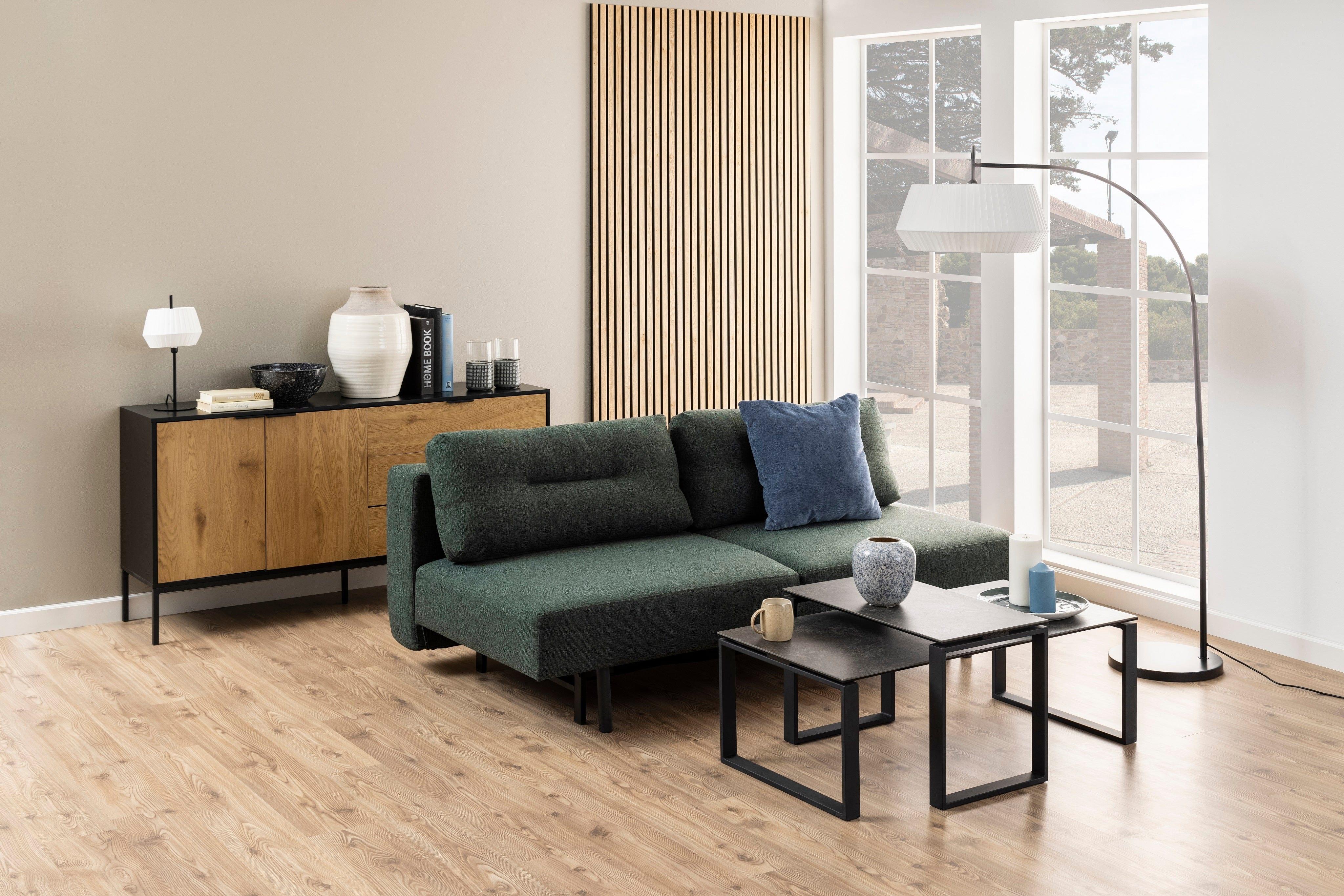
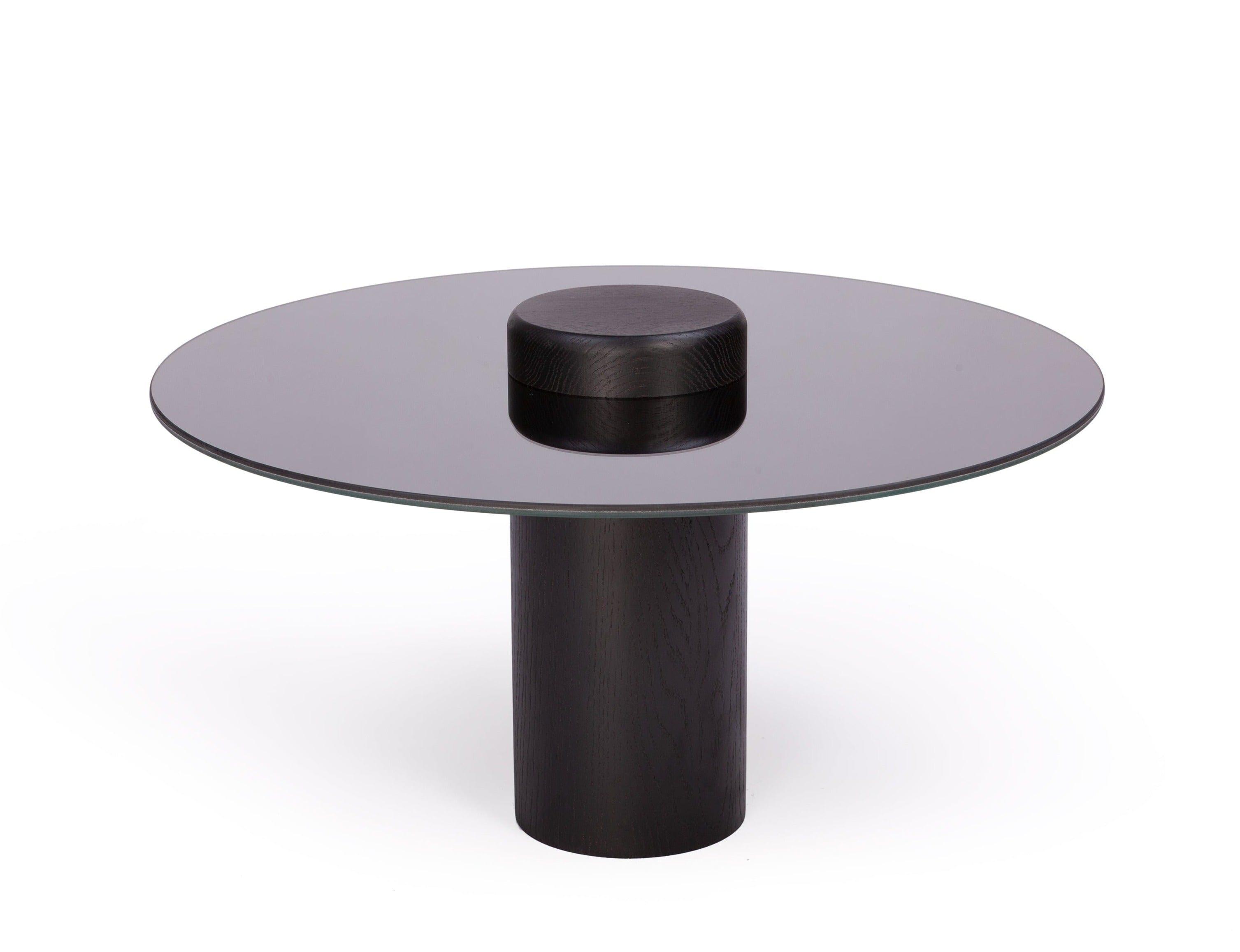
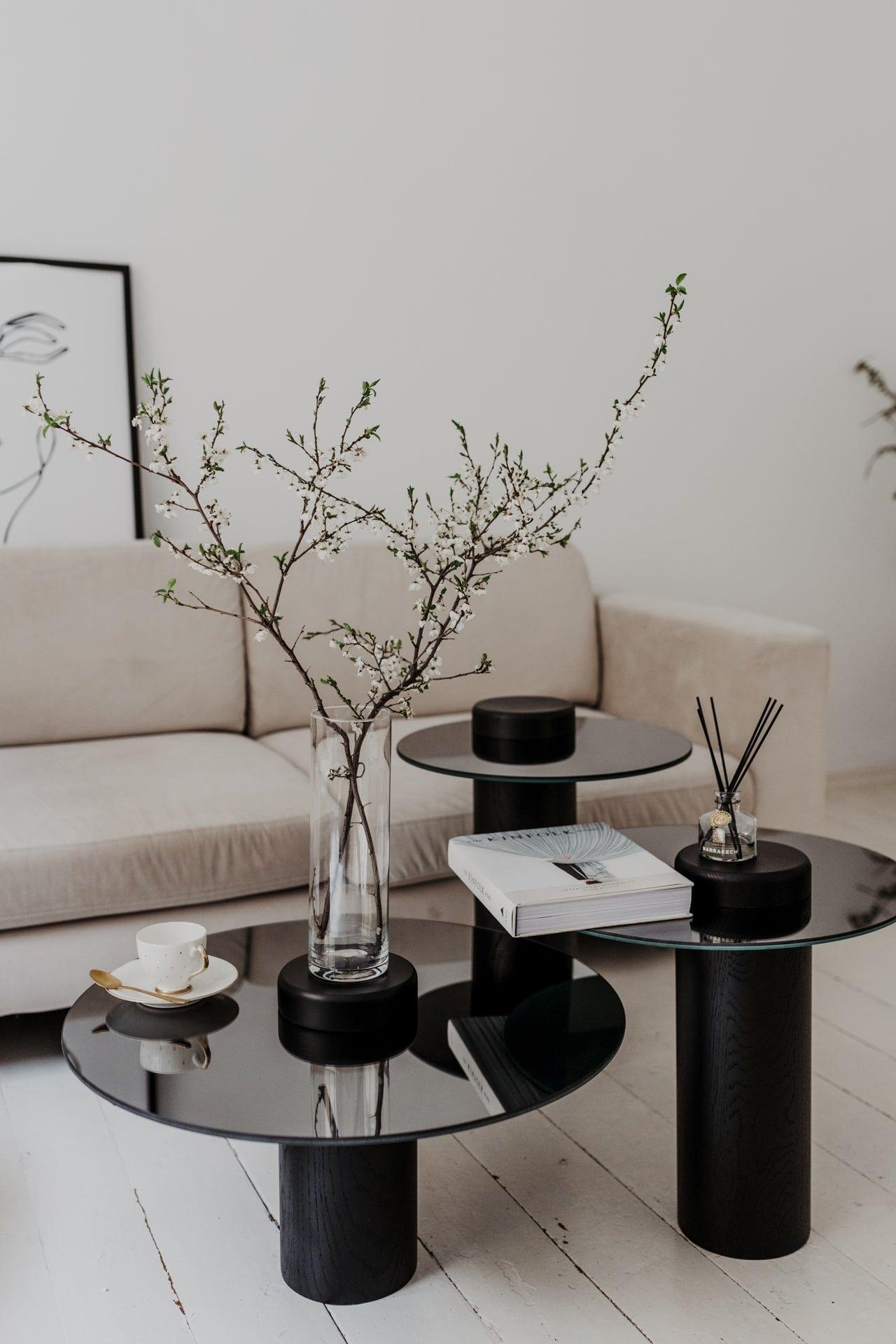
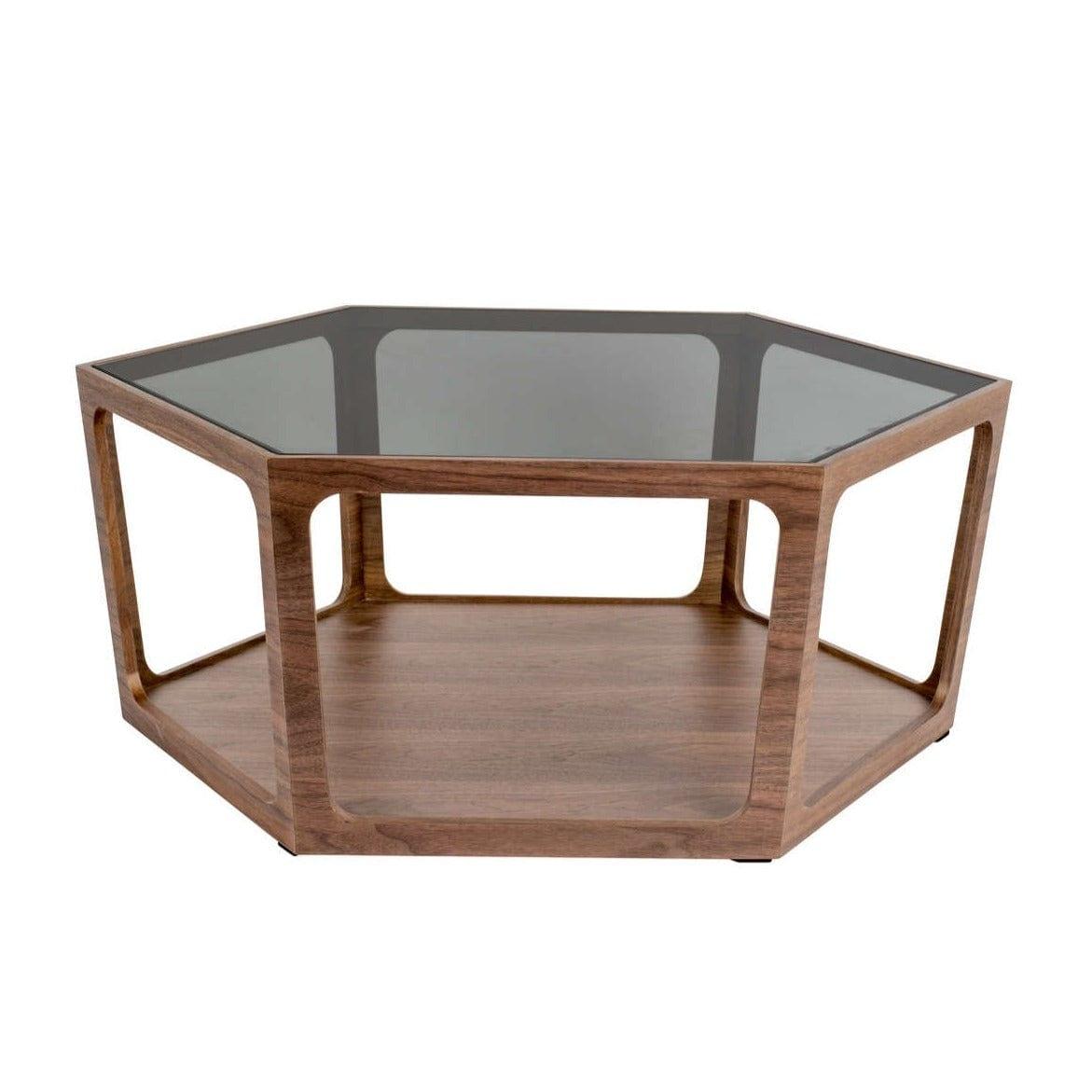
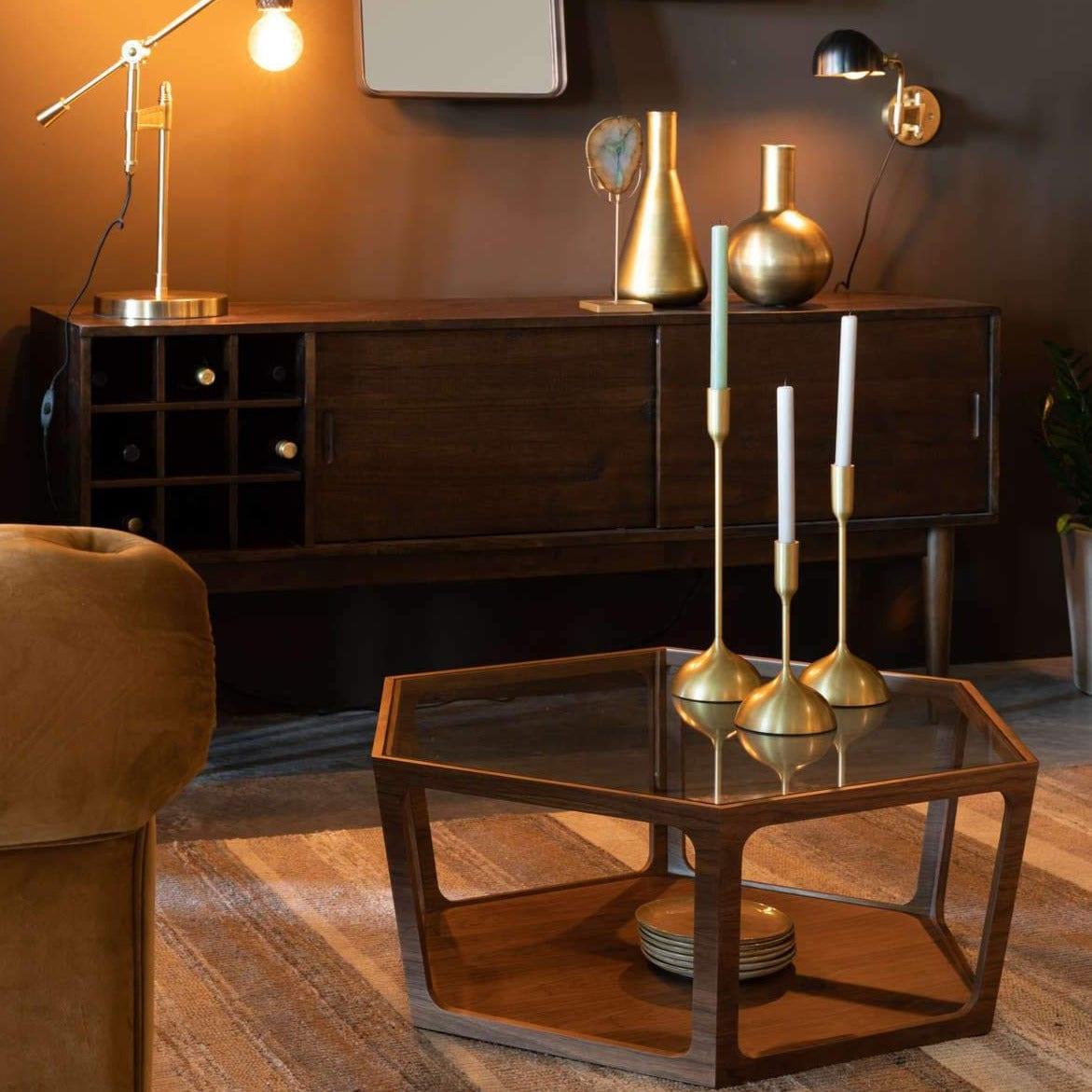
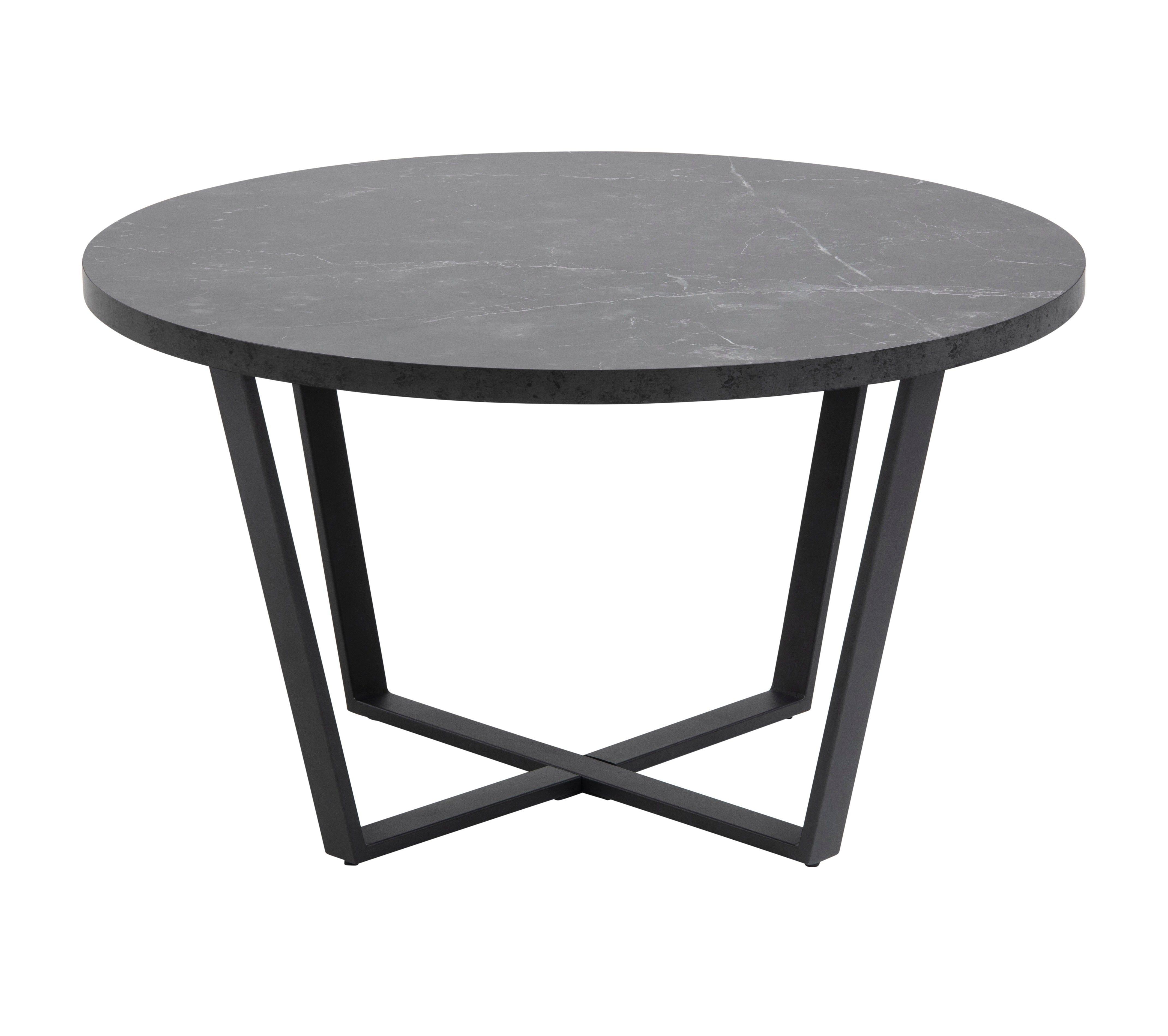
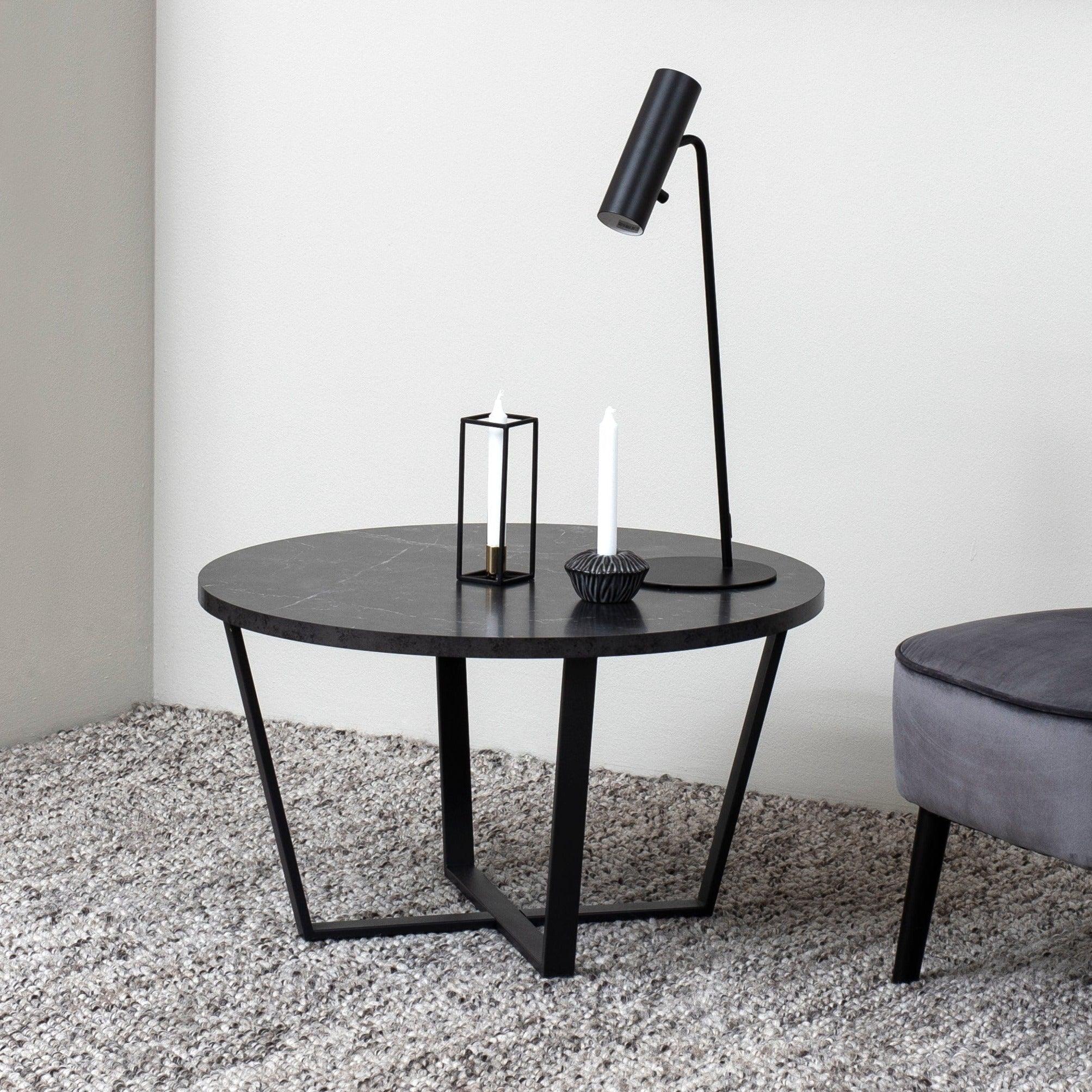
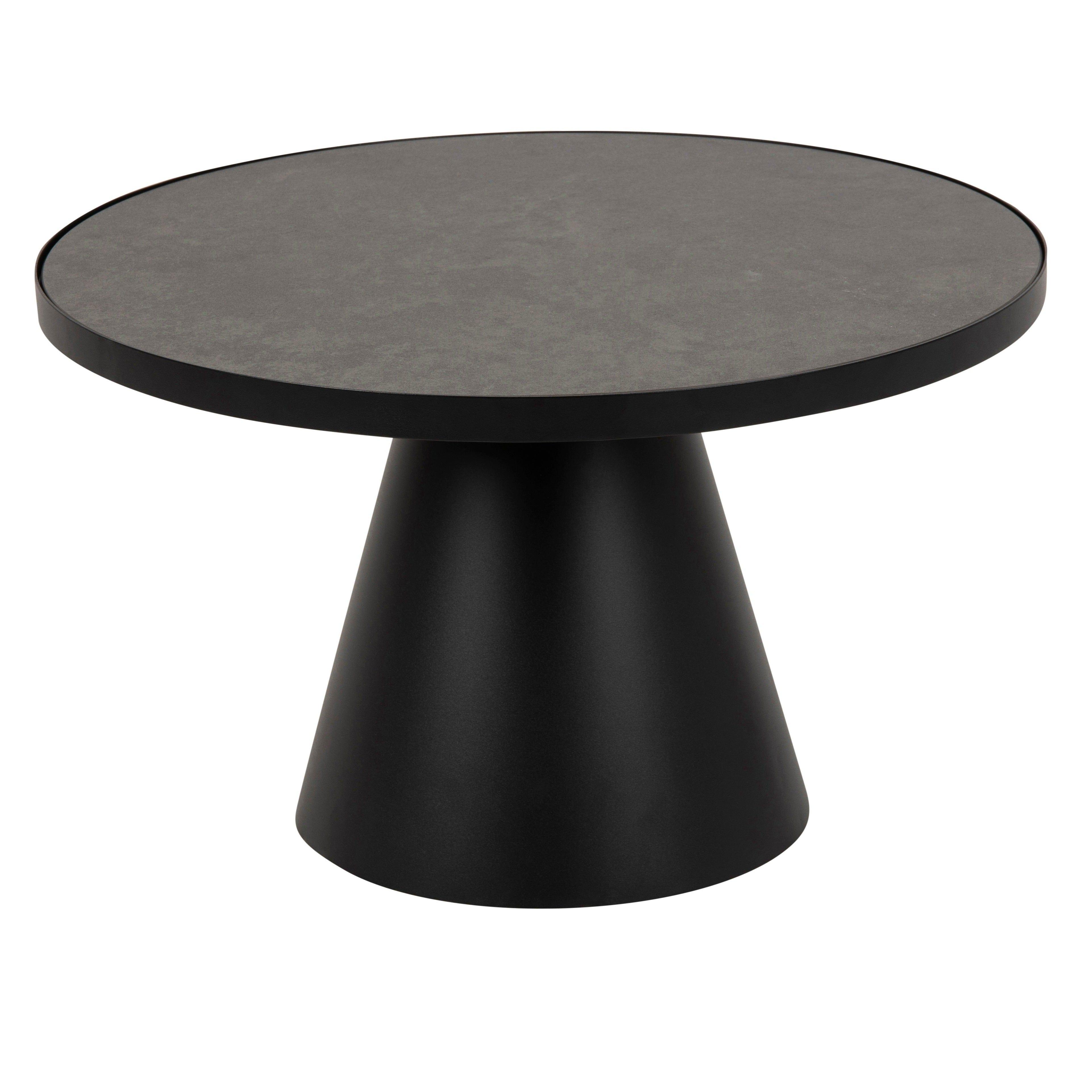
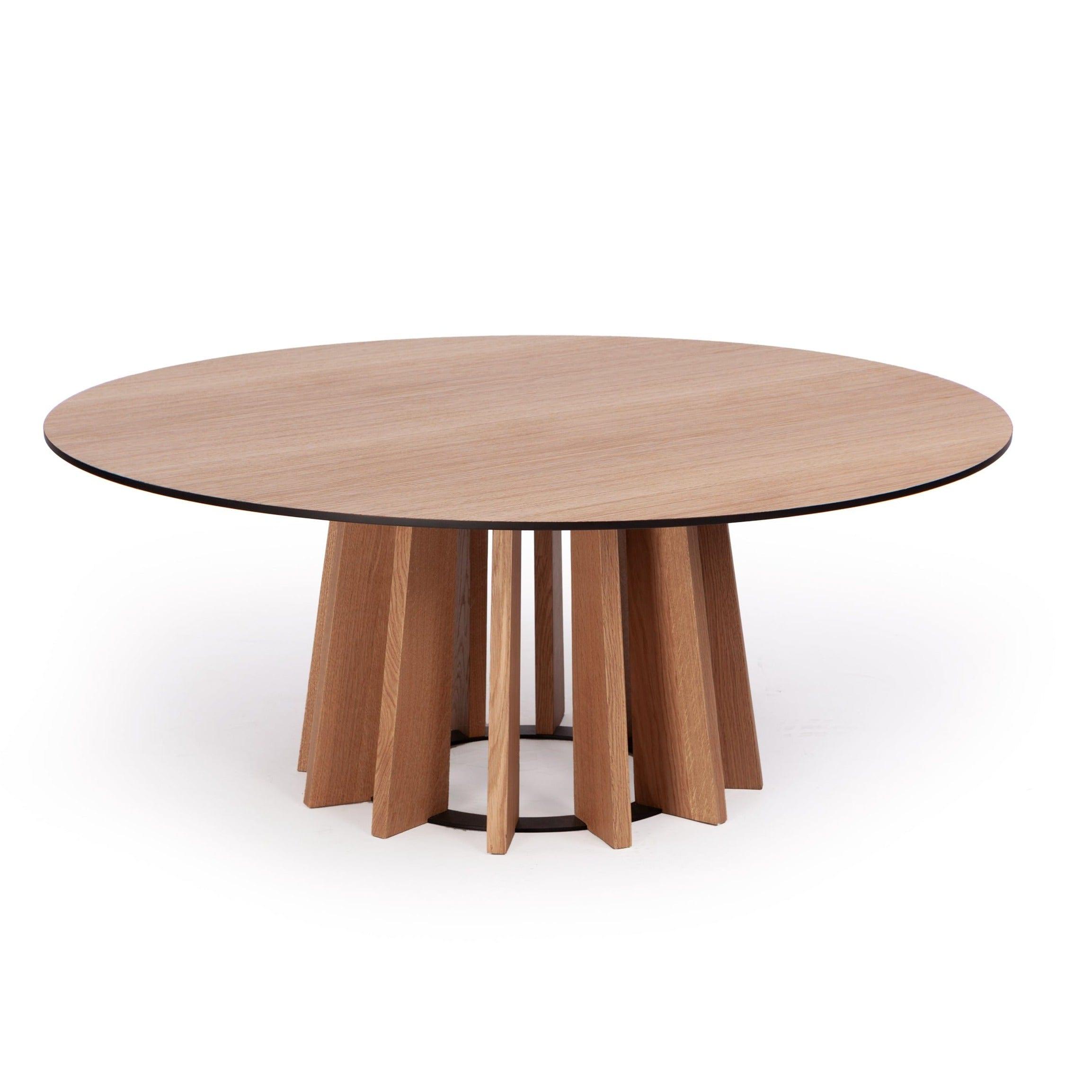
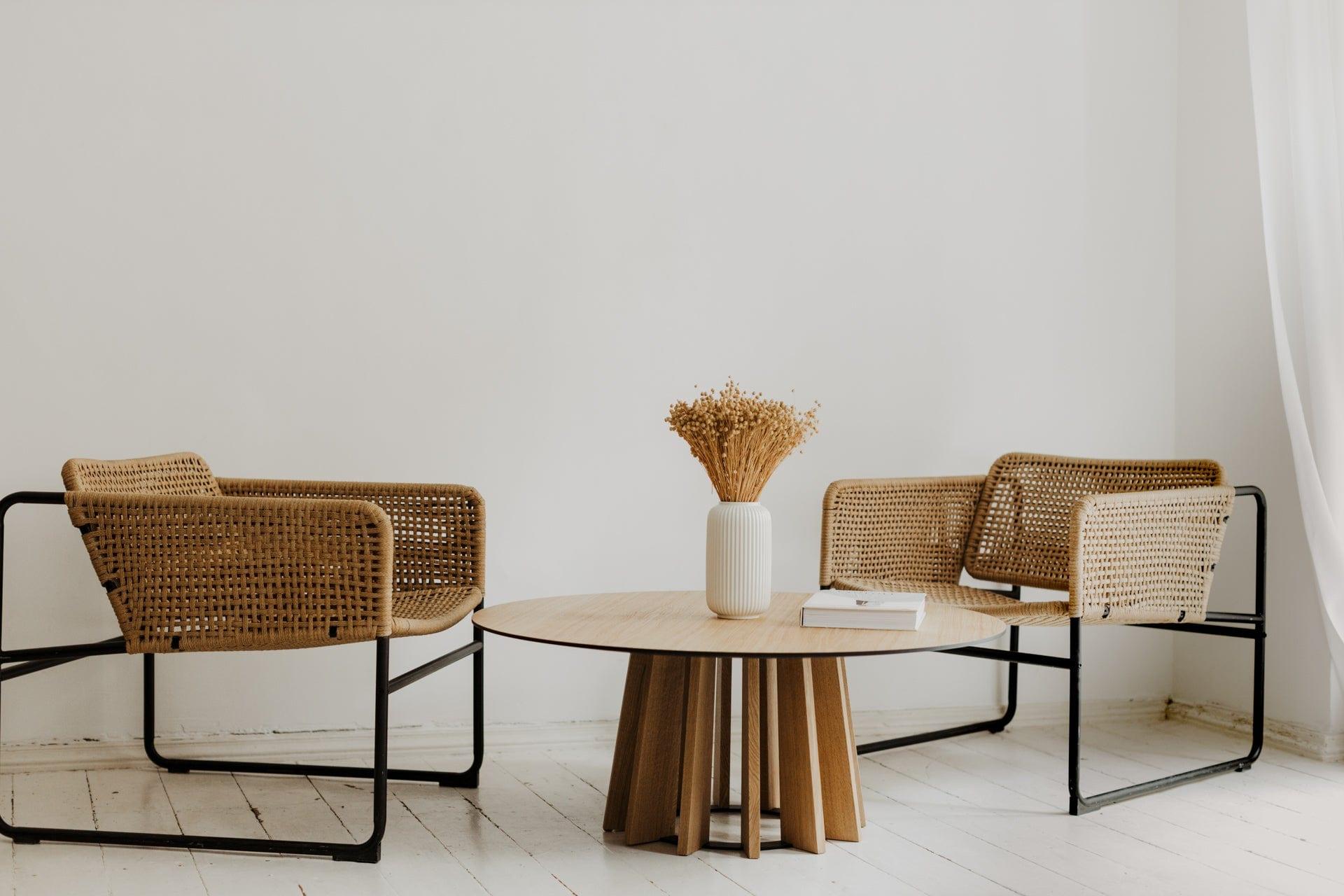
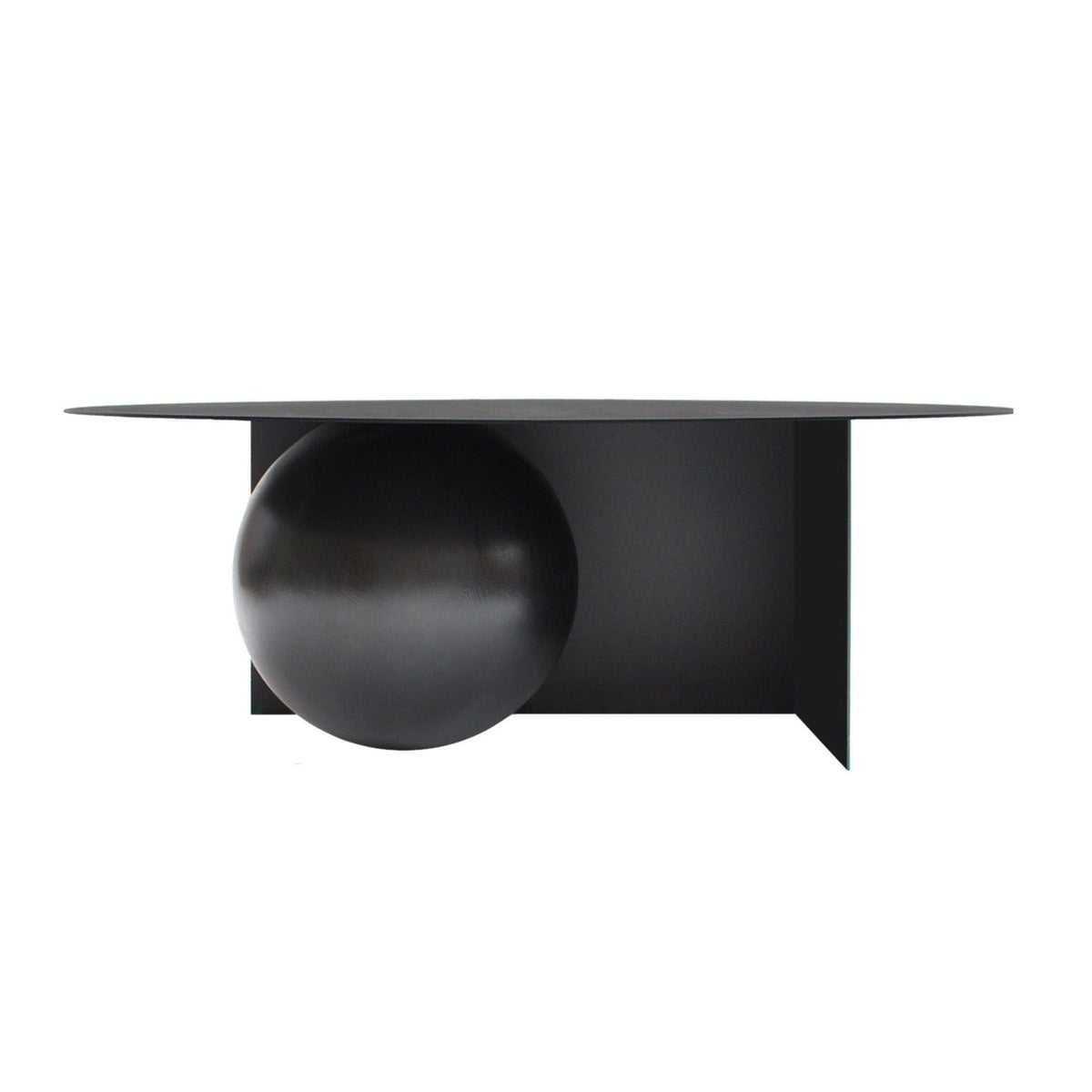
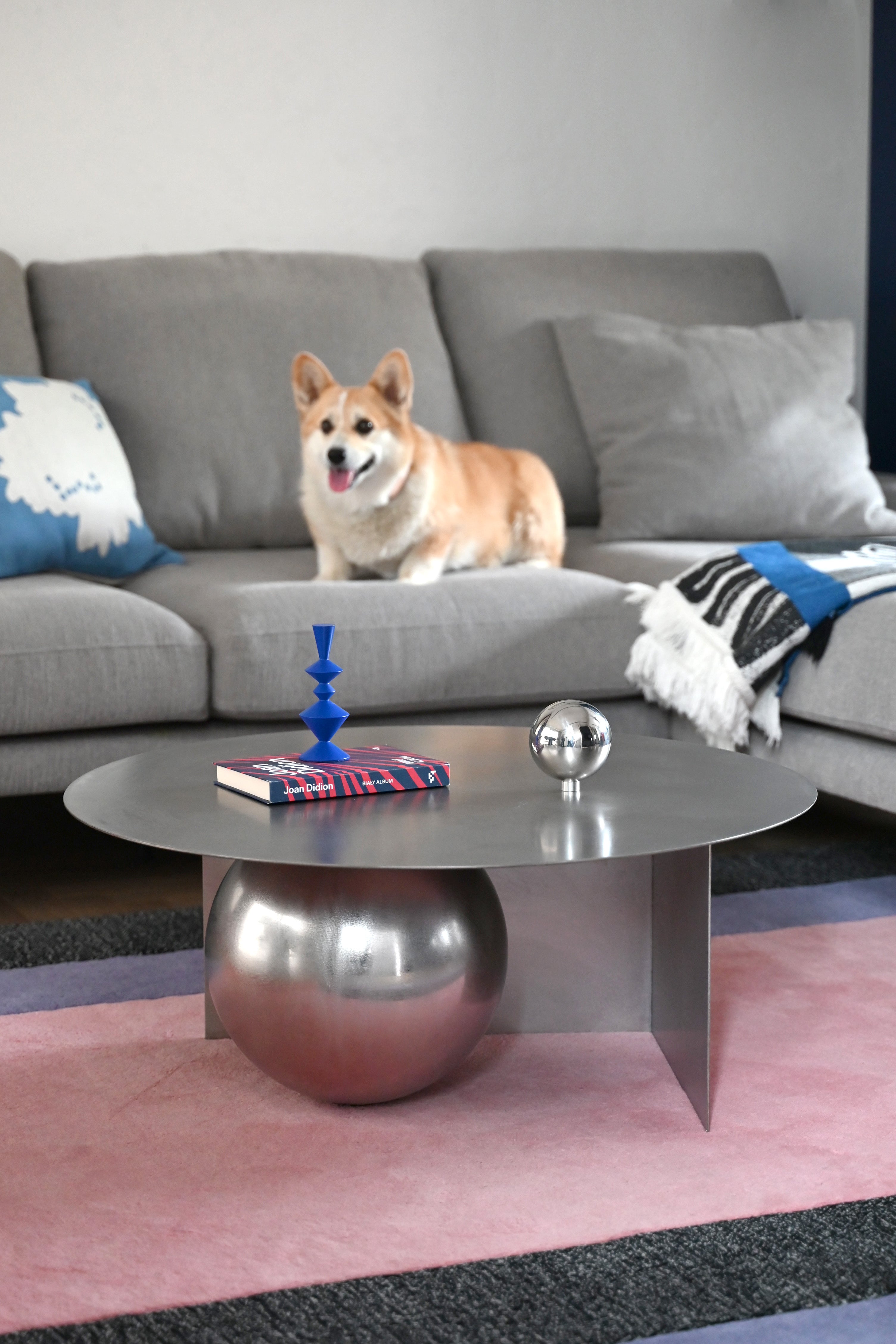
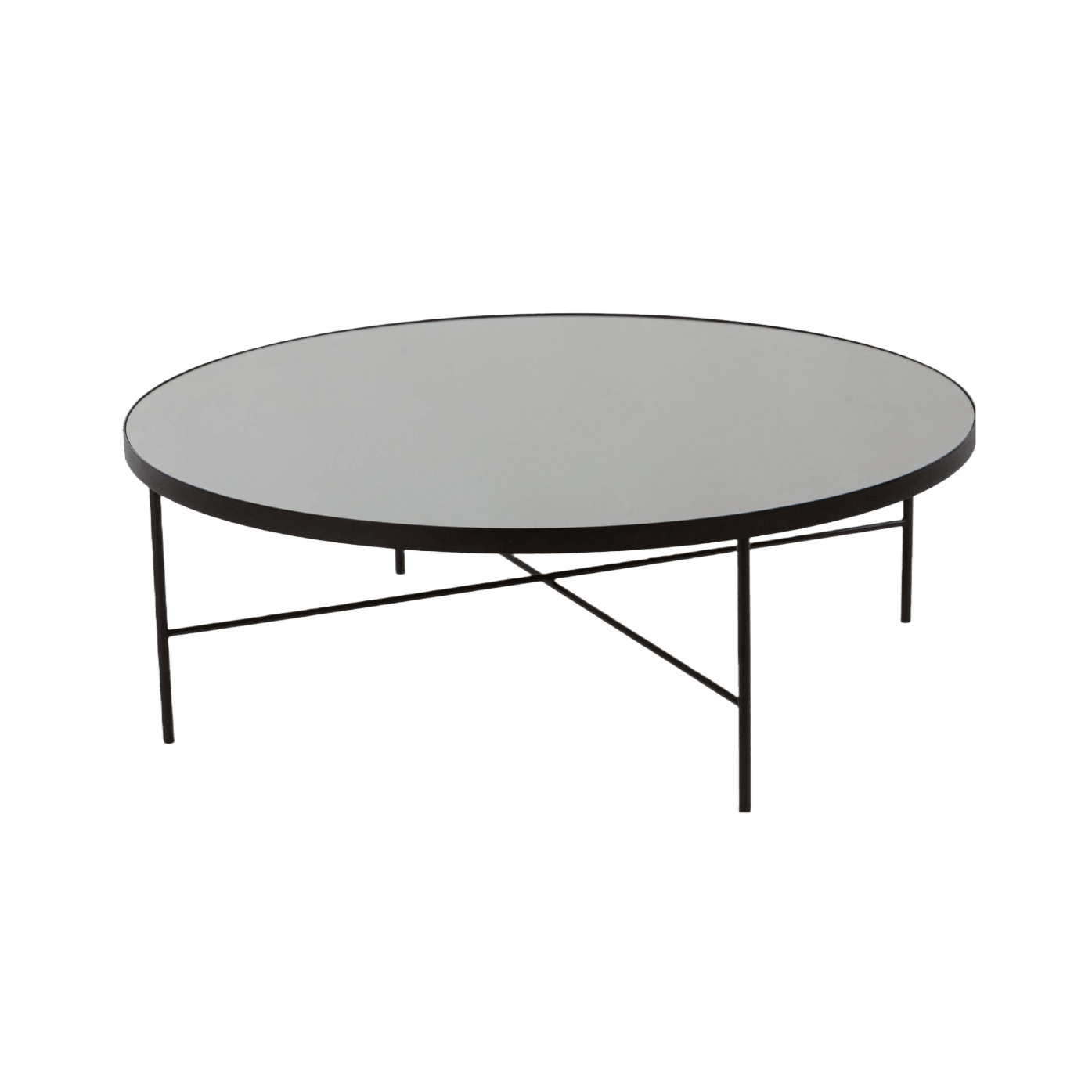
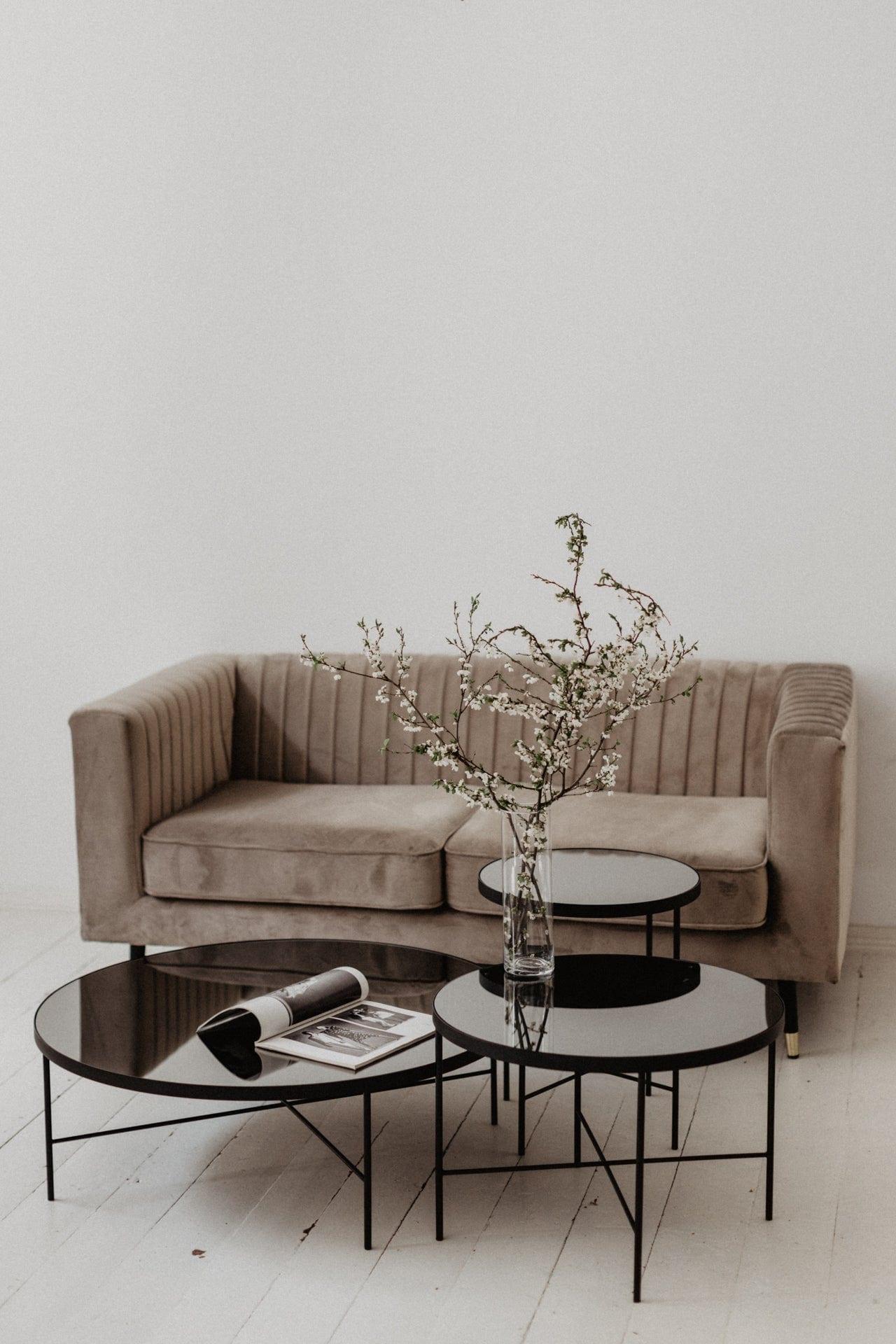
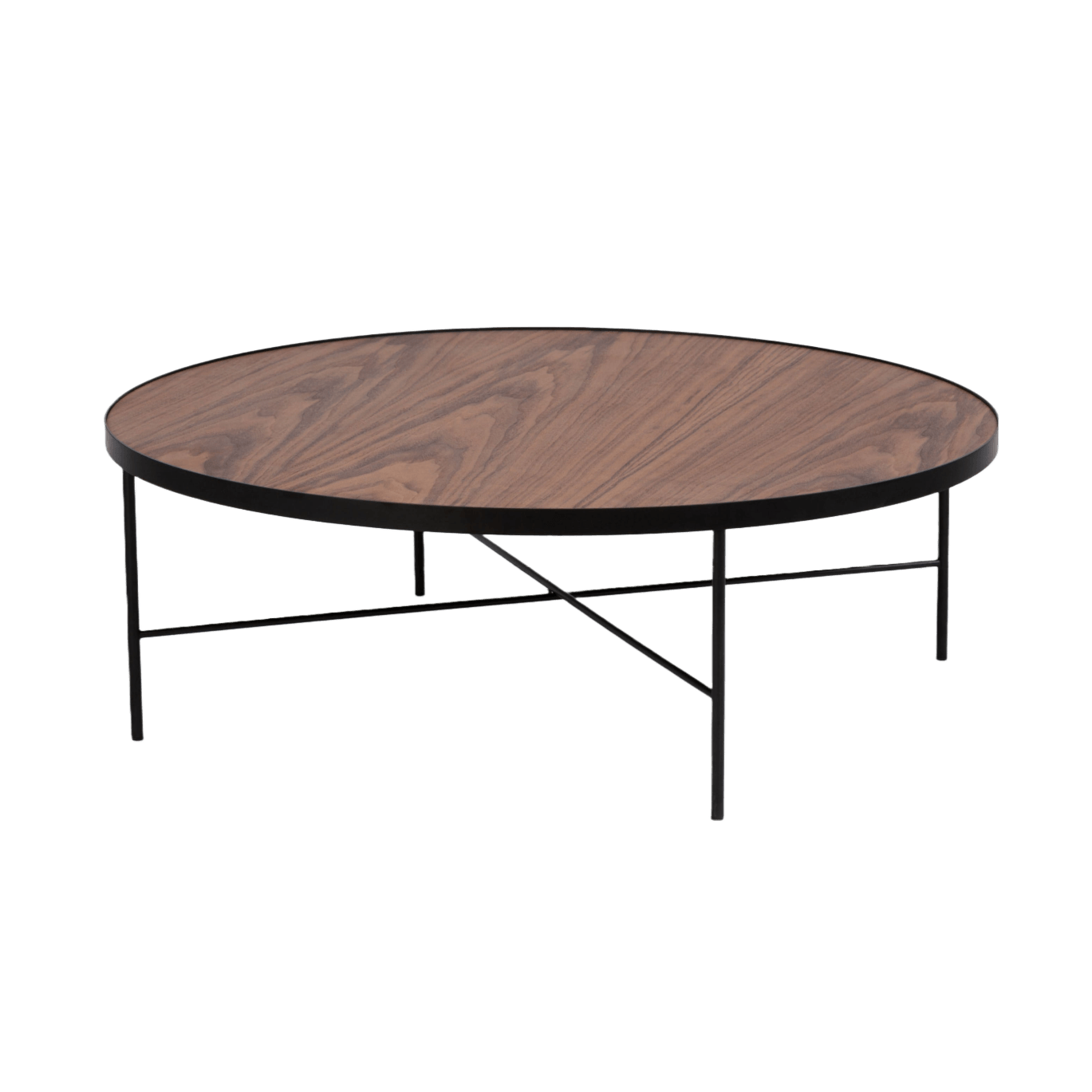
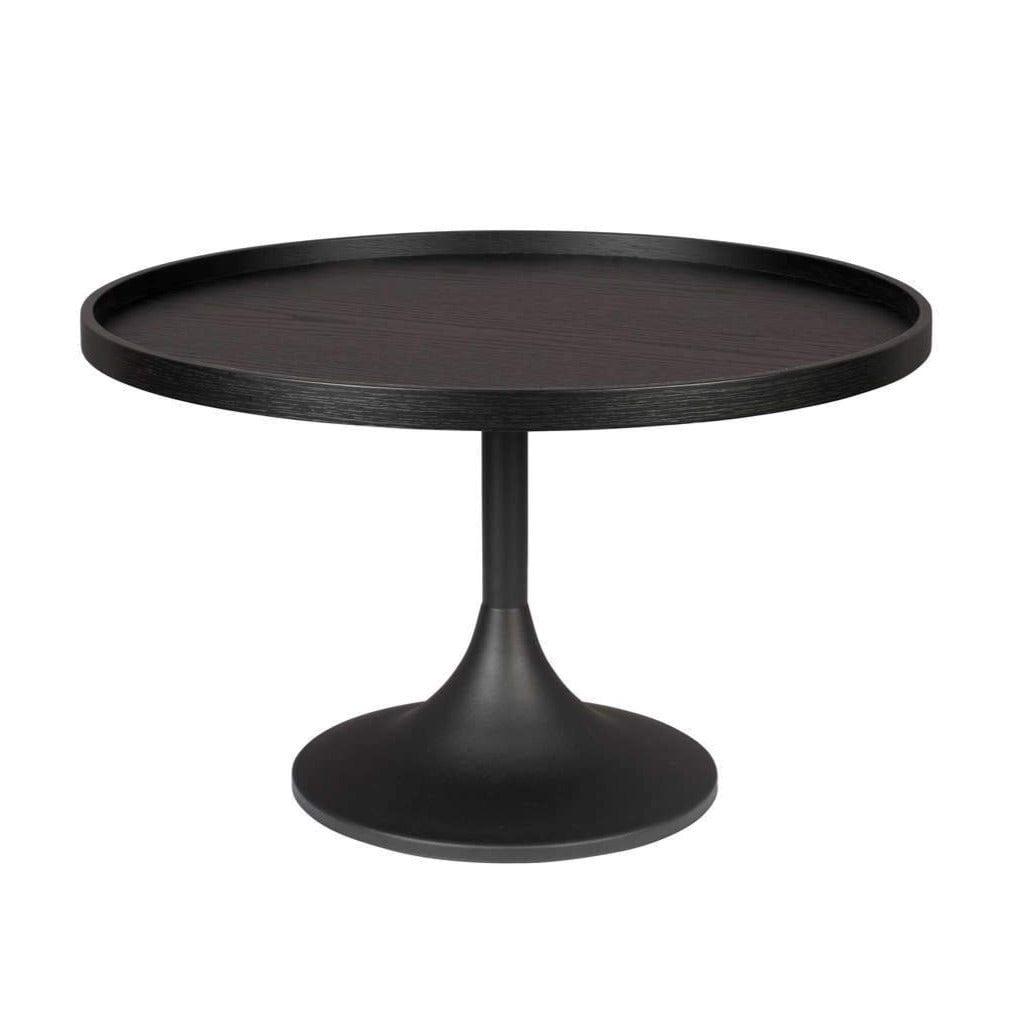
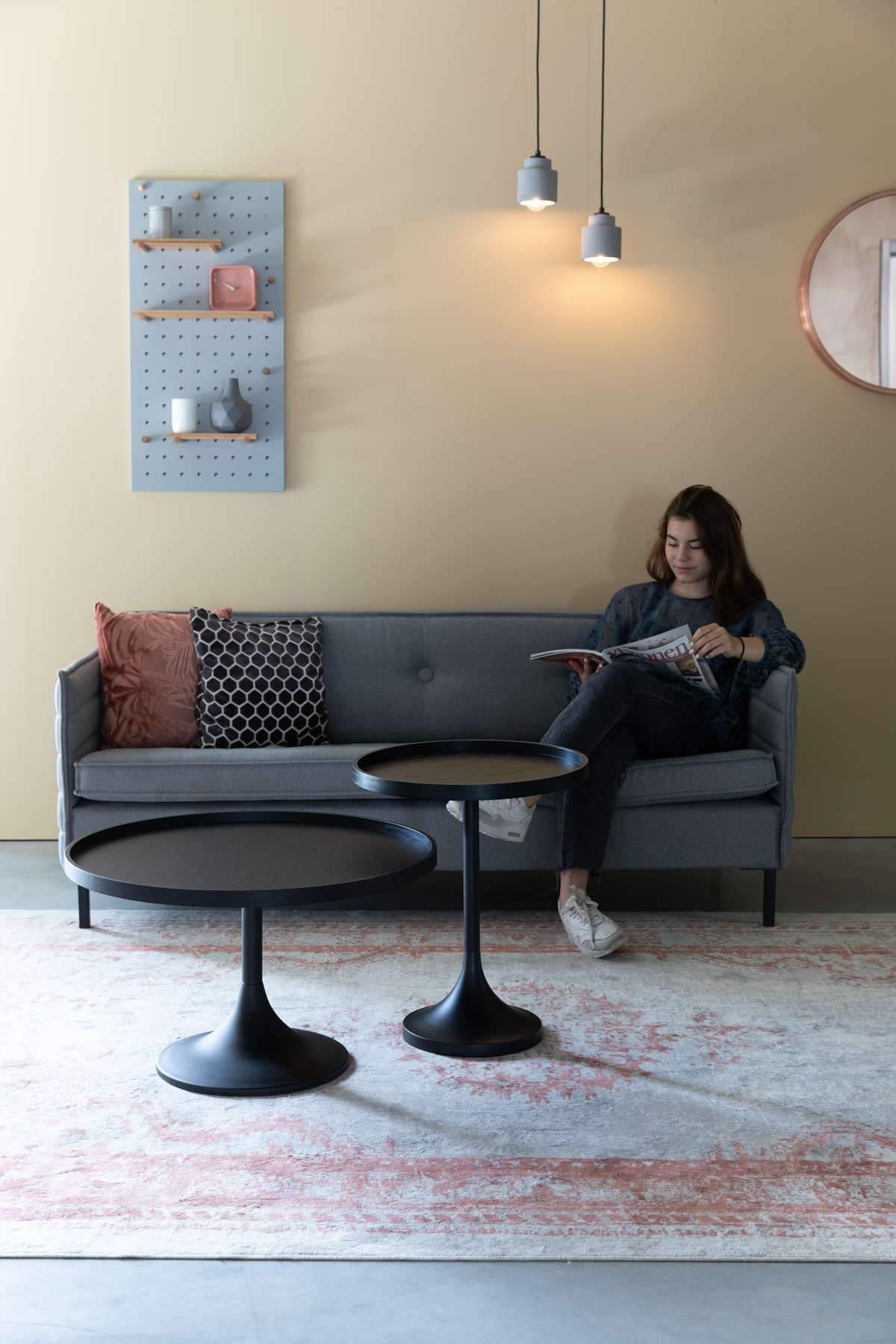
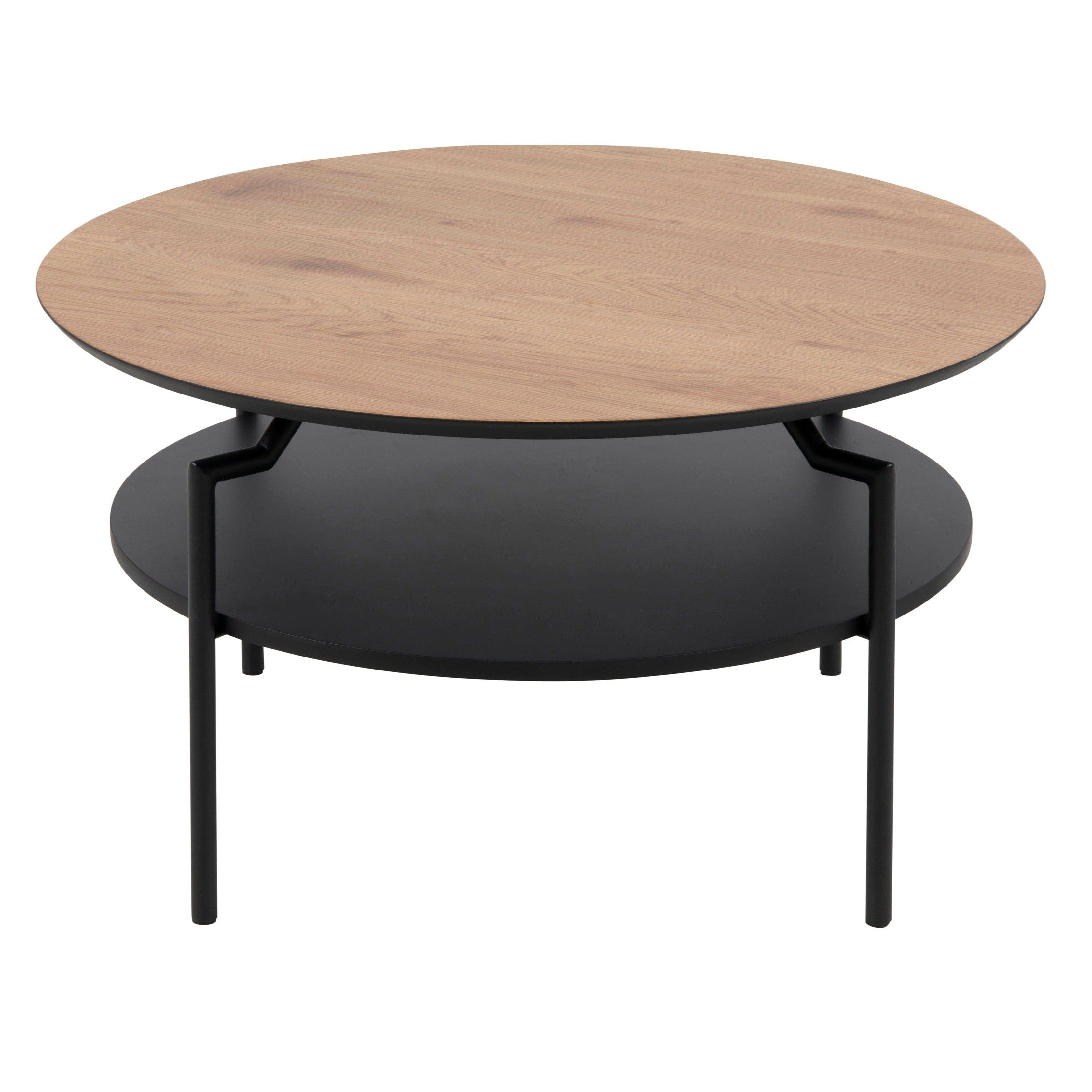
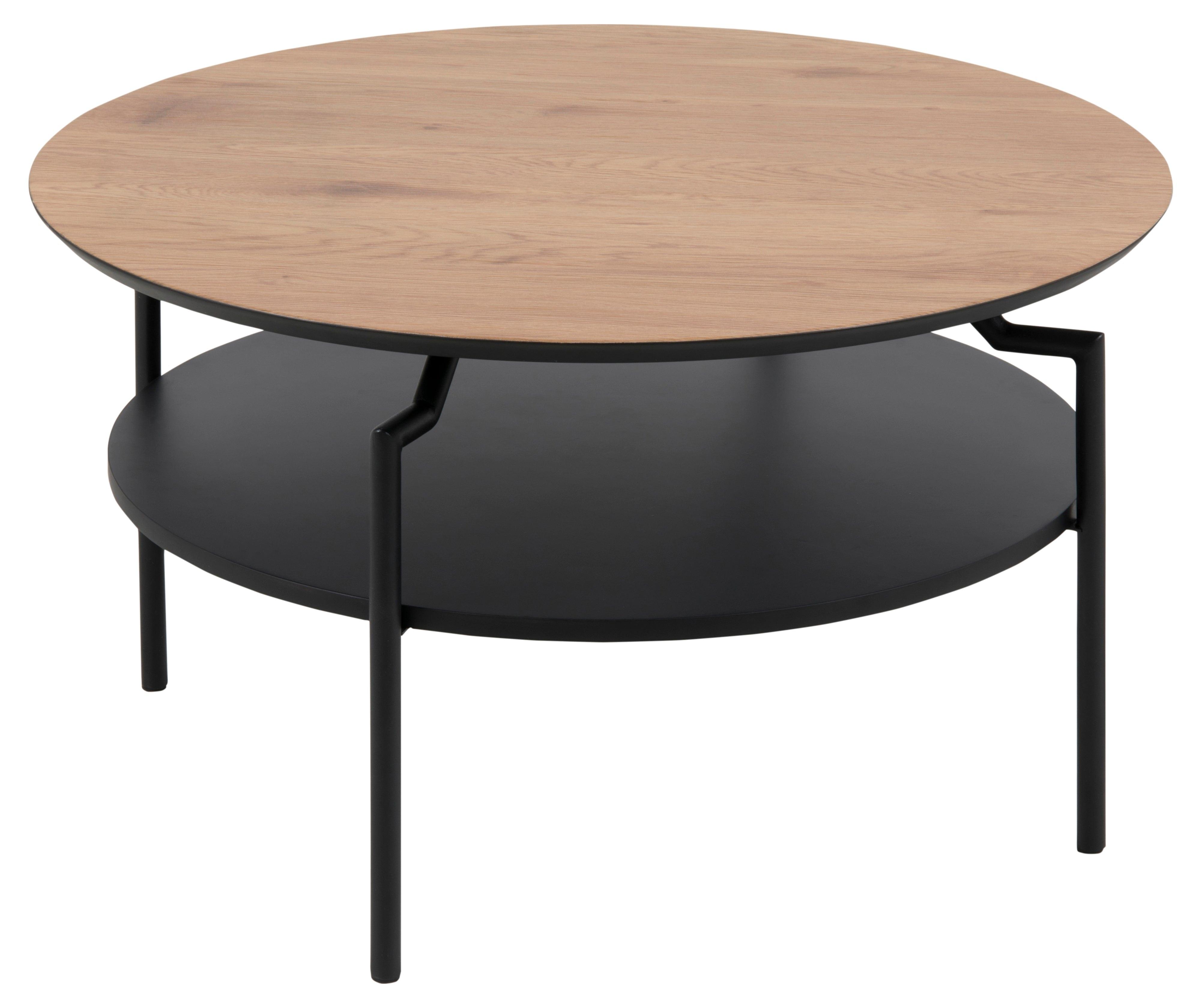
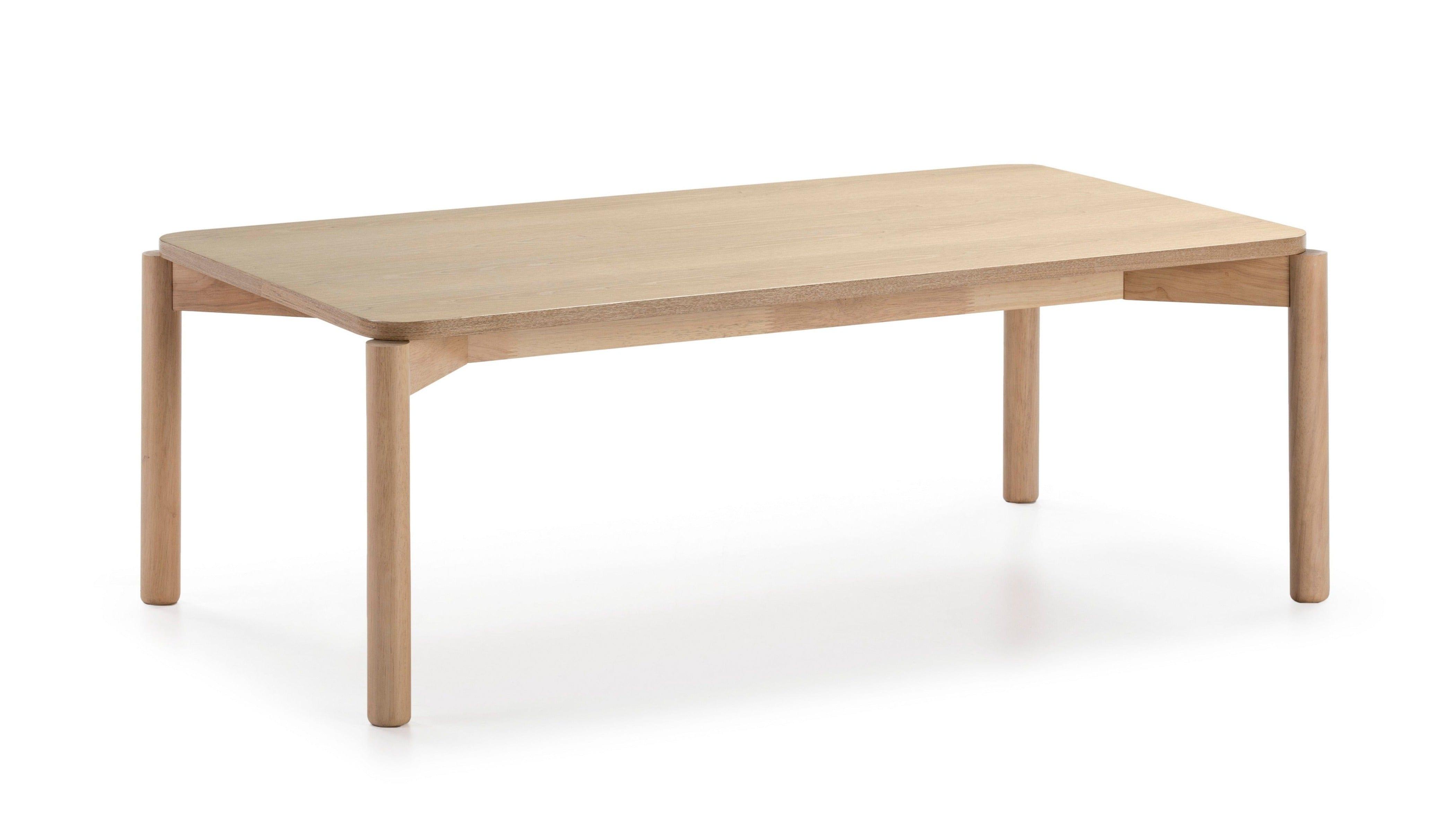
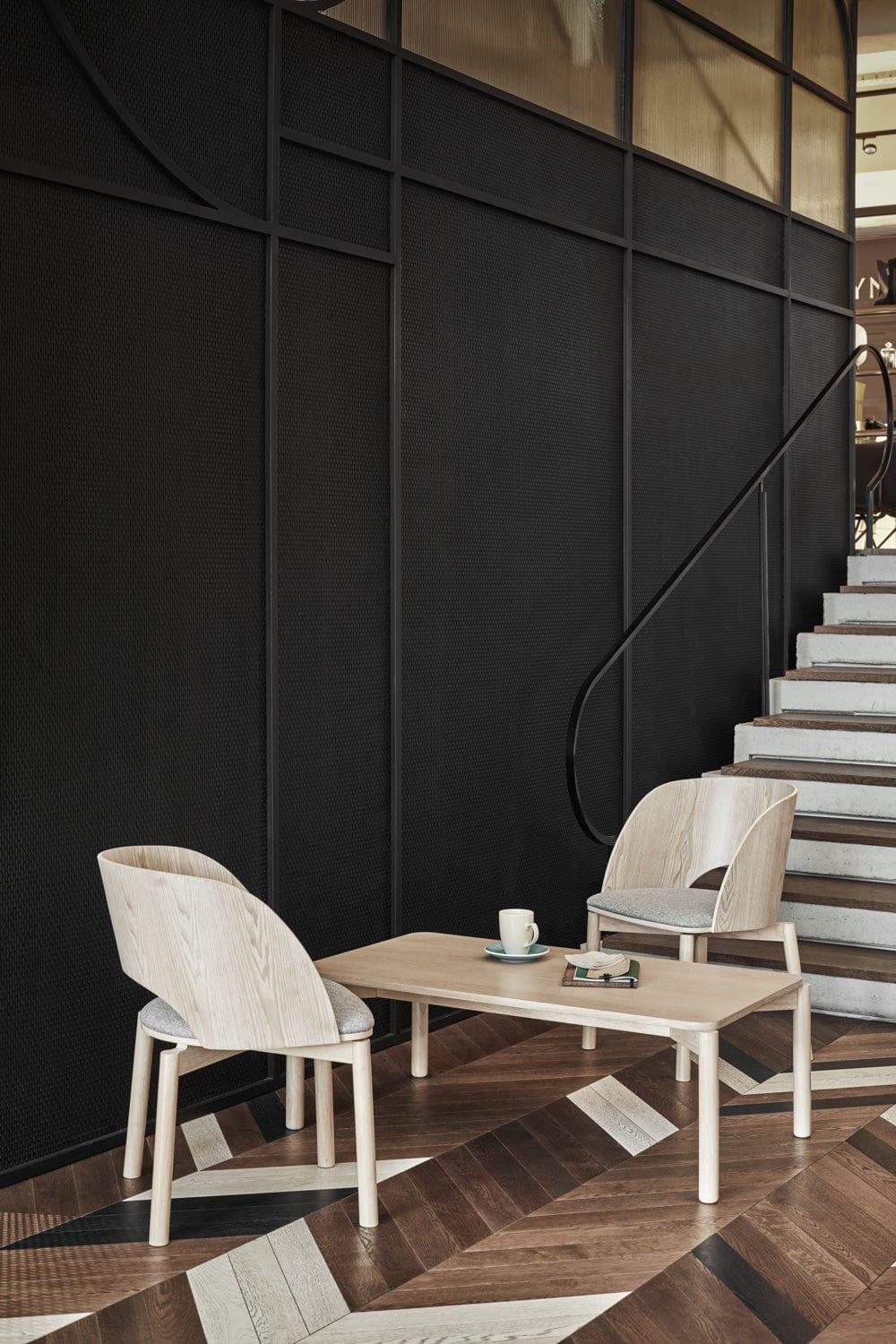
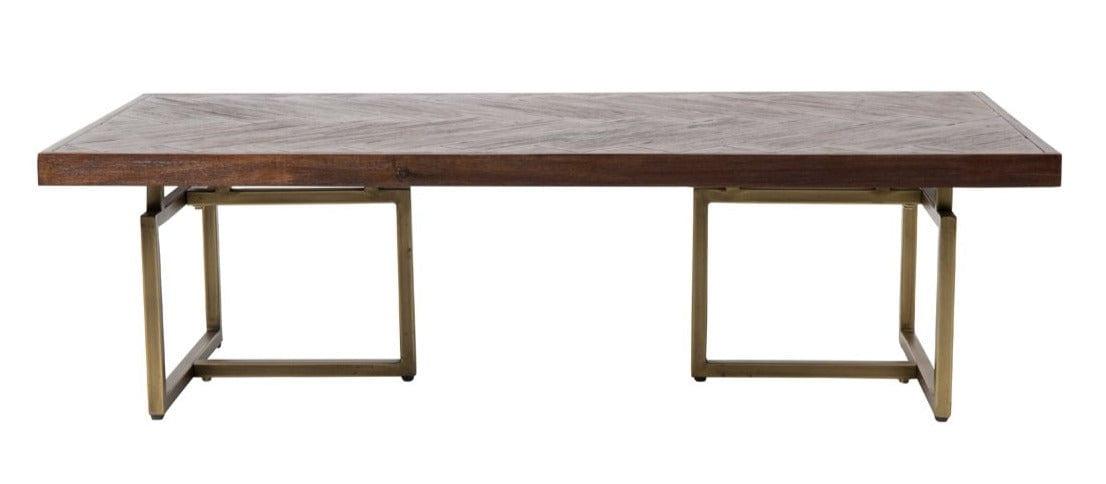
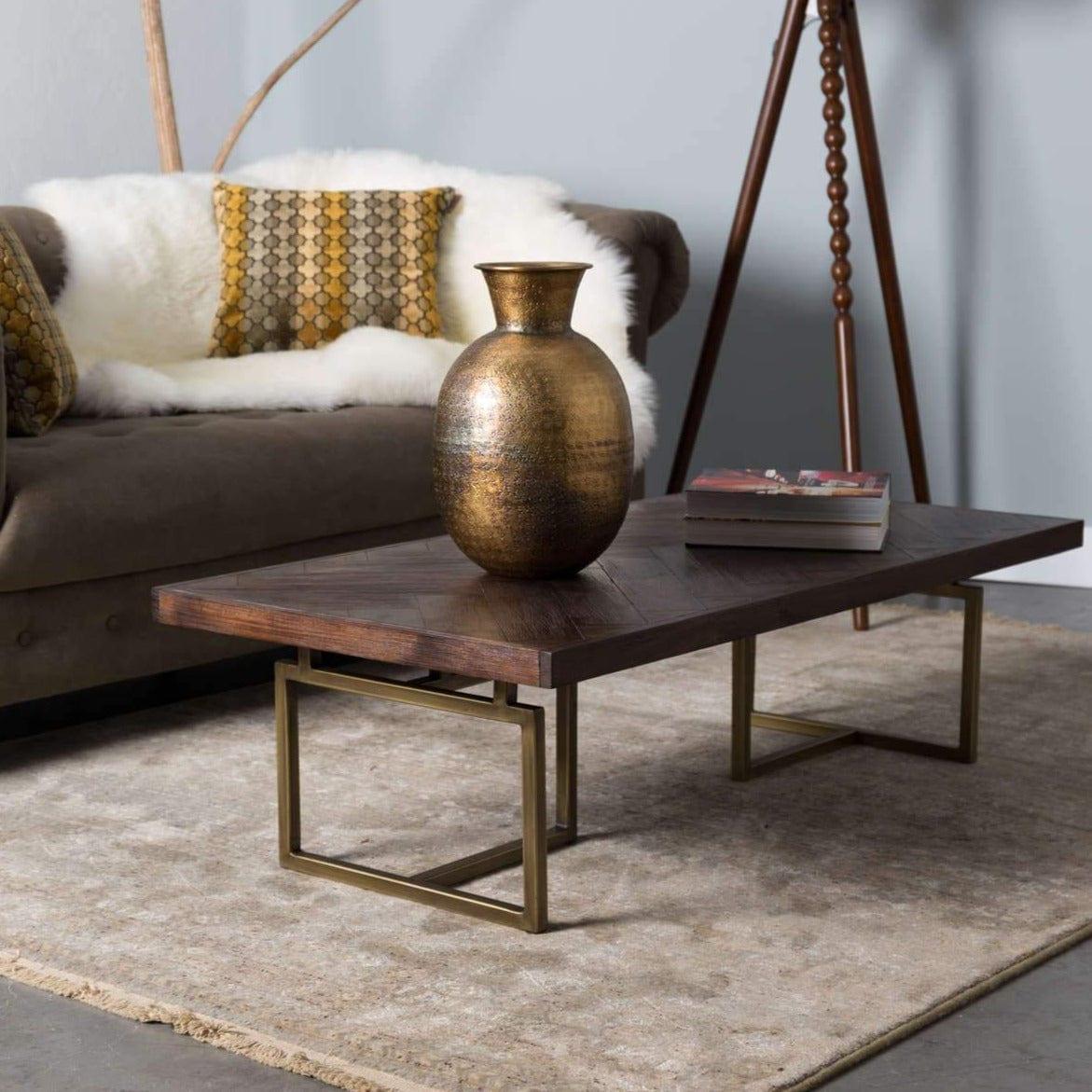
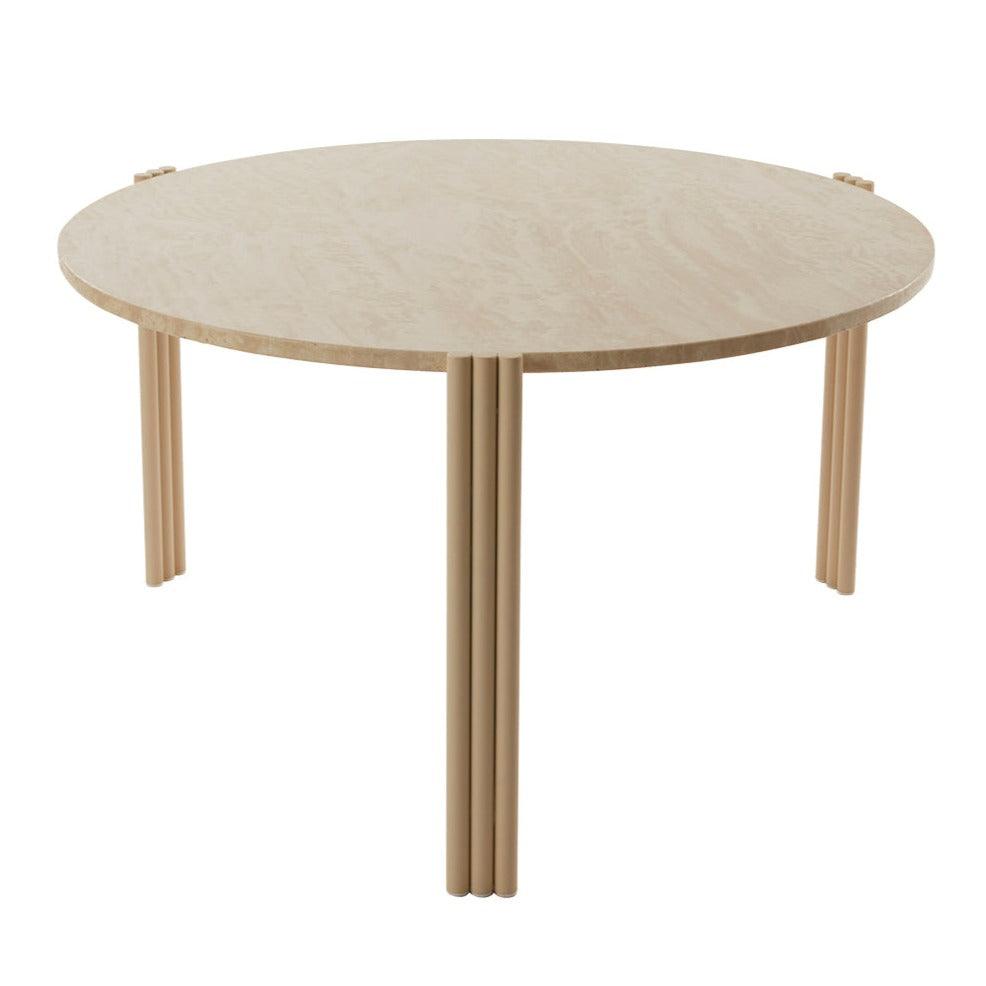
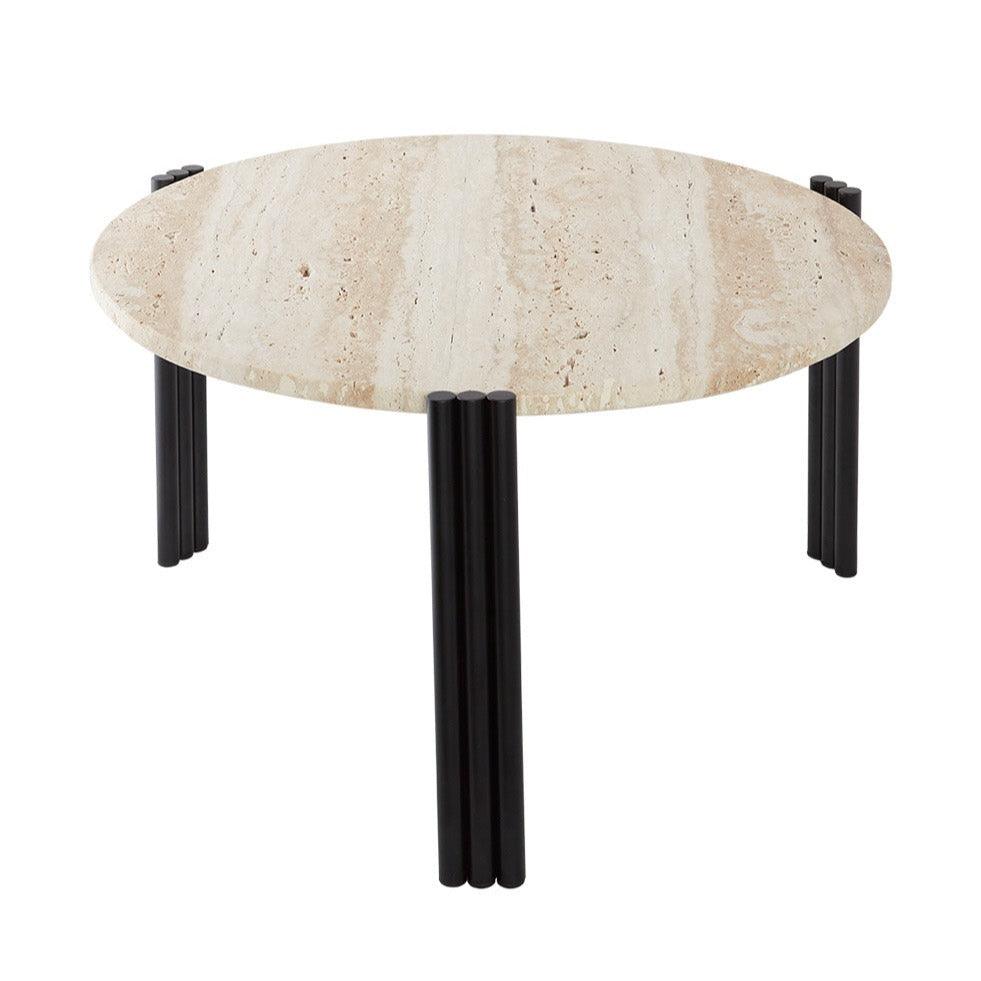
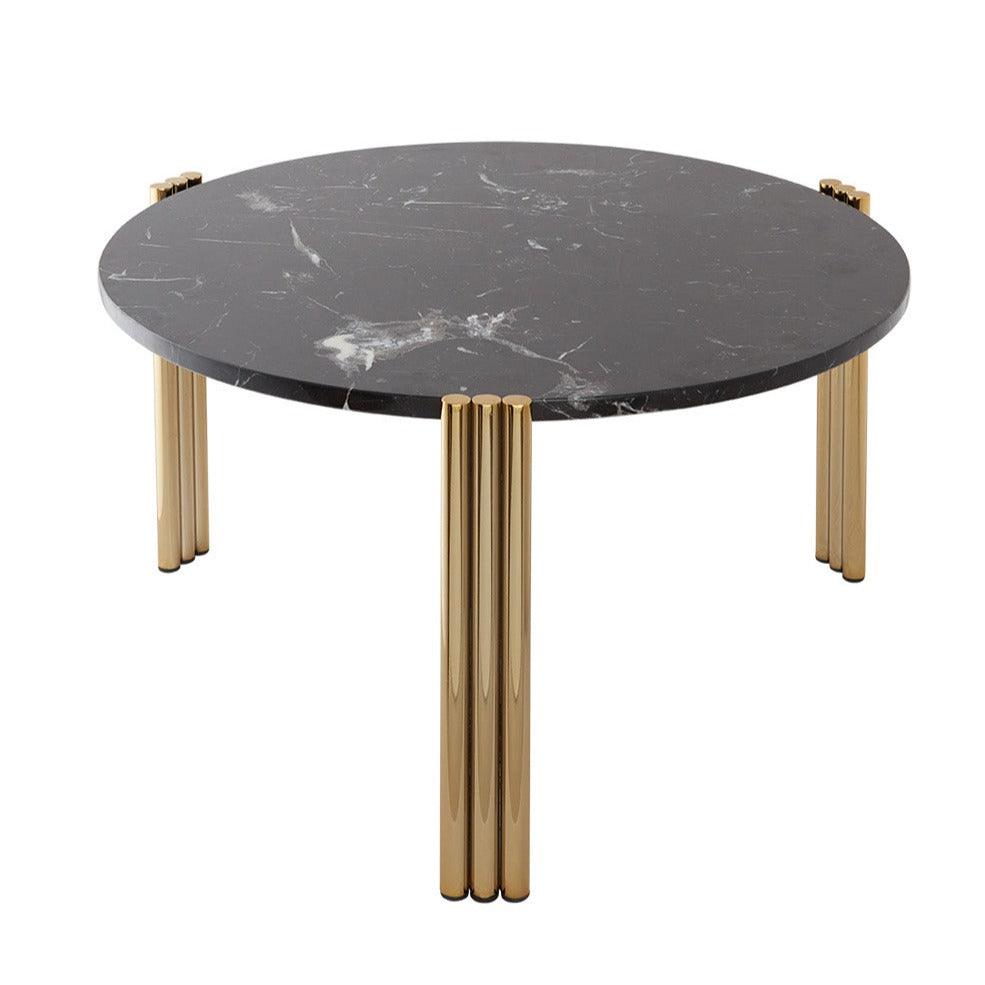
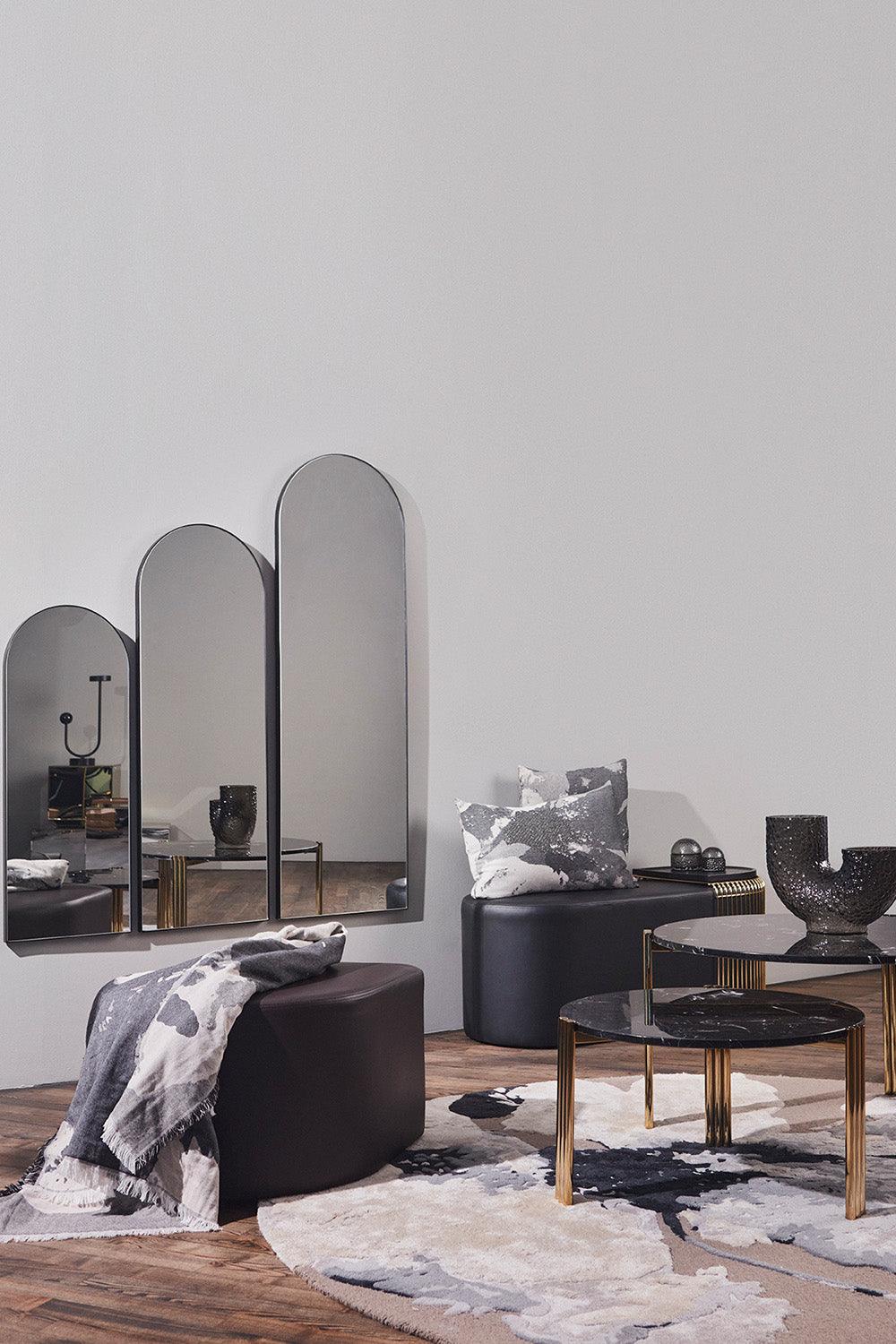
Coffee Table is centrally placed in front of the sofa and is the largest of the group. It serves as the main surface in the relaxation area – for drinks, books, and decorations. You can find models in the coffee tables collection.
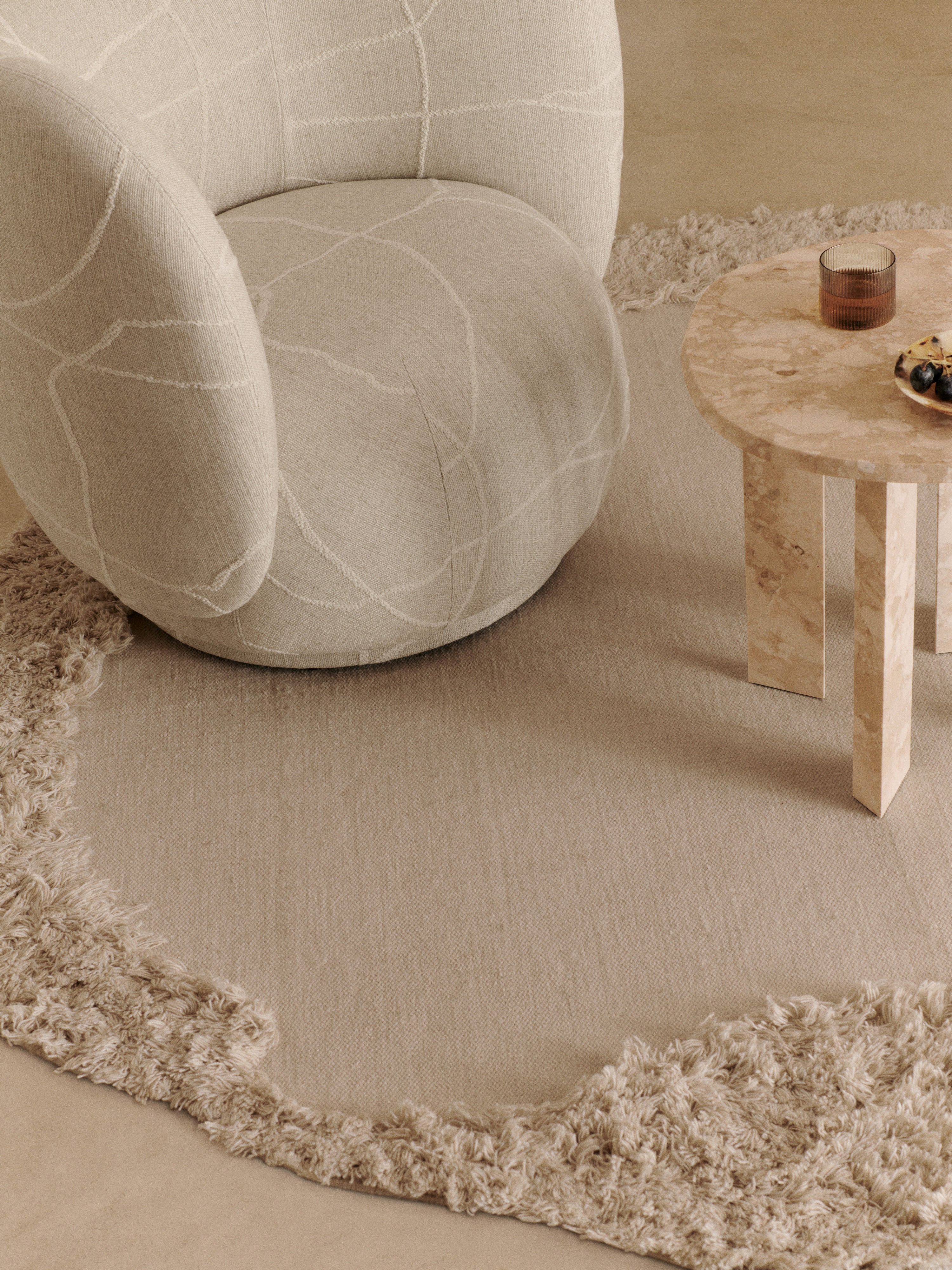
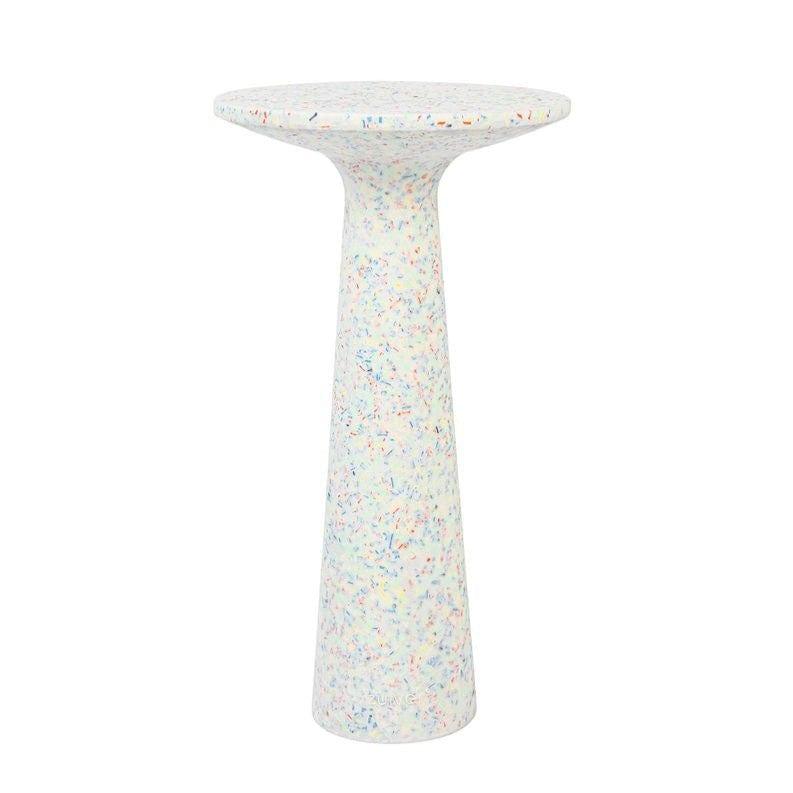
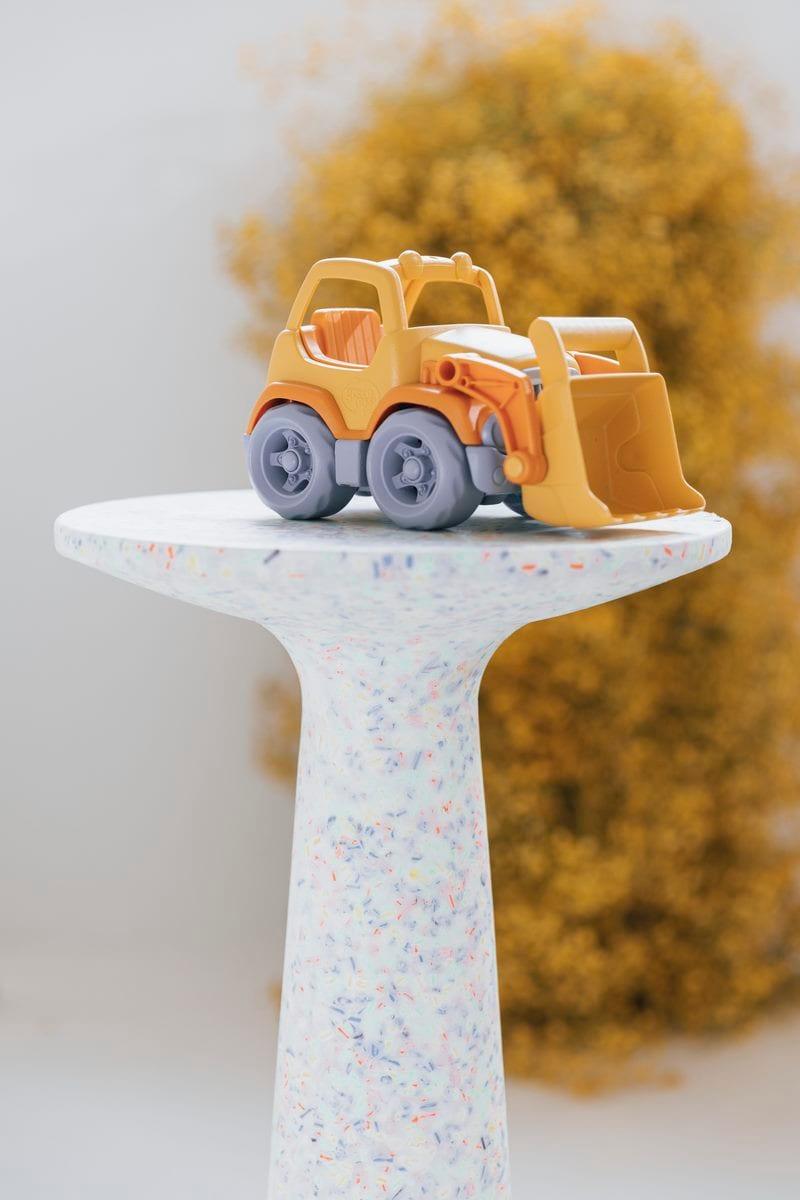
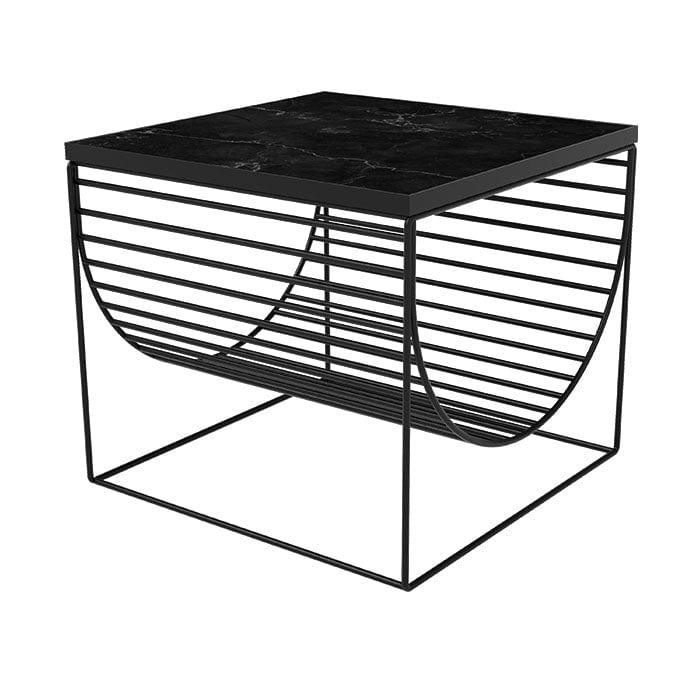
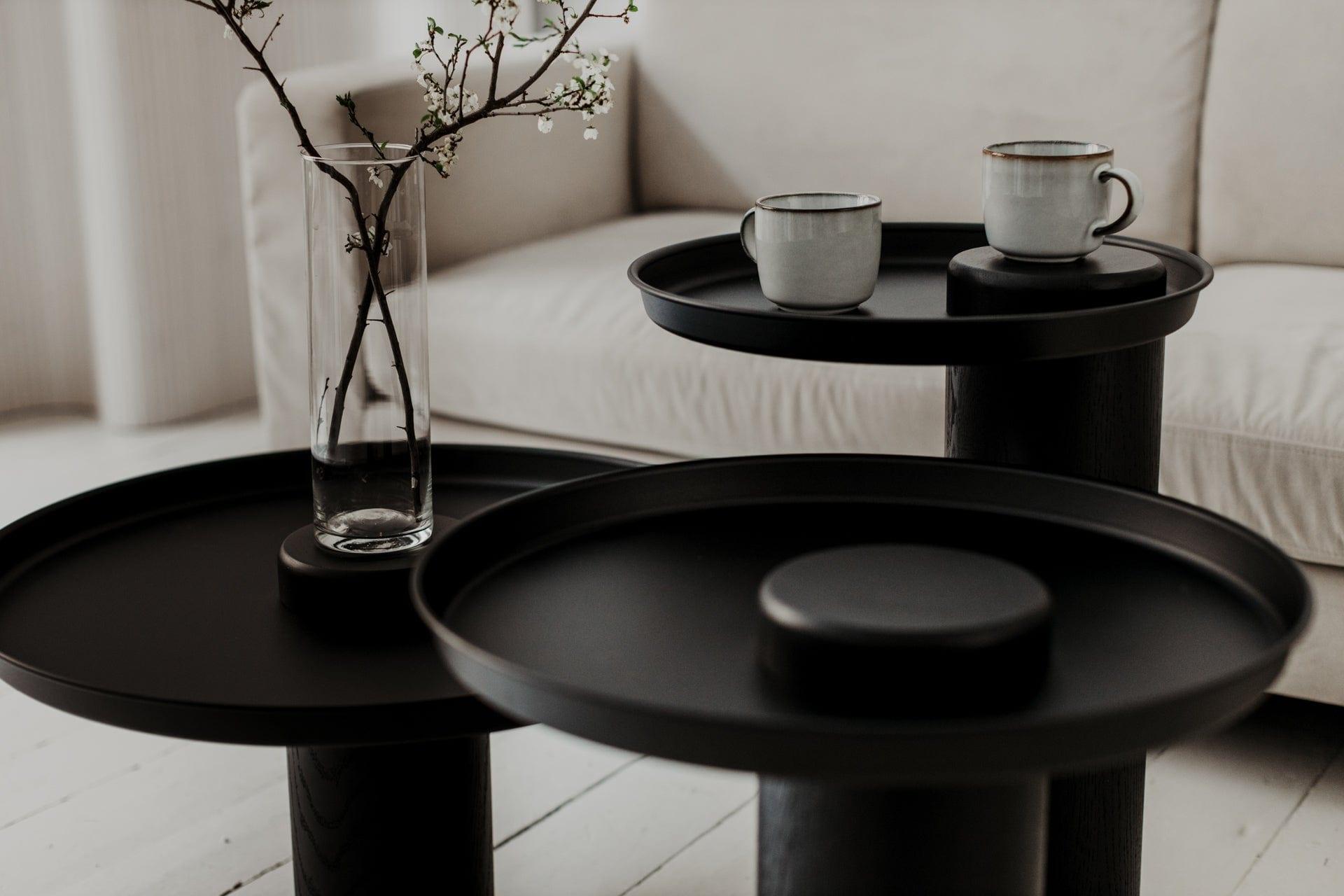
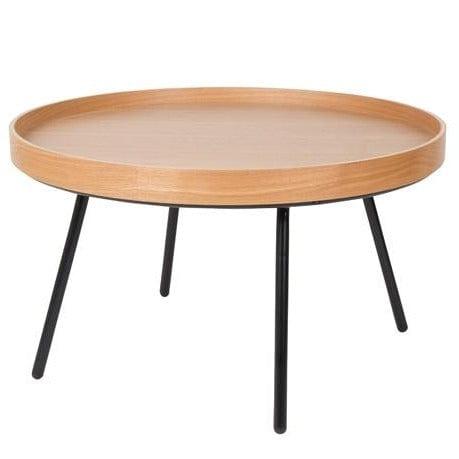
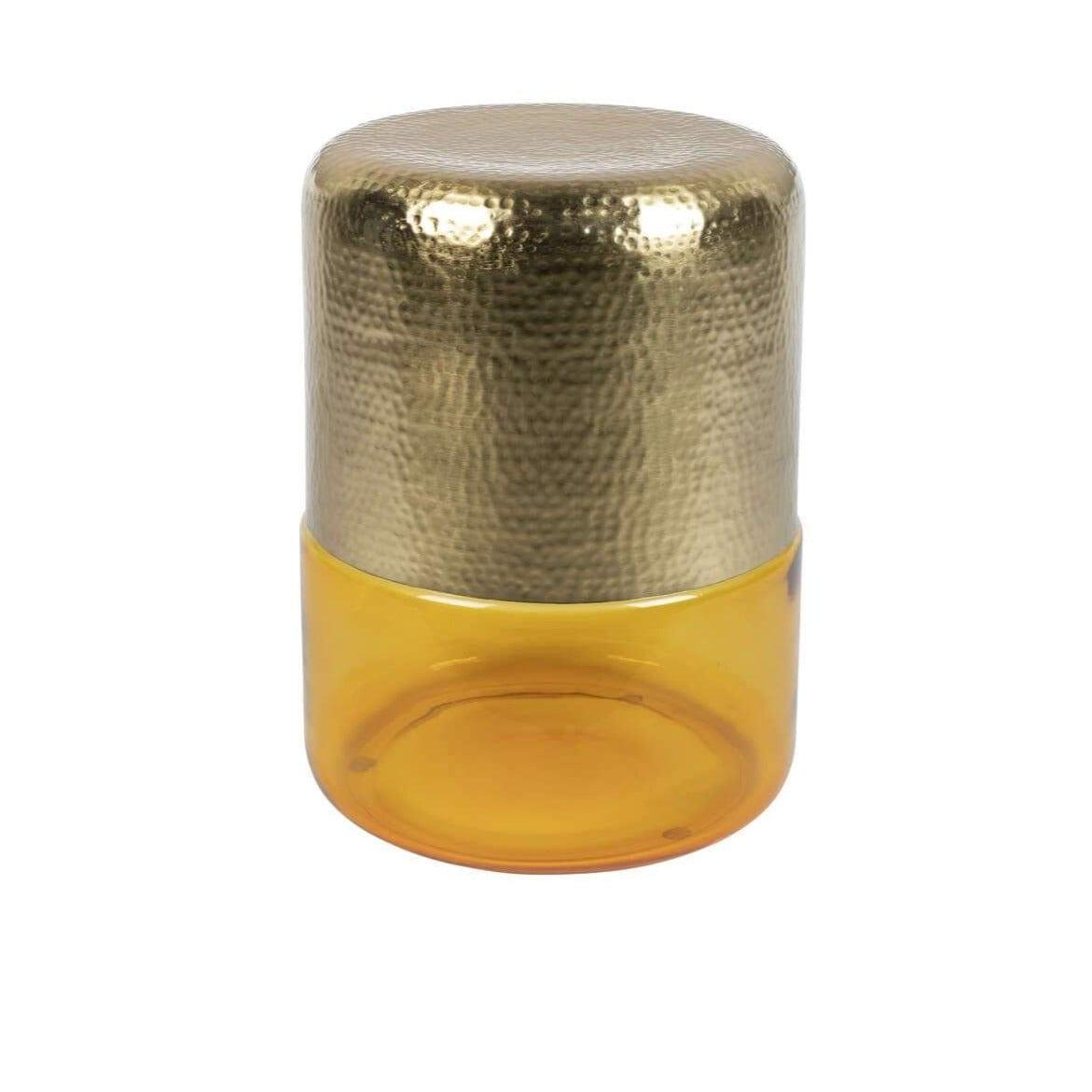
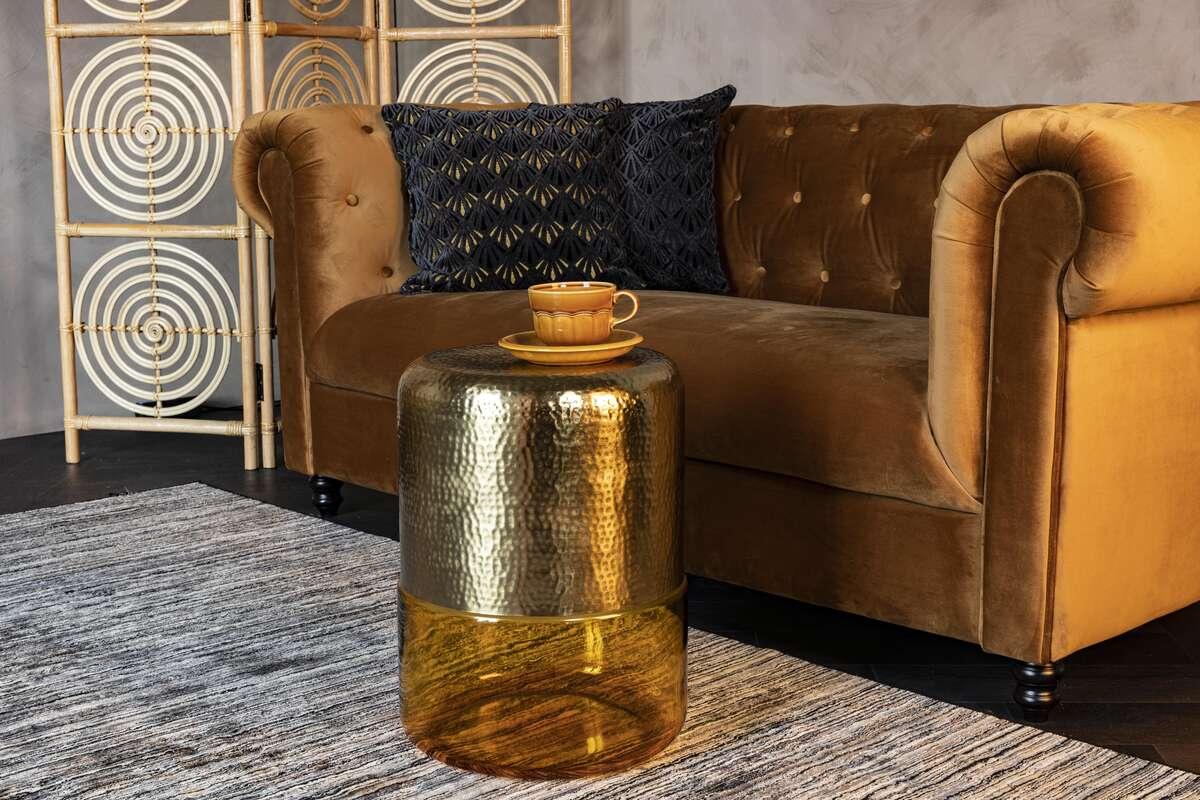
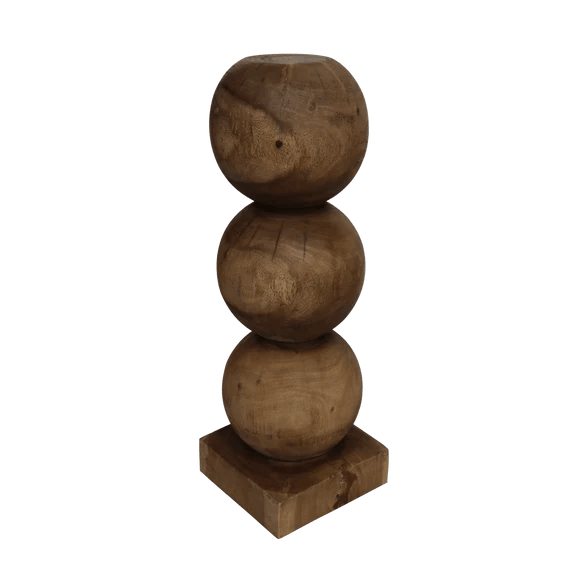
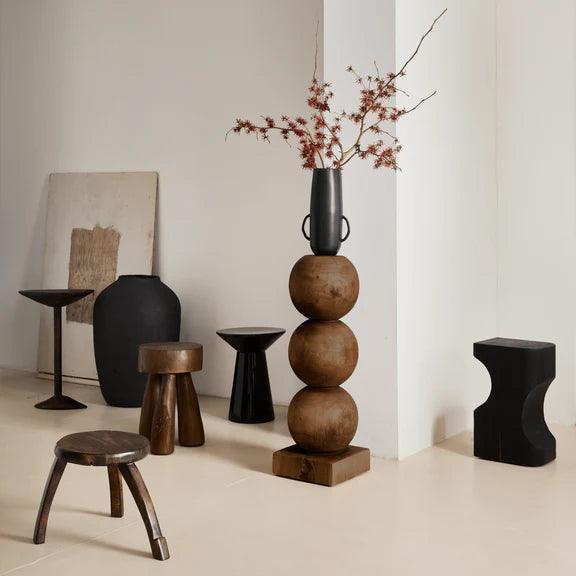
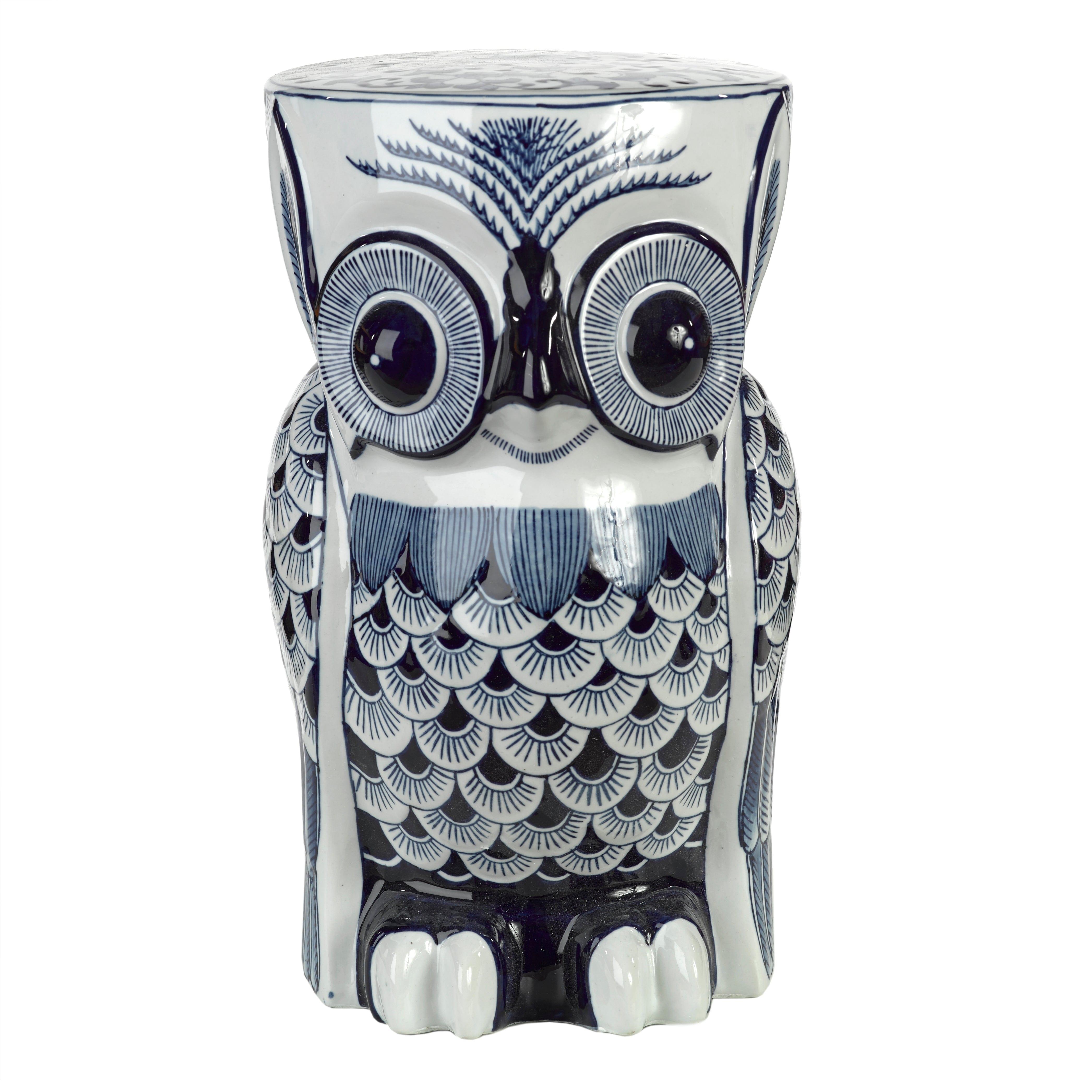
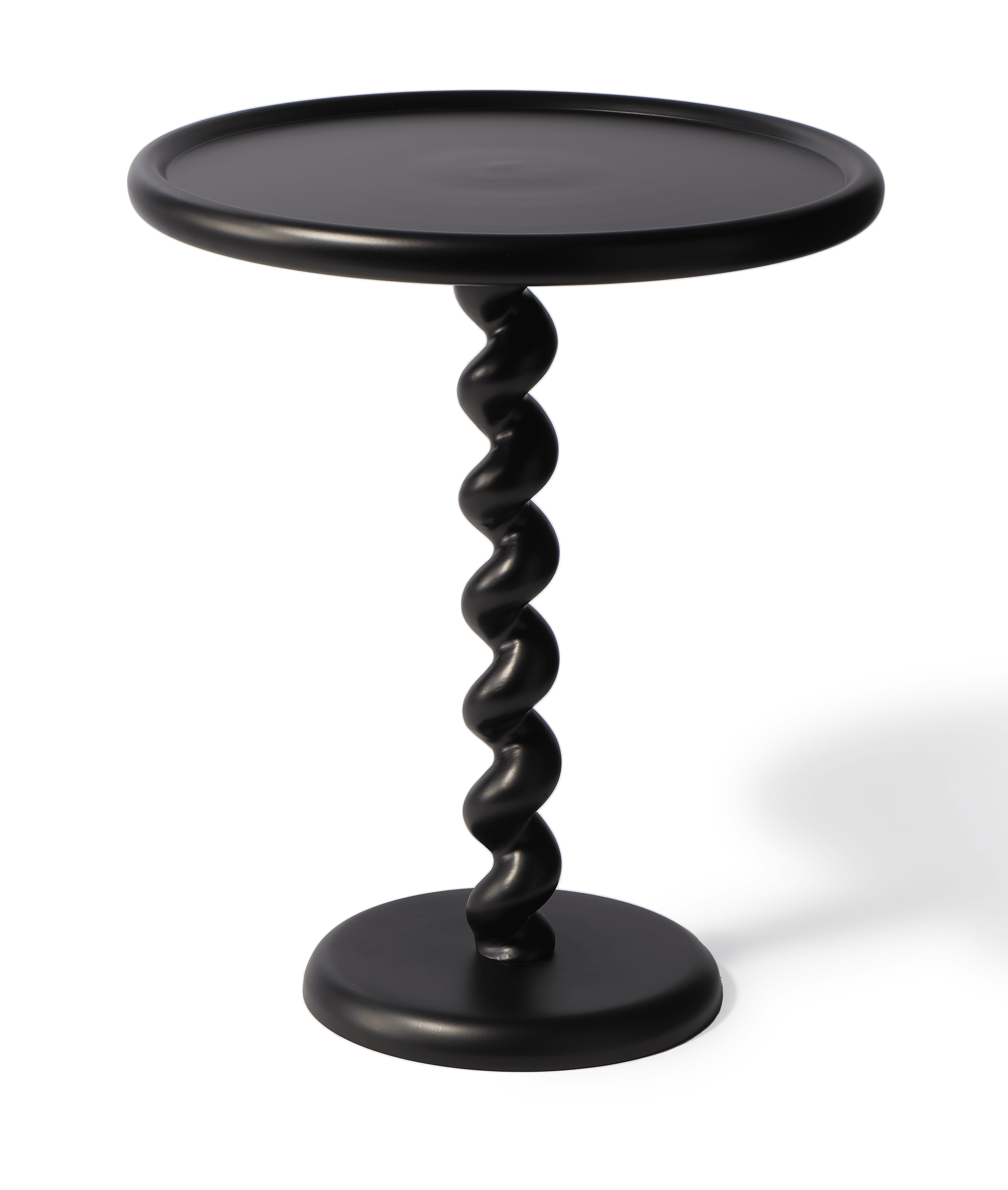
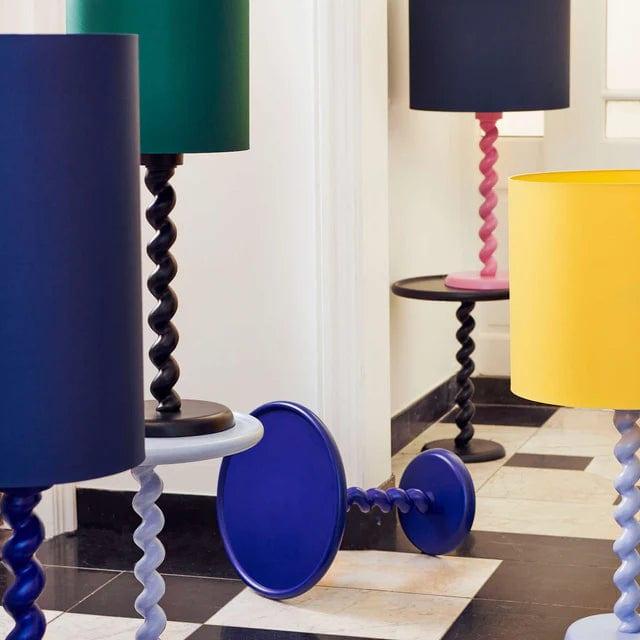
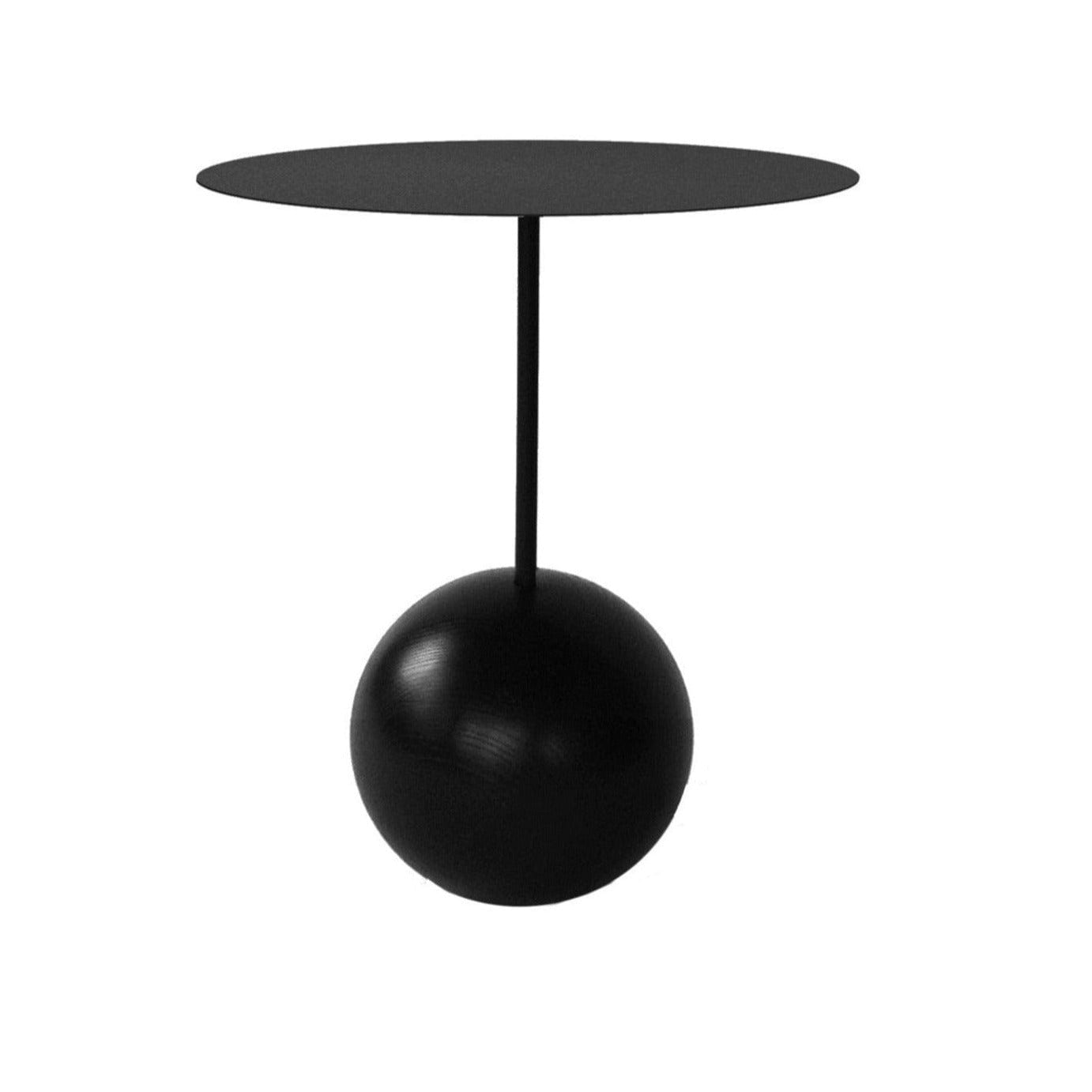
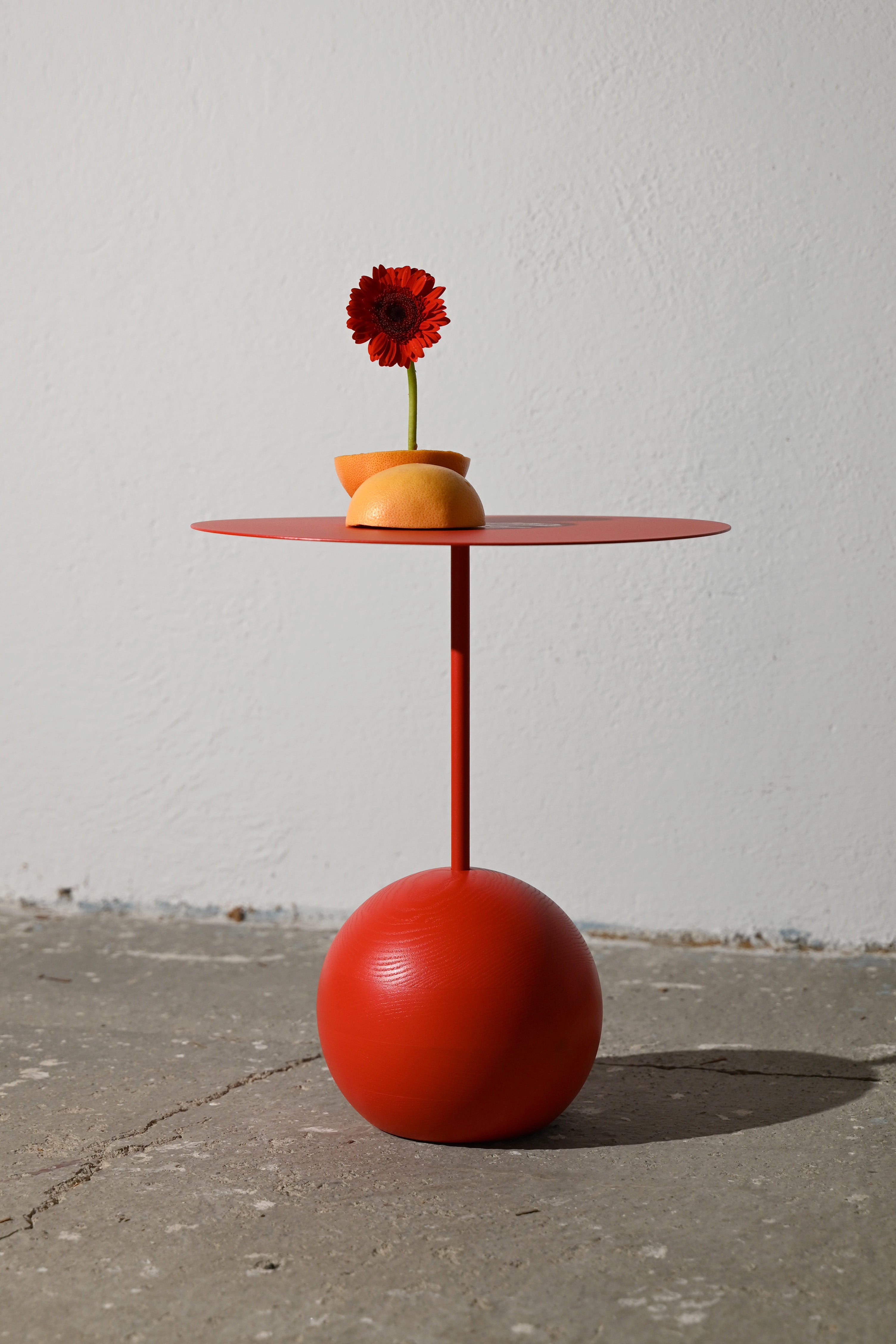
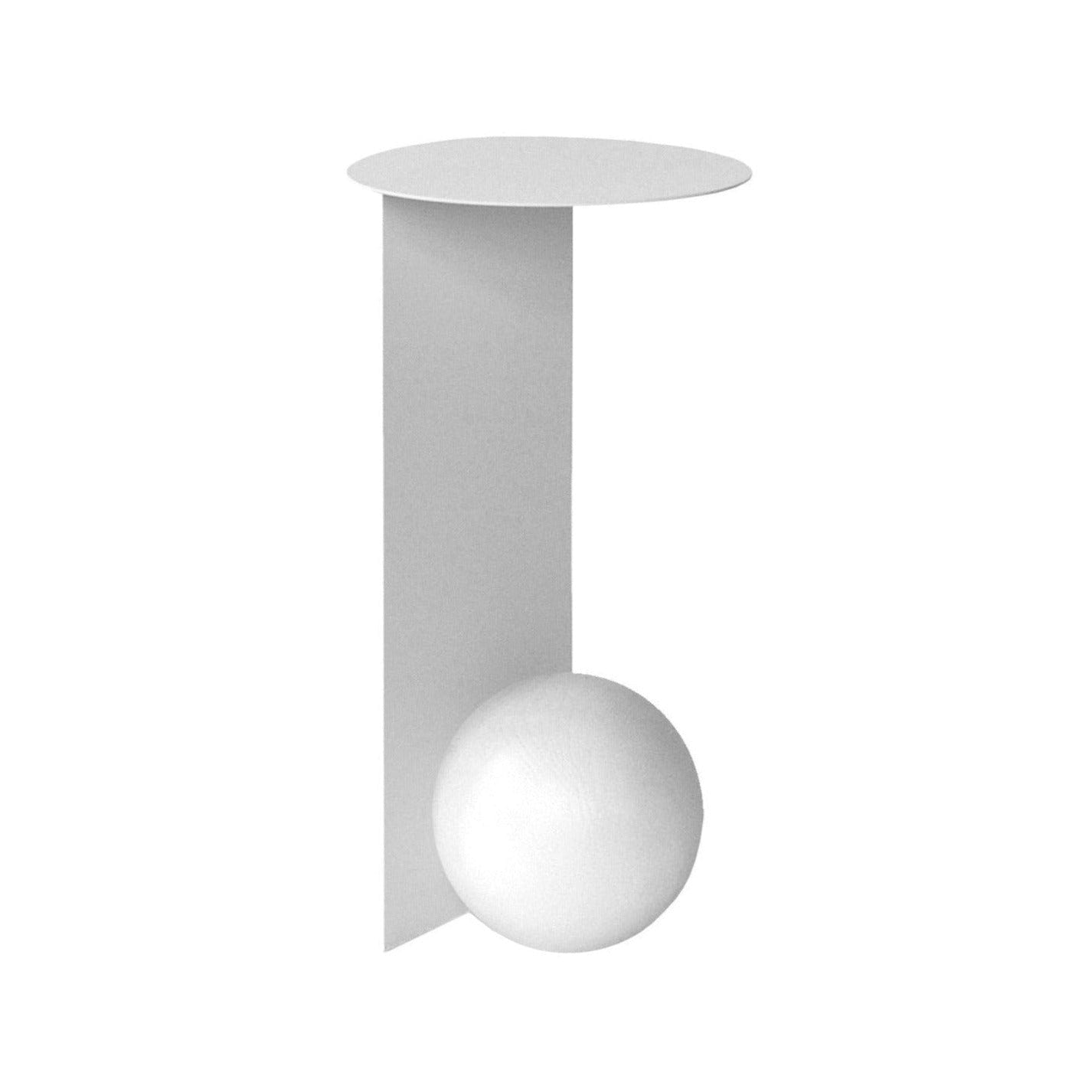
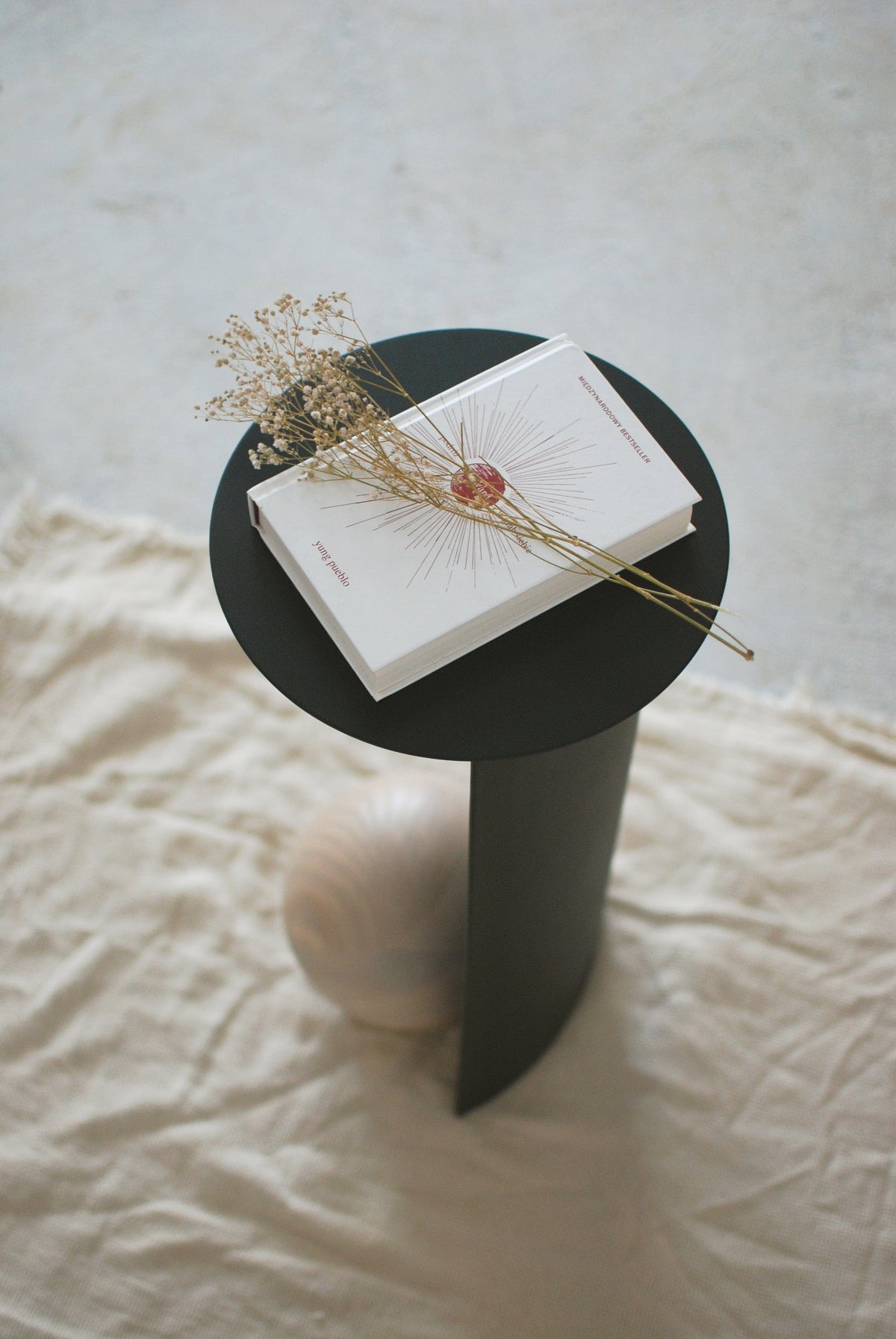
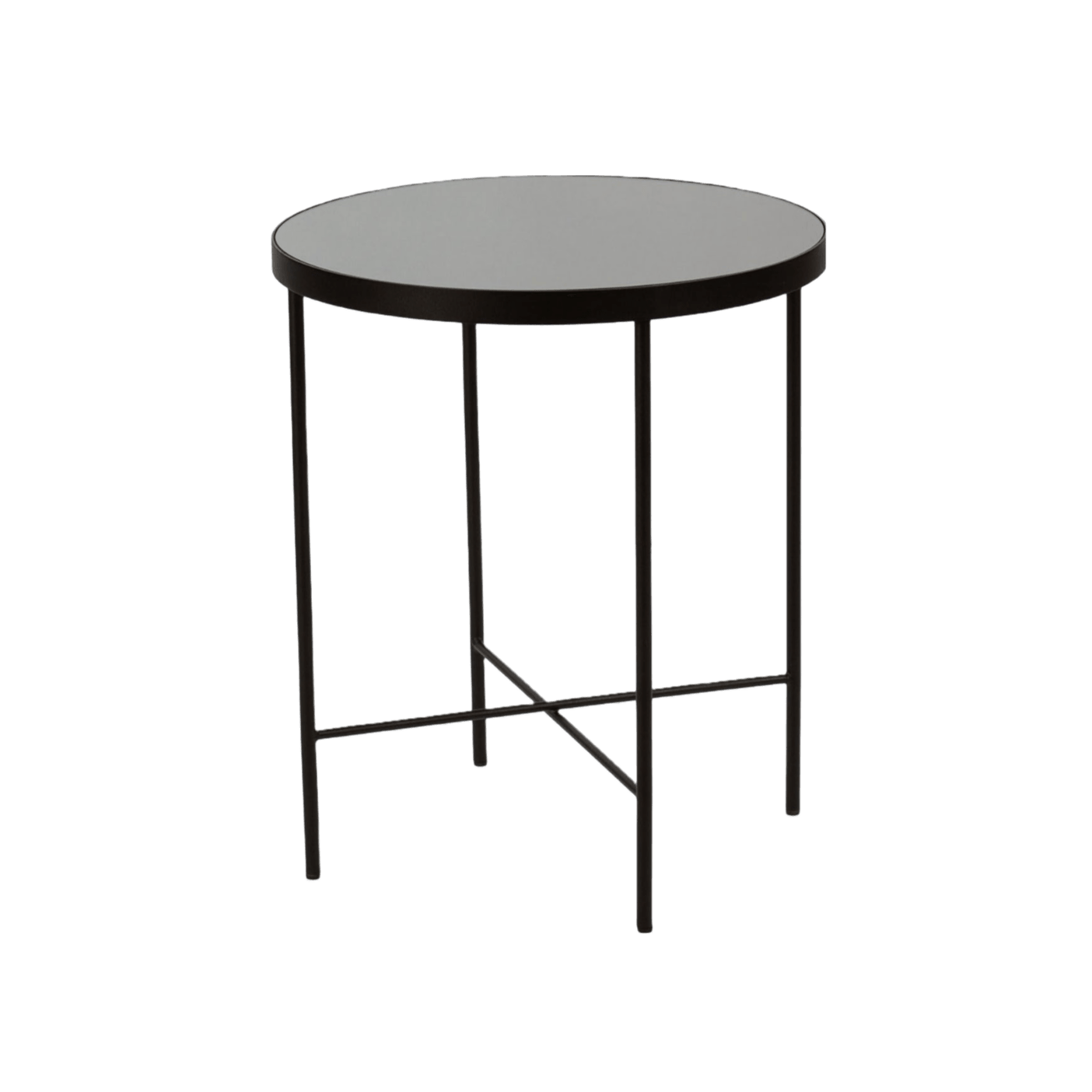
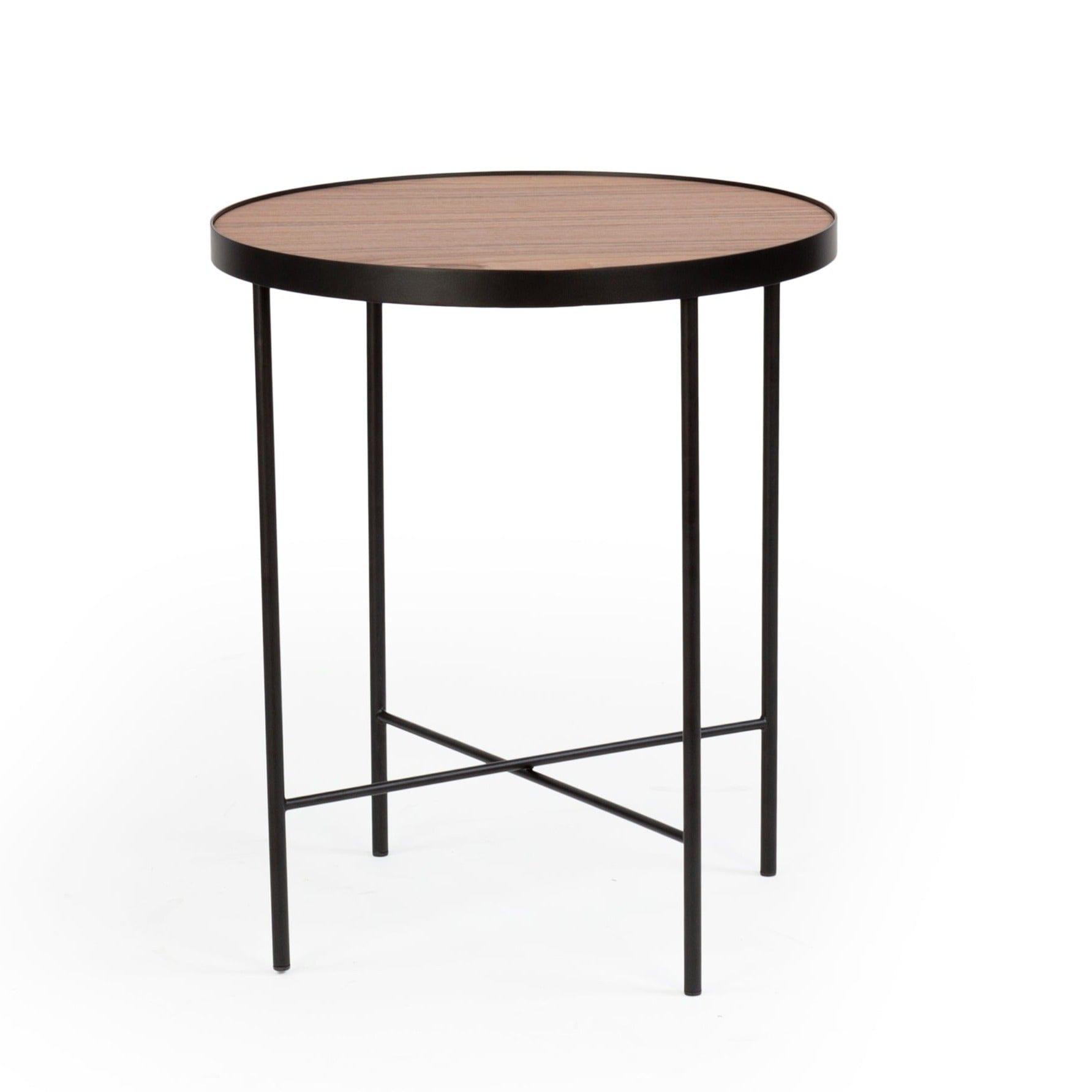
Side Table is smaller and taller, positioned next to the sofa or armchair, within reach of the seated person. Check out side tables.
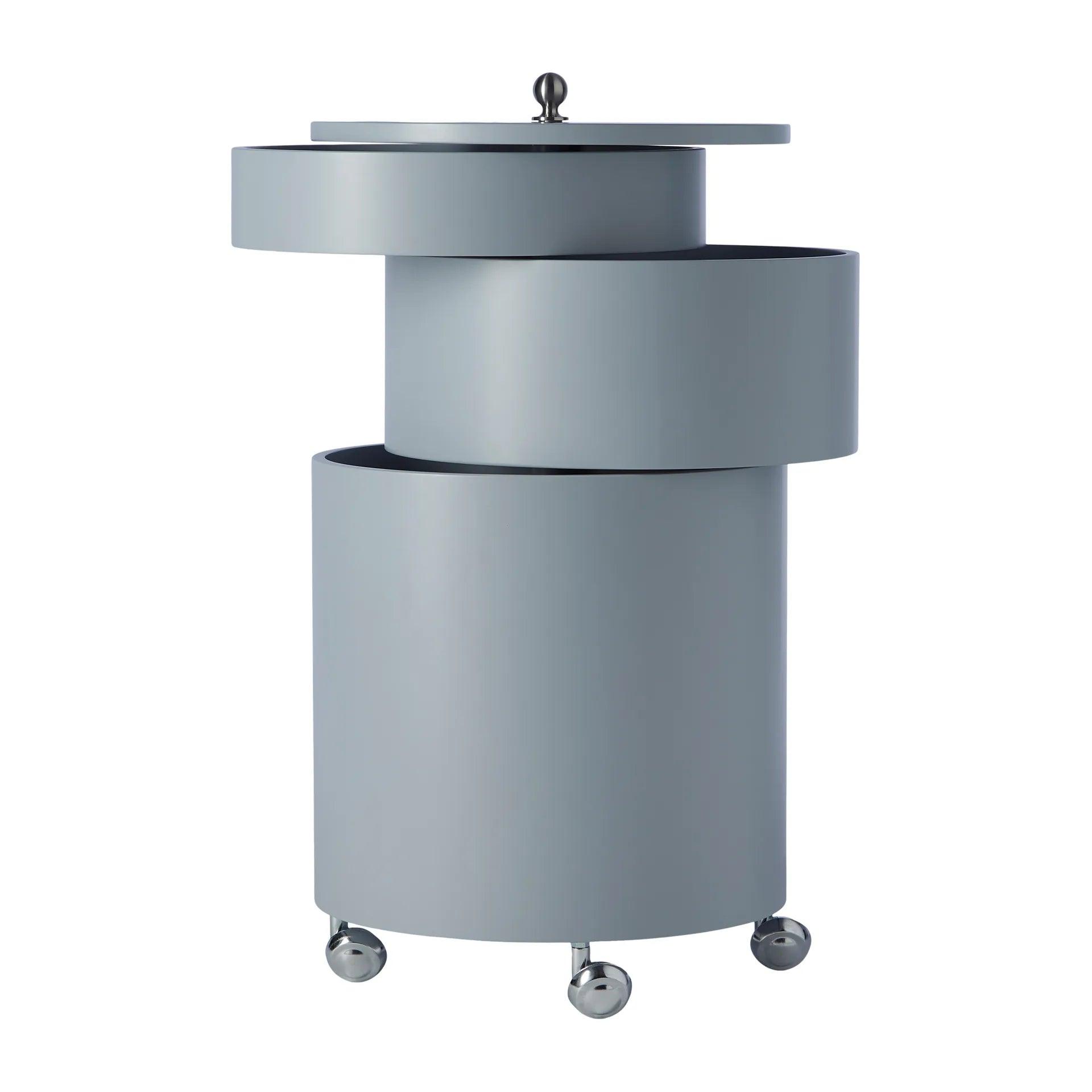
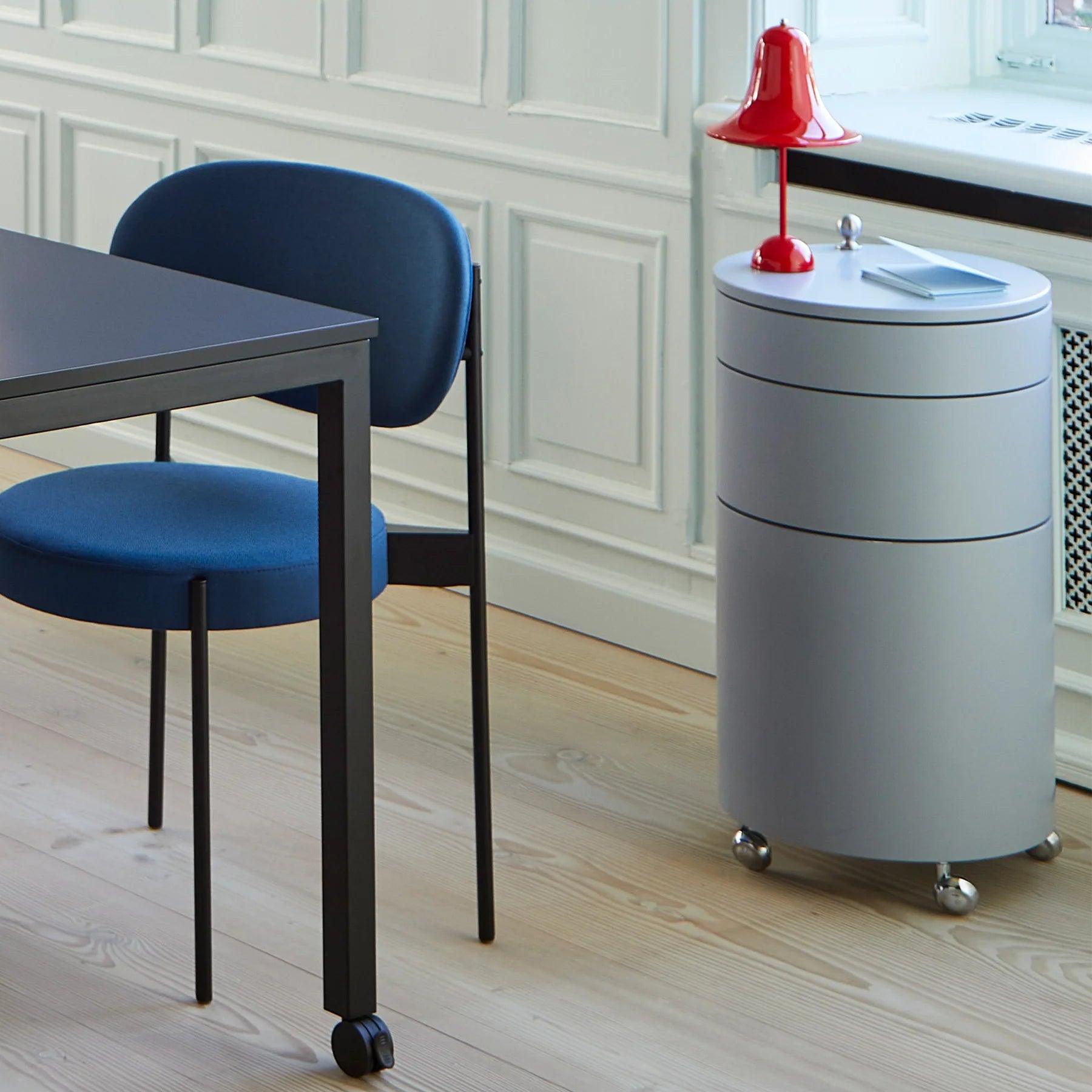
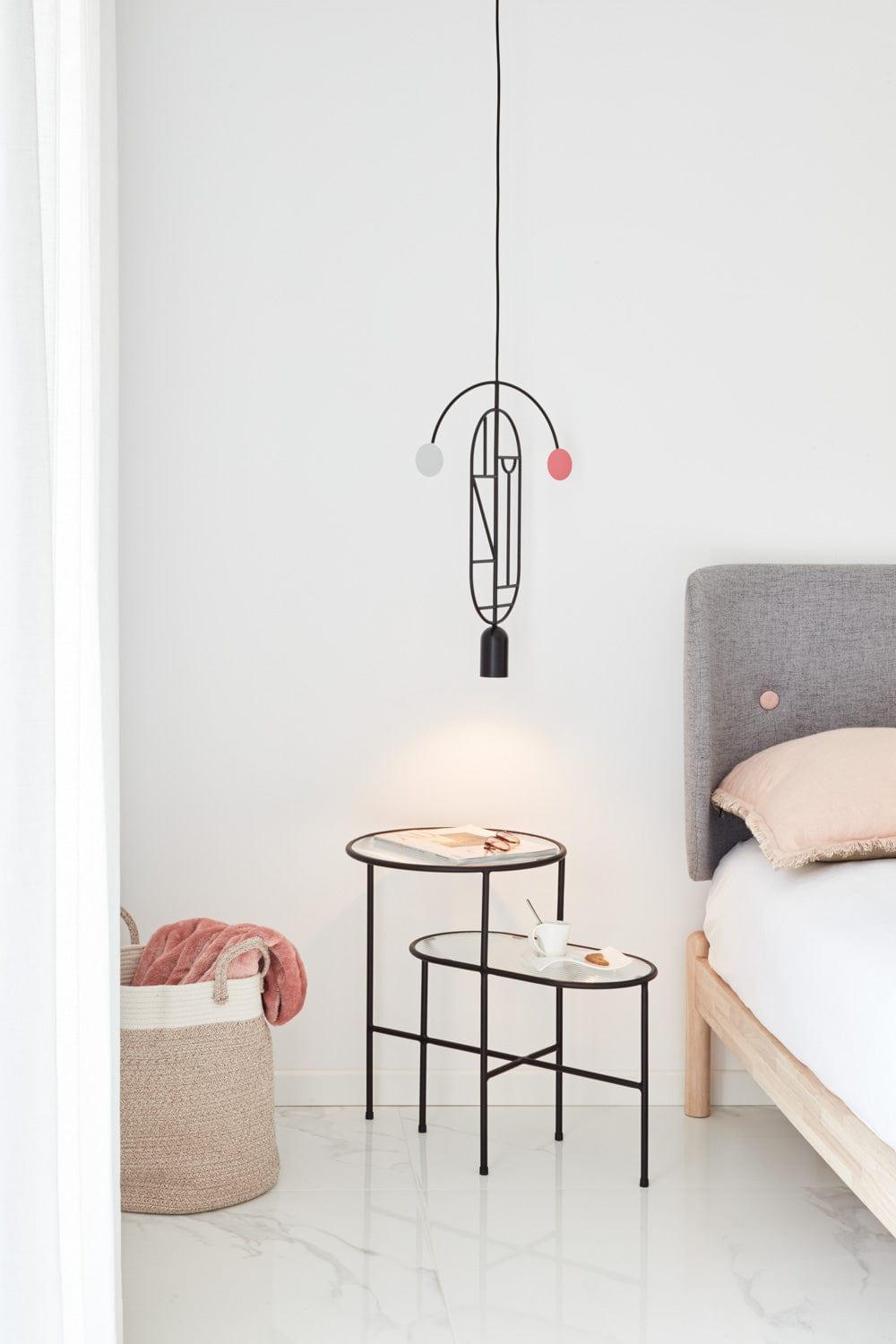
Auxiliary Table is a lightweight and mobile model, often on wheels or with a handle, which can be moved as needed – see auxiliary tables. Night Table stands next to the bed and often replaces a nightstand: night tables and cabinets.
What Height Should the Table Be?
The rule is common for all types: the tabletop should be at seat height or a few centimeters higher. For a typical sofa with a seat height of 42–45 cm, this means a coffee table of 40–45 cm and a side table of 50–60 cm.
Next to the bed, the reference point is the mattress – a tabletop at its height or slightly higher allows you to reach for your phone without sitting up.
What Size and Shape?
The coffee table should be chosen to match the sofa: ideally, its length should be about two-thirds of the length of the furniture. The distance from the edge of the seat should be 40–45 cm – close enough to reach for, yet far enough to walk freely.
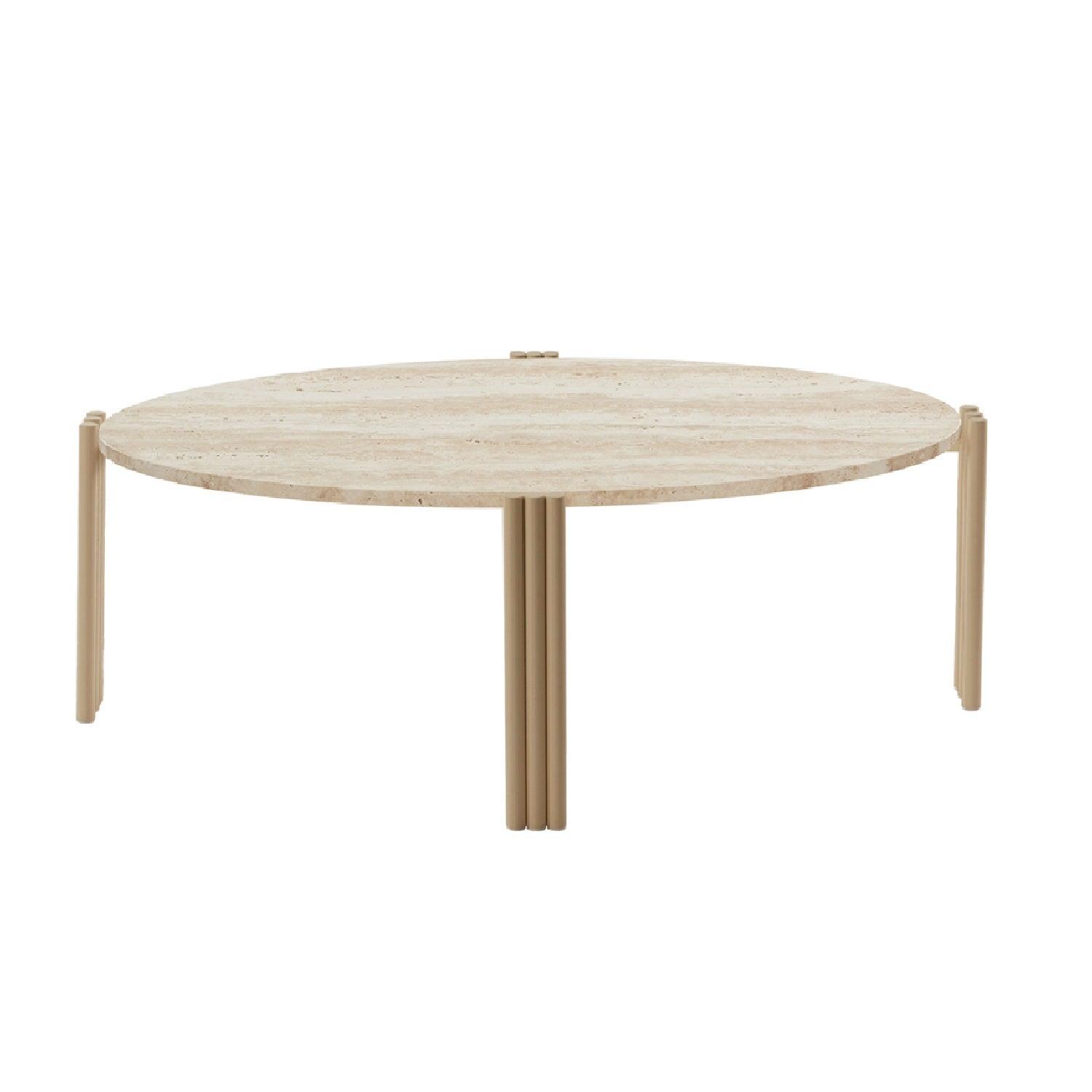
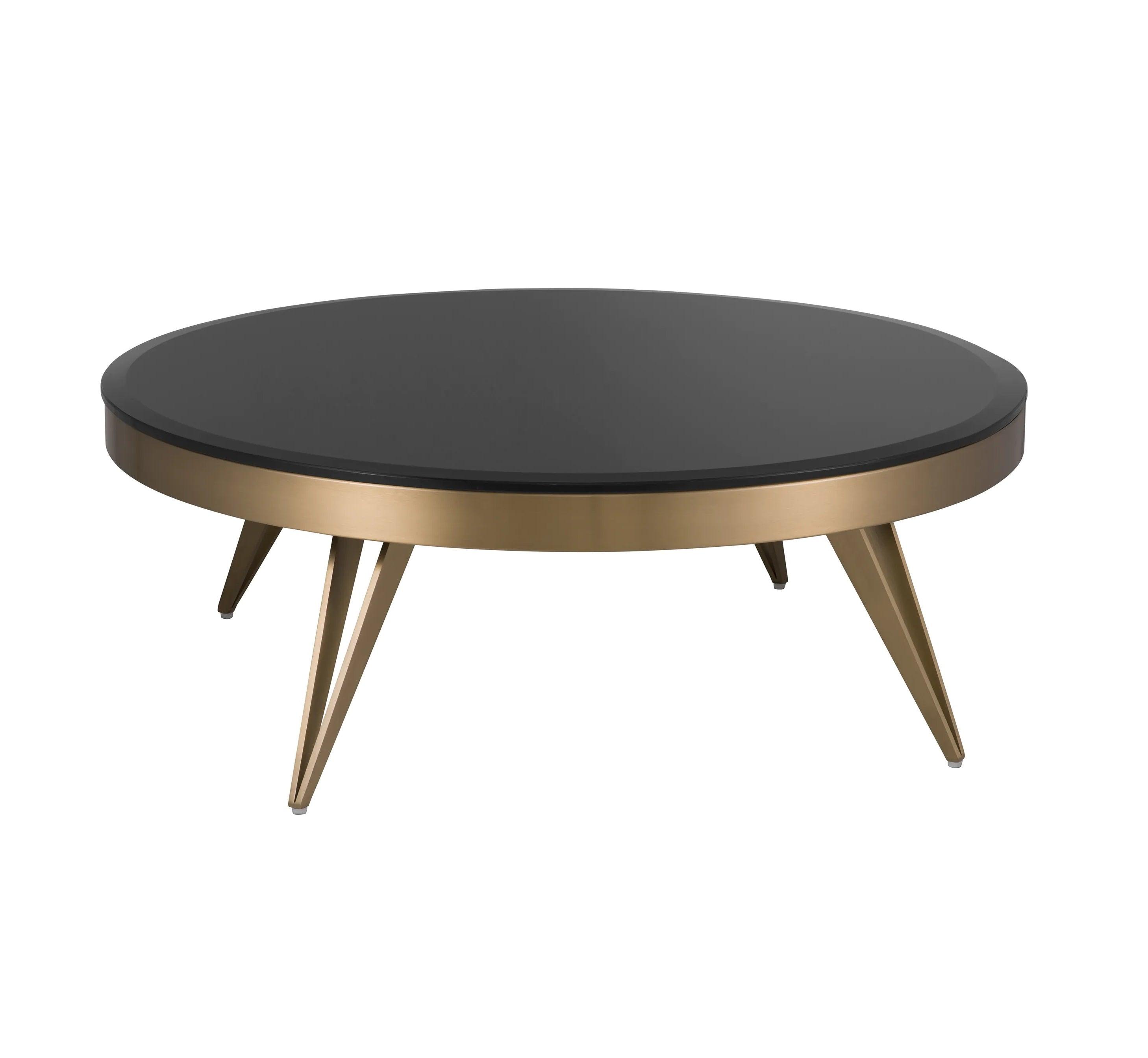
Round models have no sharp corners, making them suitable for small spaces, narrow passages, and homes with children. Rectangular tables provide more usable surface area and work better with a long sofa or sectional.
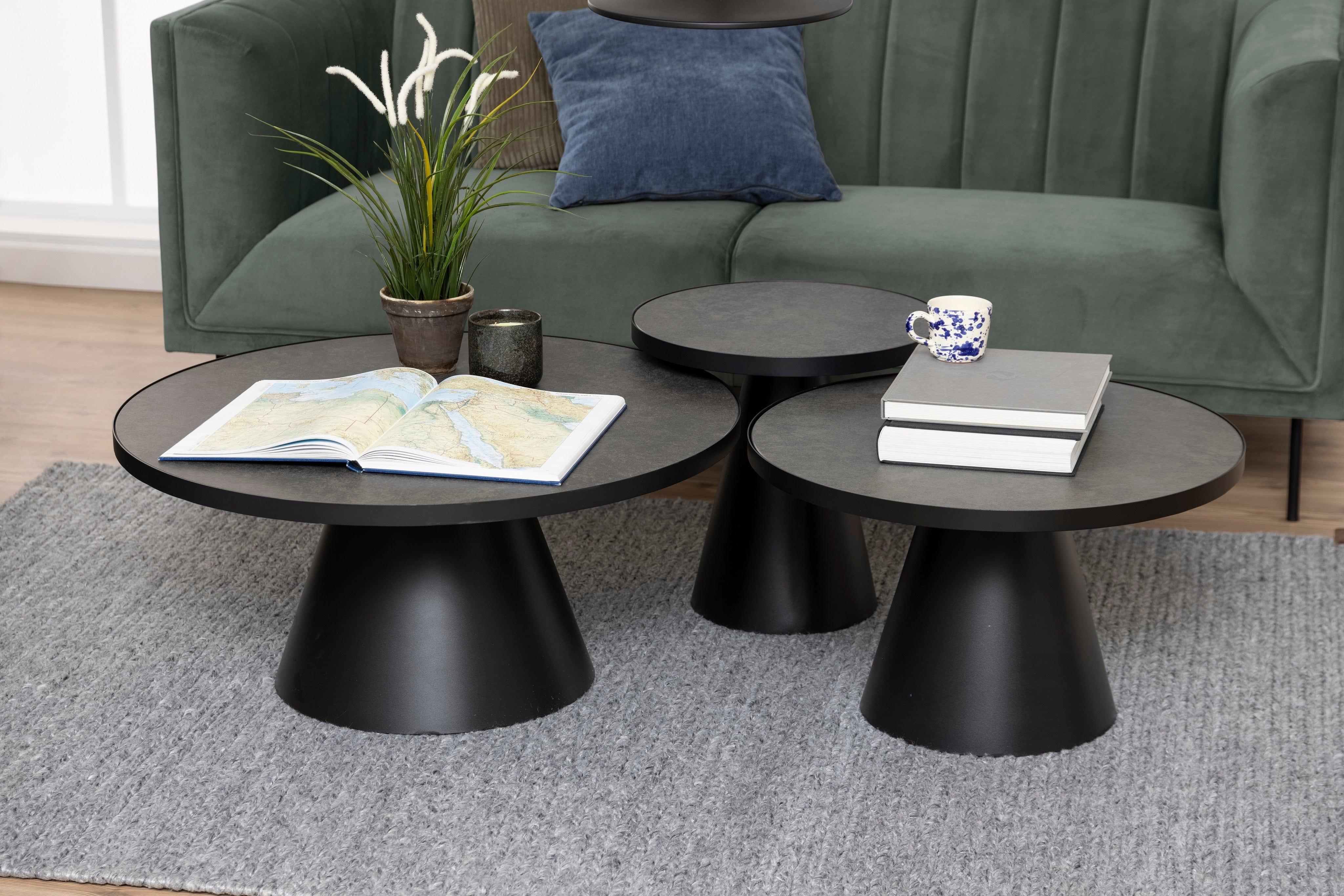
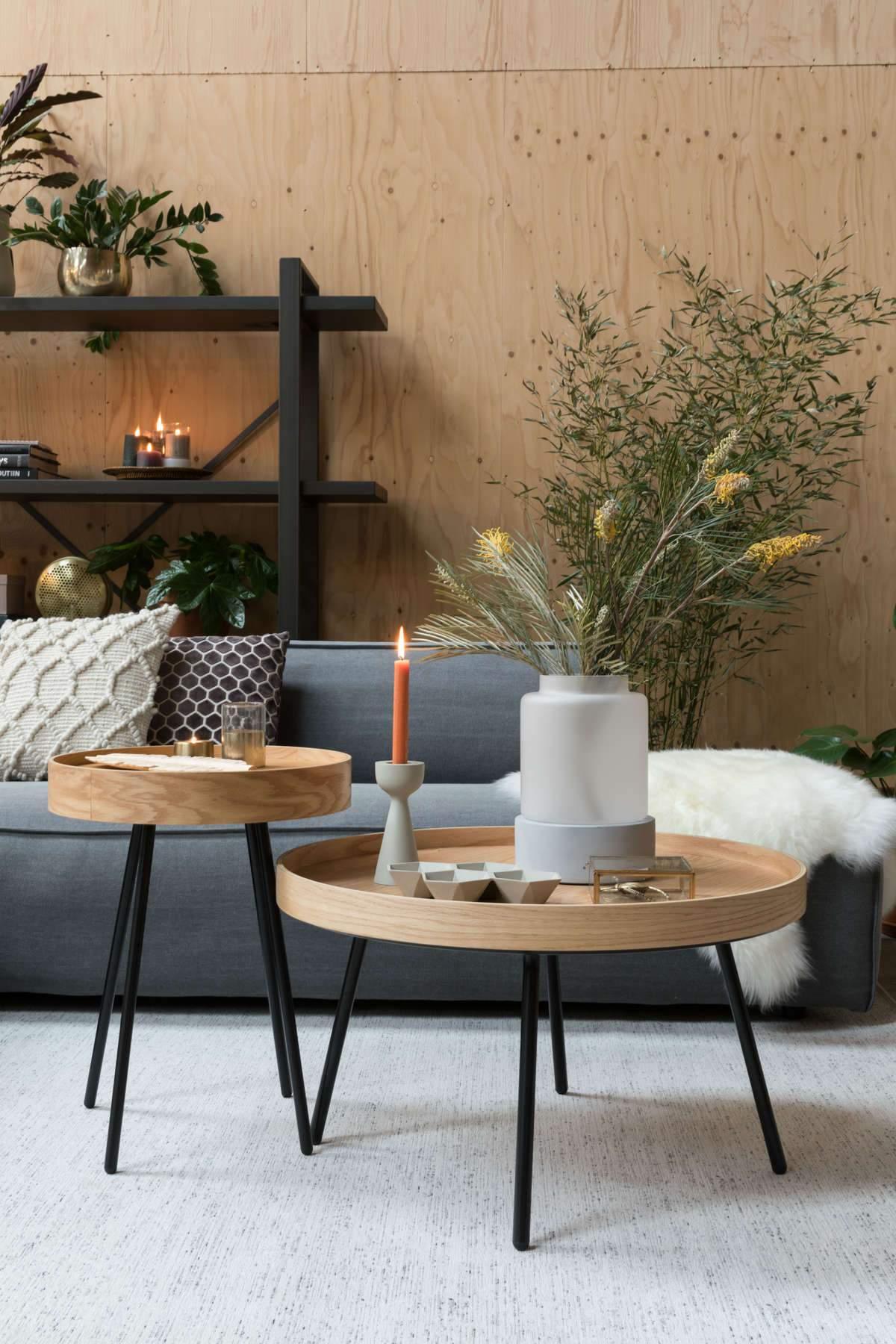
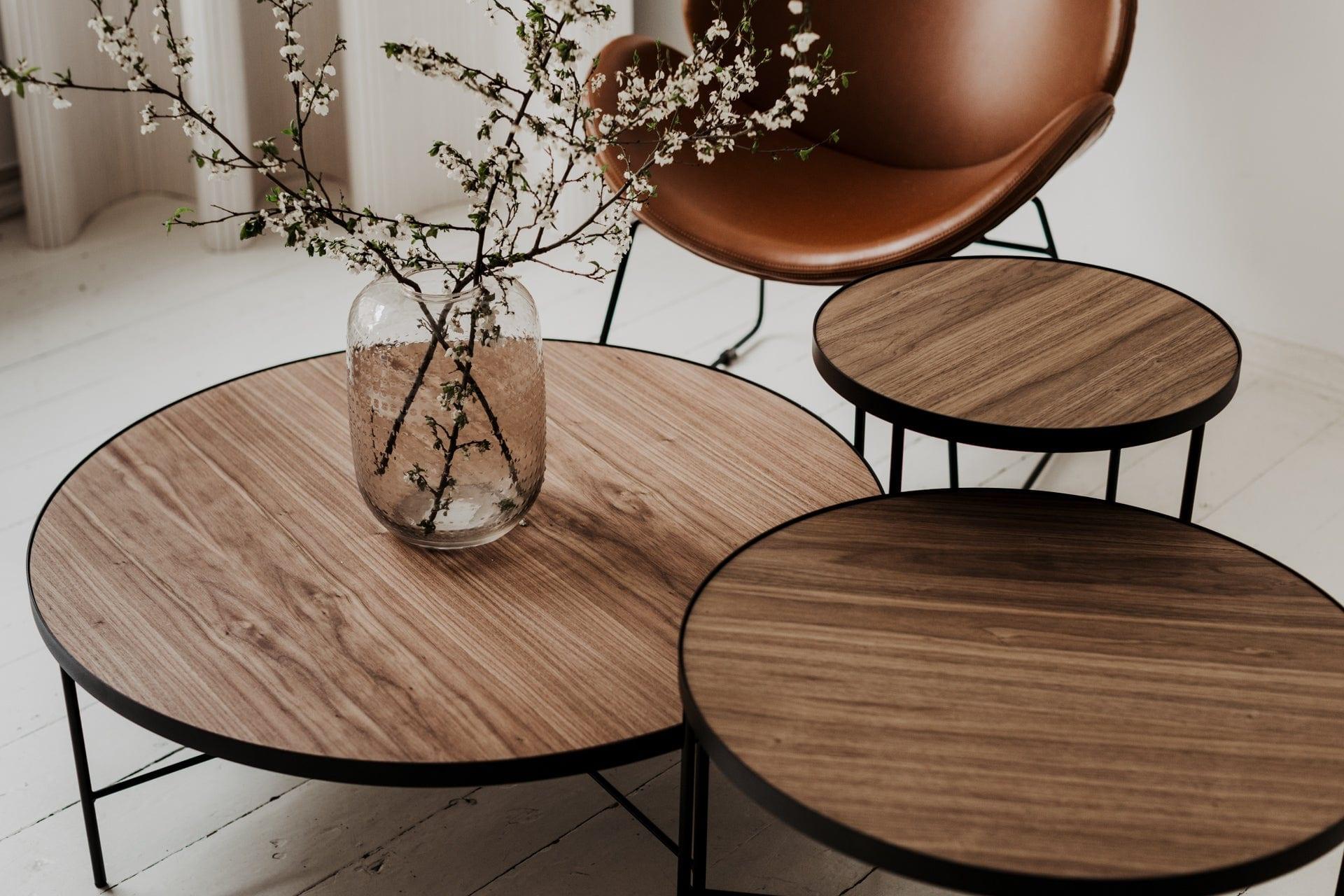
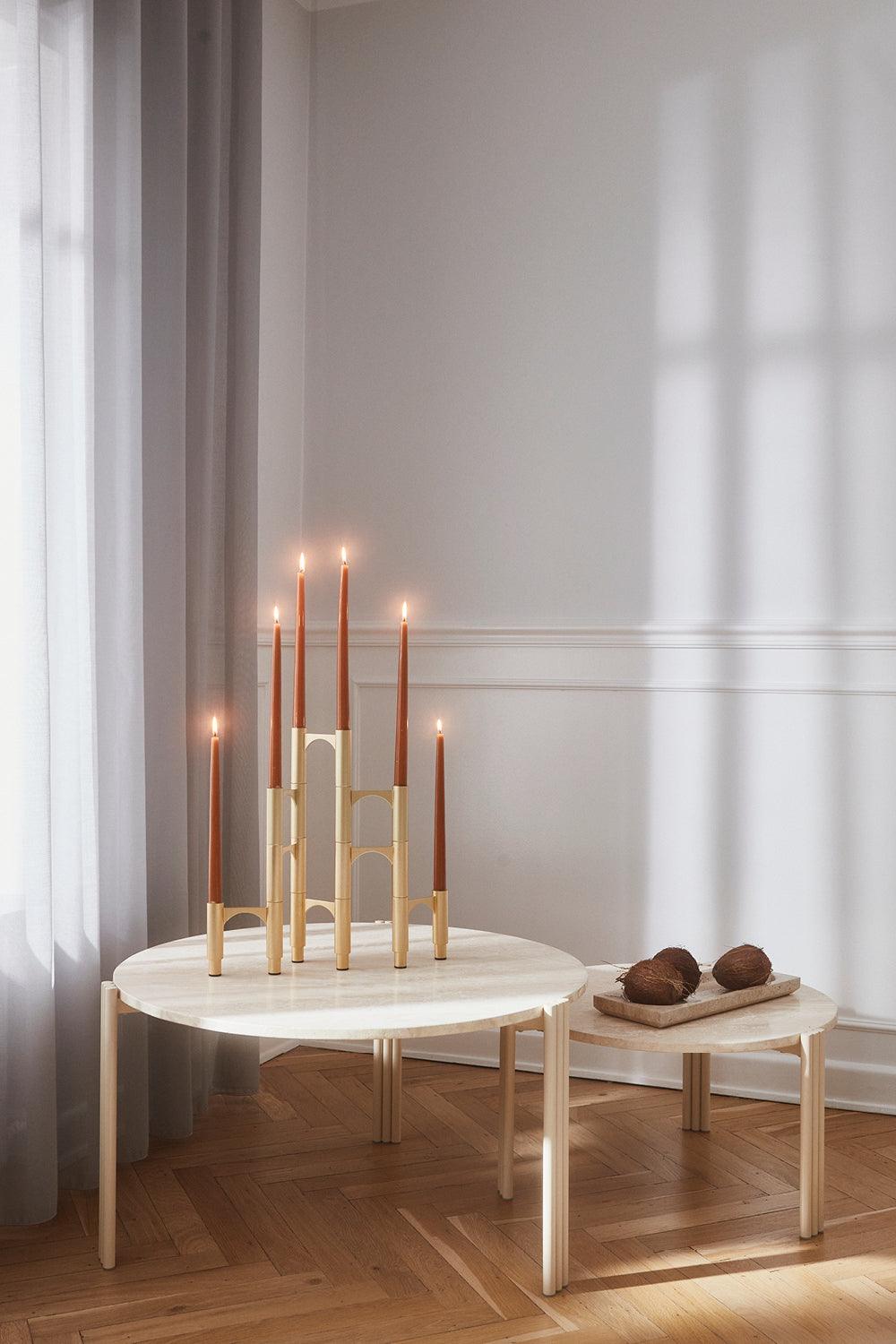
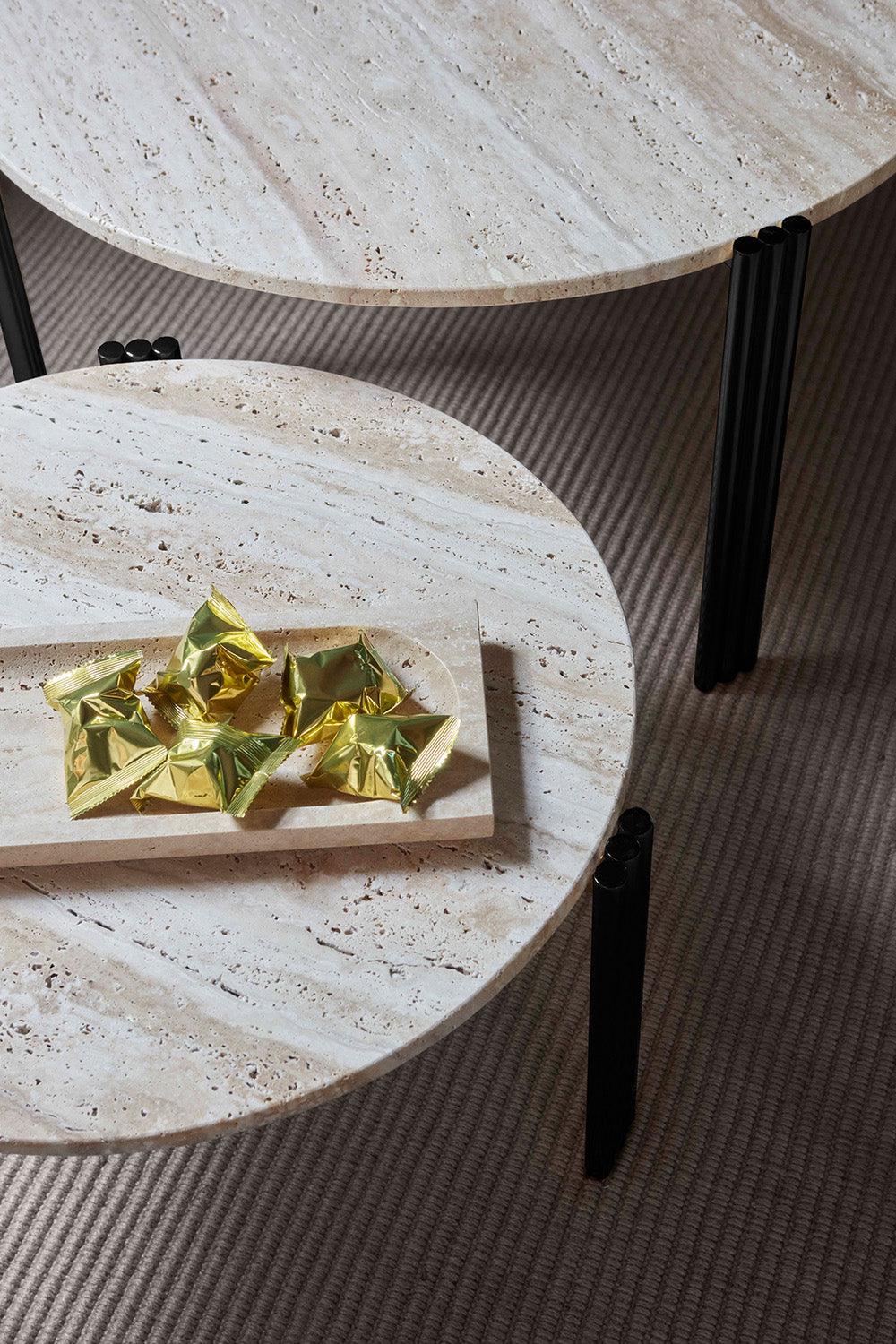
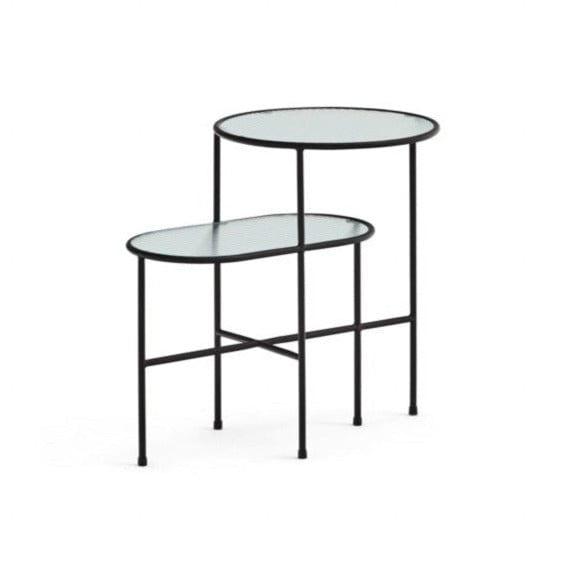
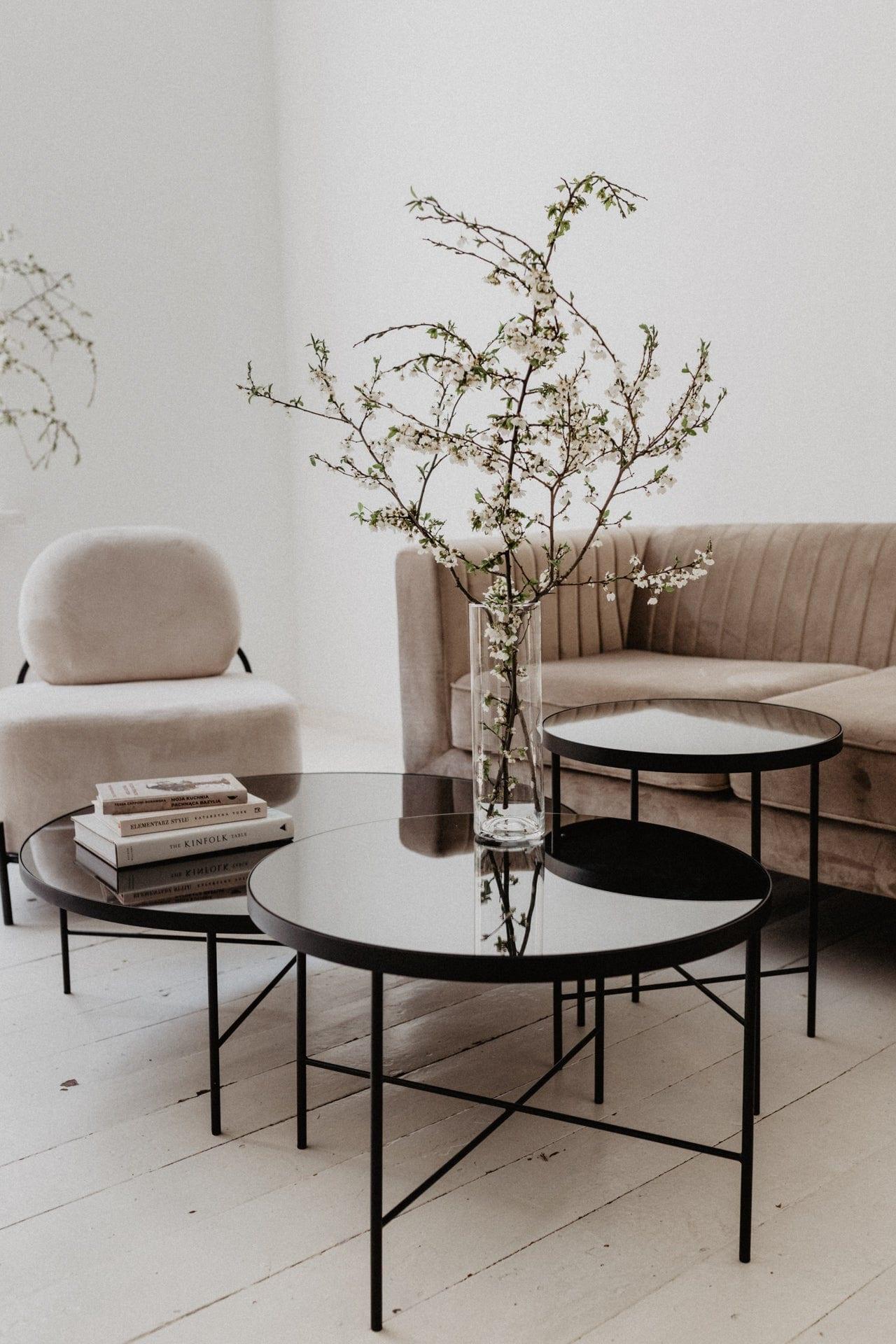
In a large living room, instead of one tabletop, consider a set of tables of varying heights – they can be spread out or stacked one under the other.
Tabletop Material
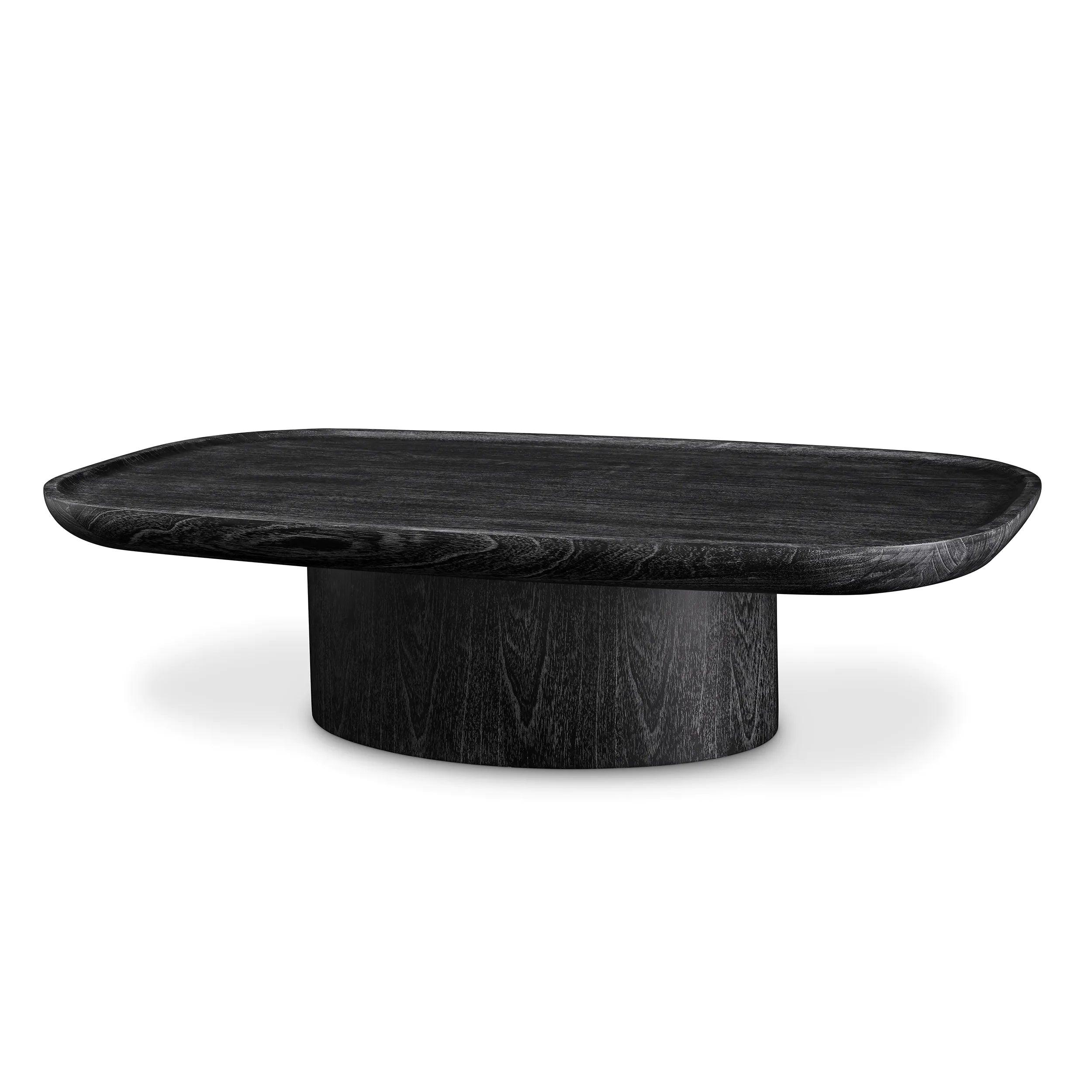
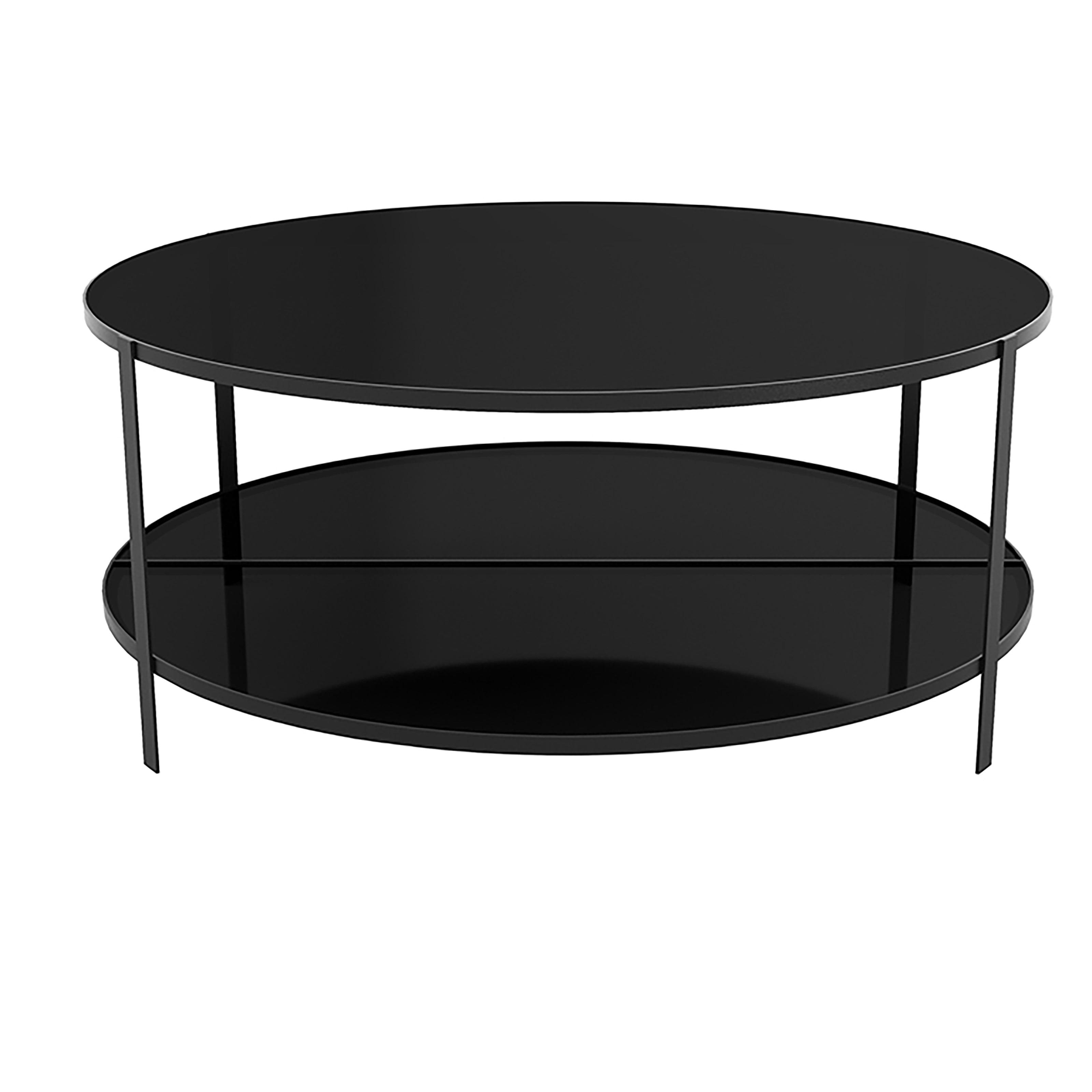
Wooden tables have a warm feel and can withstand daily use. Glass tables visually disappear, making them great for small rooms – however, they require more frequent cleaning.
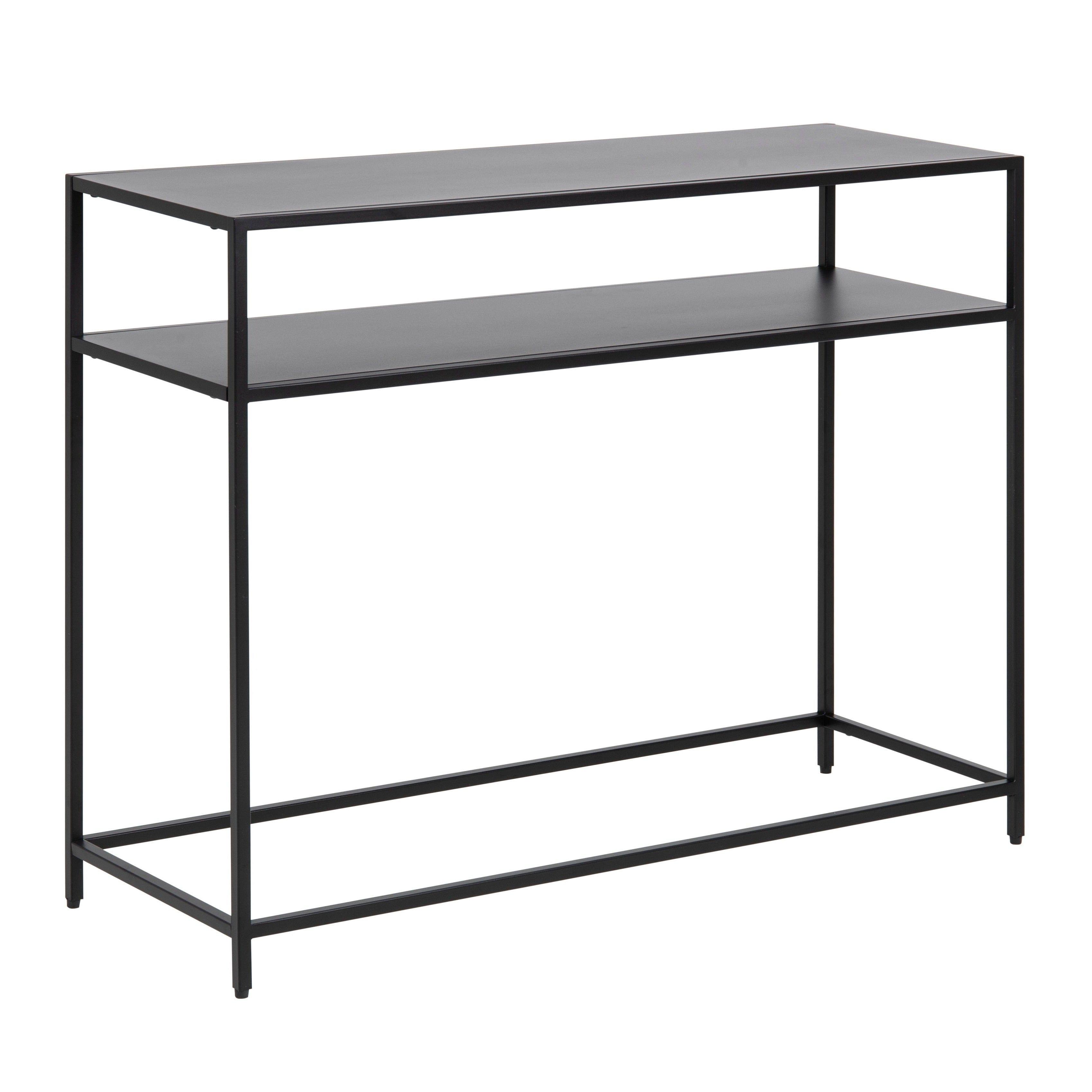
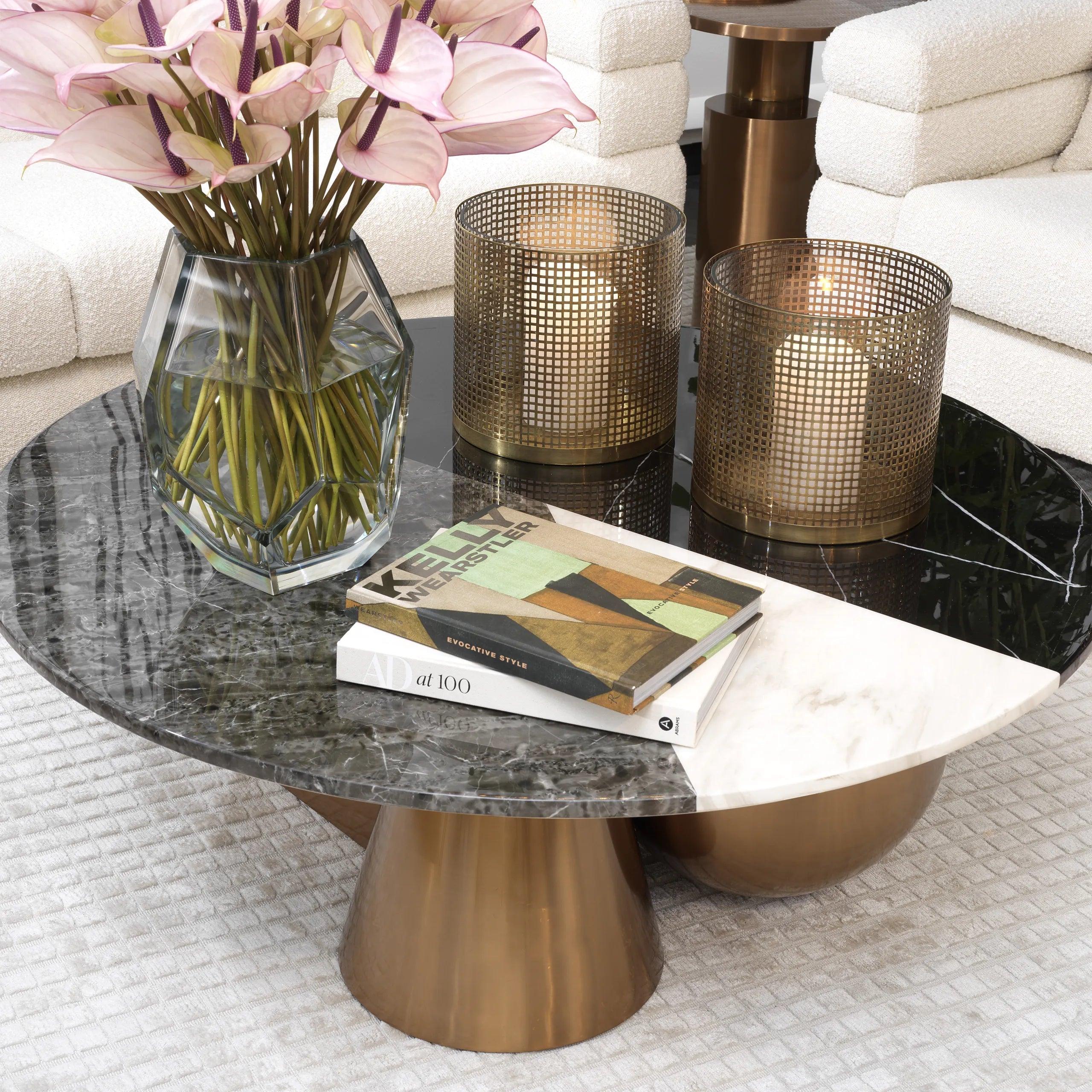
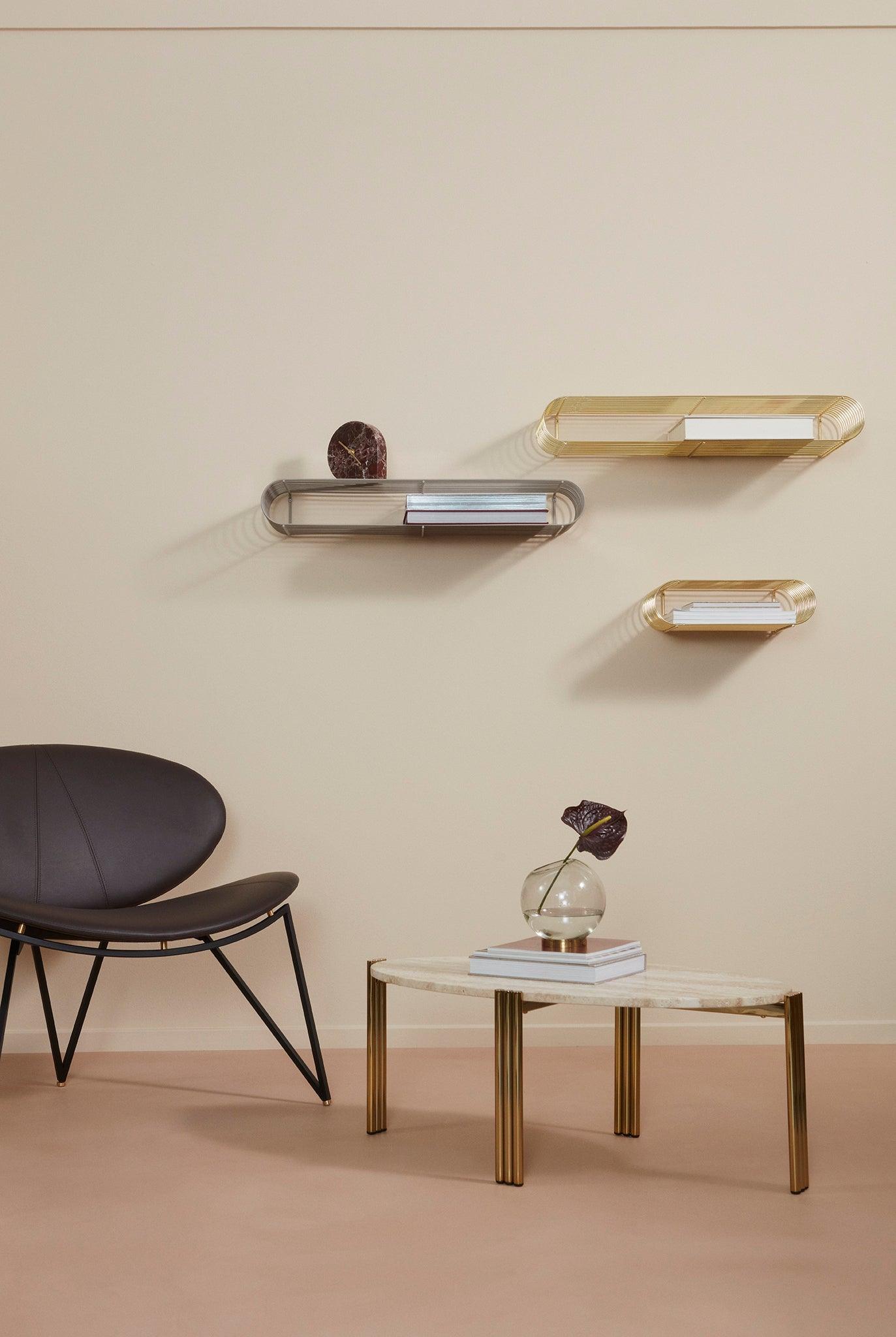
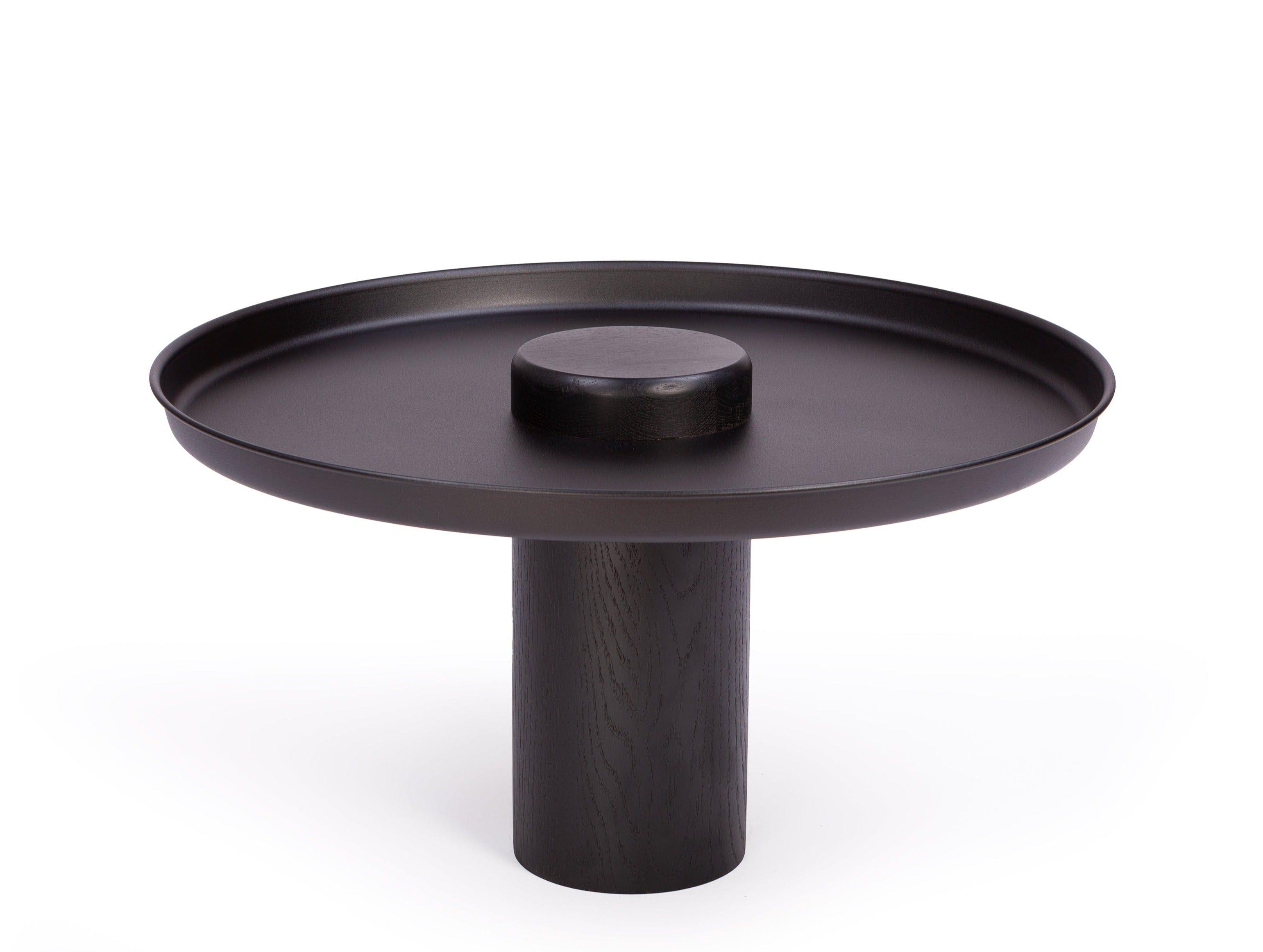
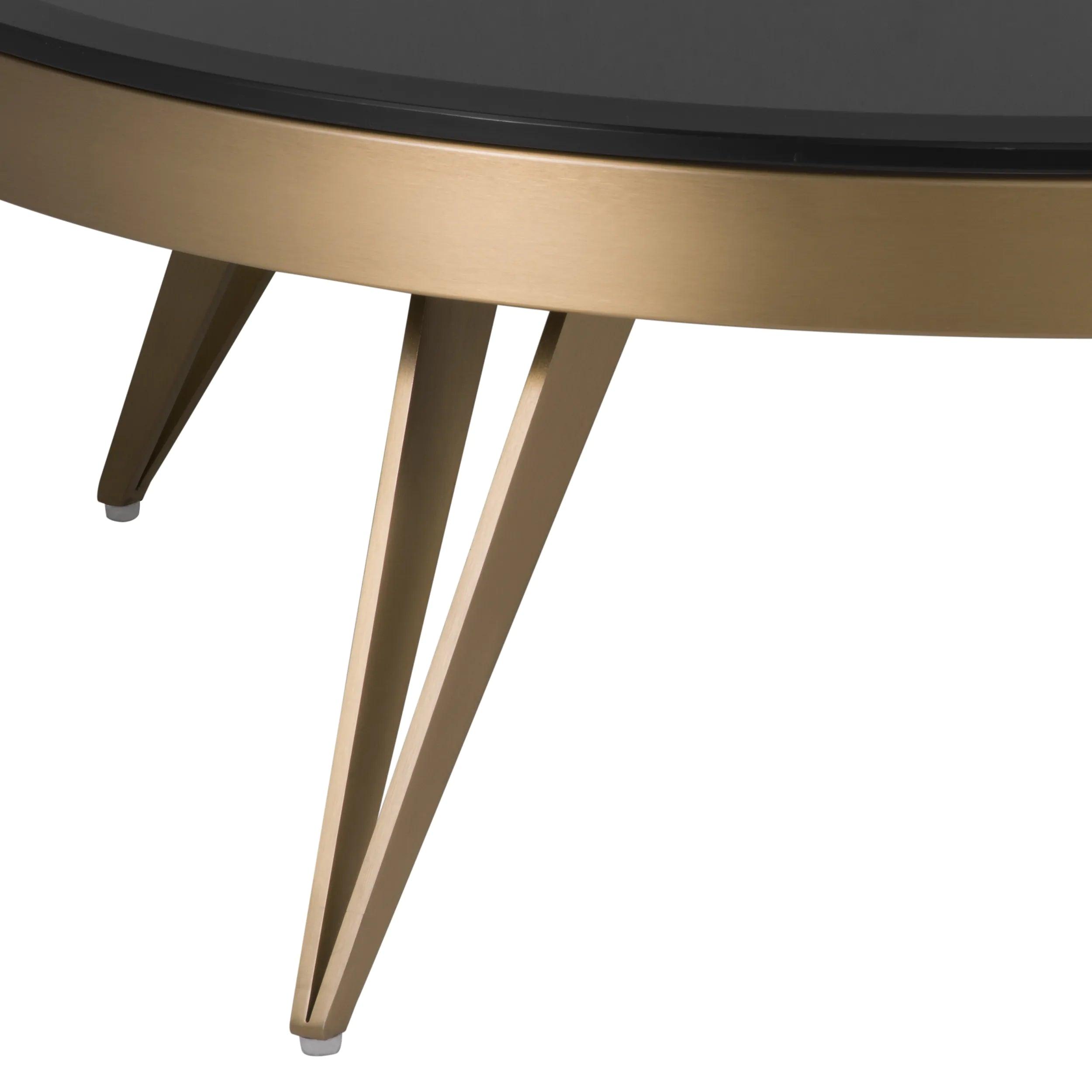
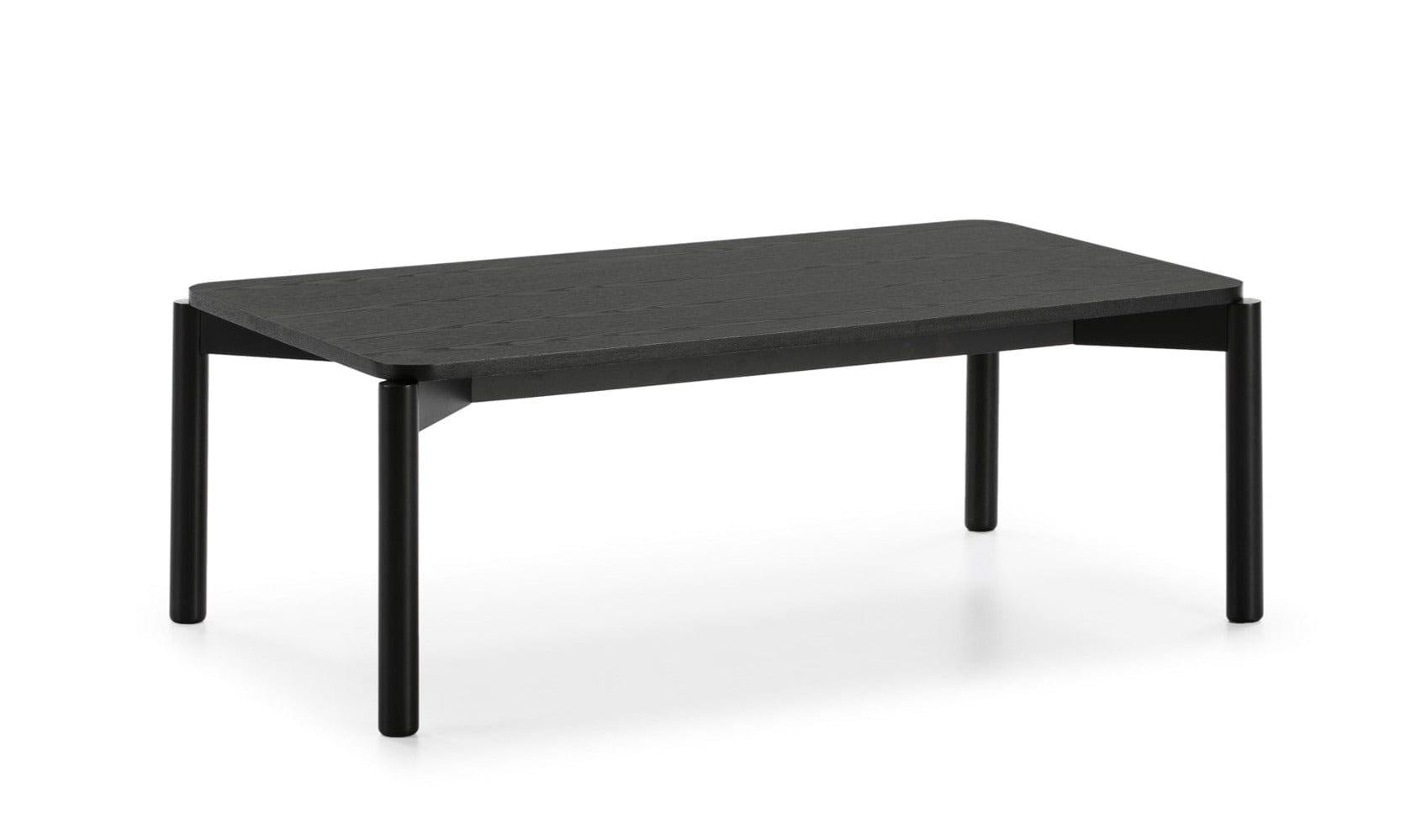
Marble and stone tops are the most prestigious and heat-resistant, but they are heavy and sensitive to stains. Metallic accents can be found among gold tables and brass tables, while a universal finish can be found among black tables.
Table with Drawers or a Shelf
If your tabletop usually holds remotes, chargers, and magazines, choose a model with a drawer or a lower shelf. An empty tabletop visually calms the entire living room, and storage solves the problem at its source.
How Many Tables in the Living Room?
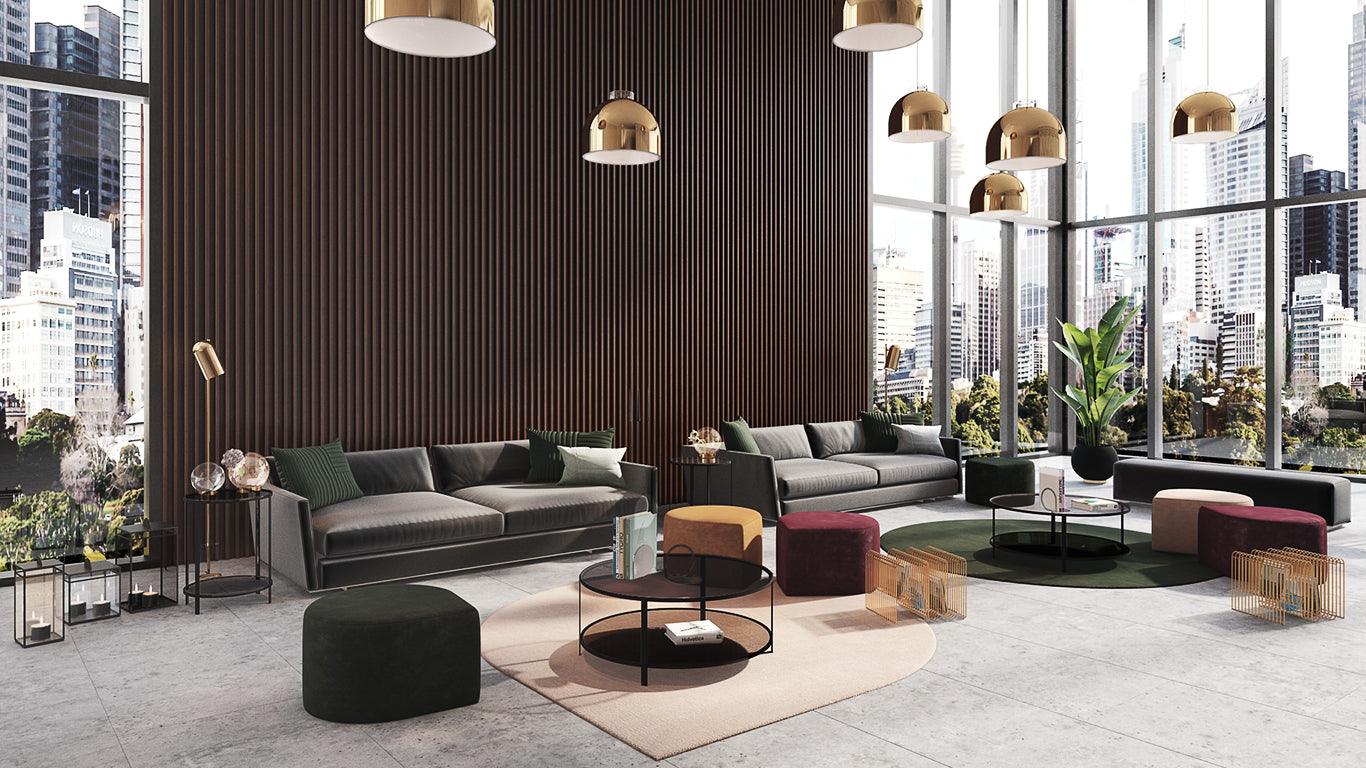
The most common setup is: one coffee table in front of the sofa plus one side table next to the armchair. In a smaller space, you can forgo a large tabletop in favor of two lightweight tables that are easy to move when guests arrive.
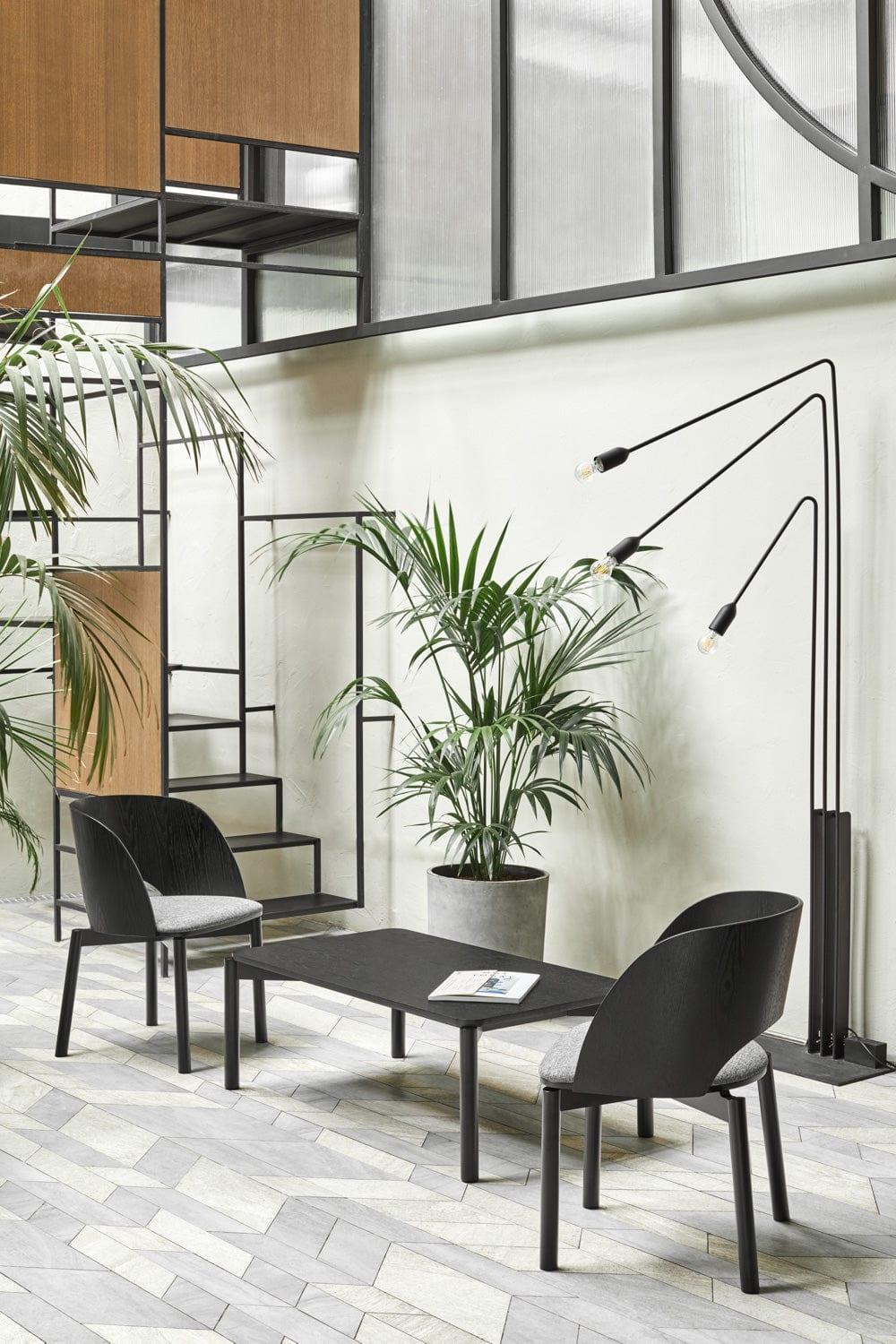
The entire arrangement – sofa, rug, floor lamp – can be found in the Living Room collection. For the terrace, choose outdoor coffee tables.
Frequently Asked Questions
What is the difference between a coffee table and a side table?
The coffee table is lower and larger, positioned centrally in front of the sofa. The side table is narrower and taller, placed next to the sofa or armchair.
What is the distance between the table and the sofa?
About 40–45 cm – allowing you to reach without standing up while also providing enough space to walk freely.
What table is best for a small living room?
A round, glass table or a set of two smaller tables. Slim legs reveal the floor and visually enlarge the space.
What tabletop is the most practical?
Wood and stone are the most resistant to daily use, while glass requires more frequent cleaning but visually lightens the space.
Do you know what you’re looking for? Check out coffee tables and side tables – free delivery on orders over 1000 PLN, showroom in Warsaw.